Episode summary
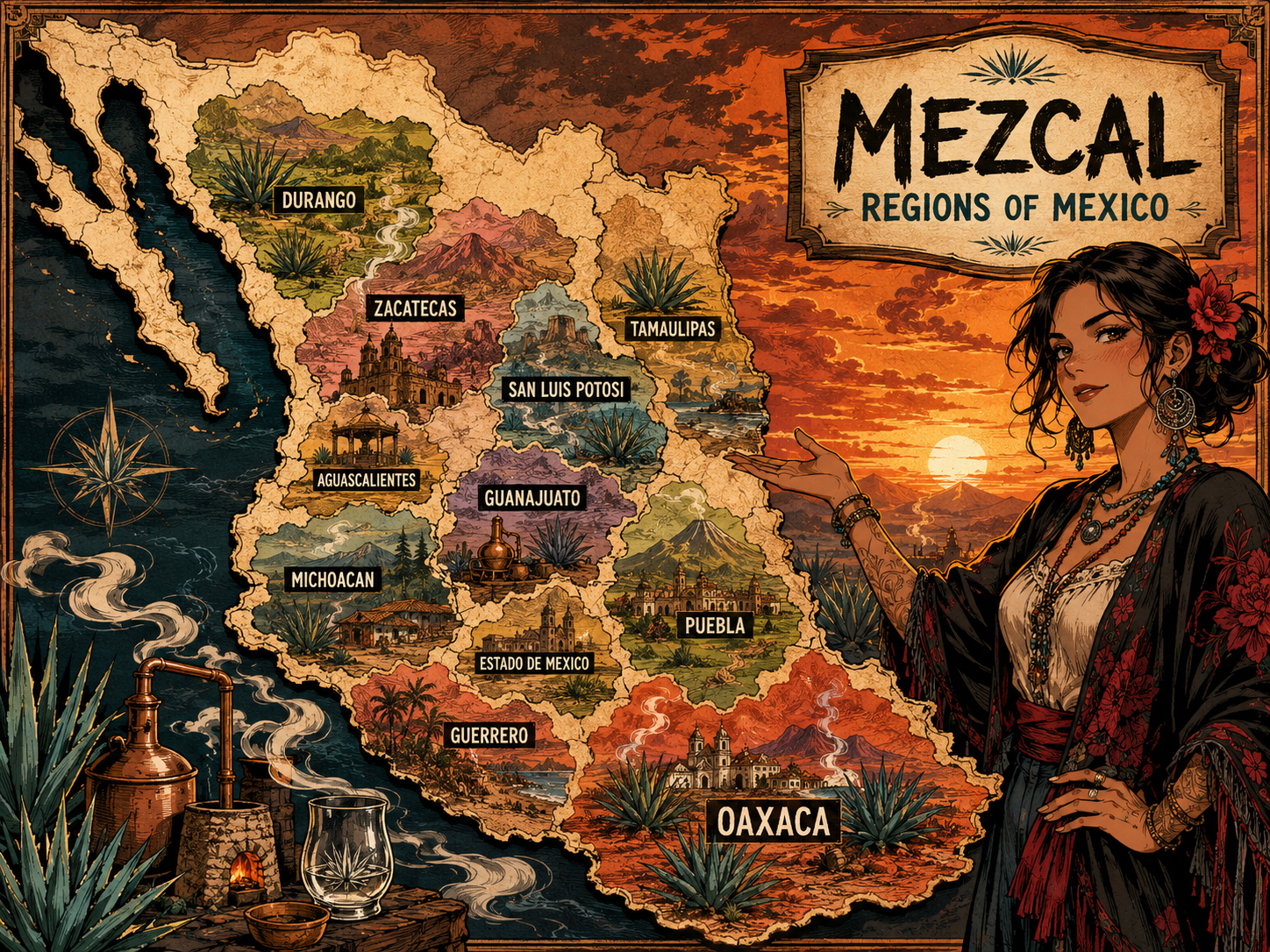
Mezcal does not come from nowhere. Place leaves fingerprints.
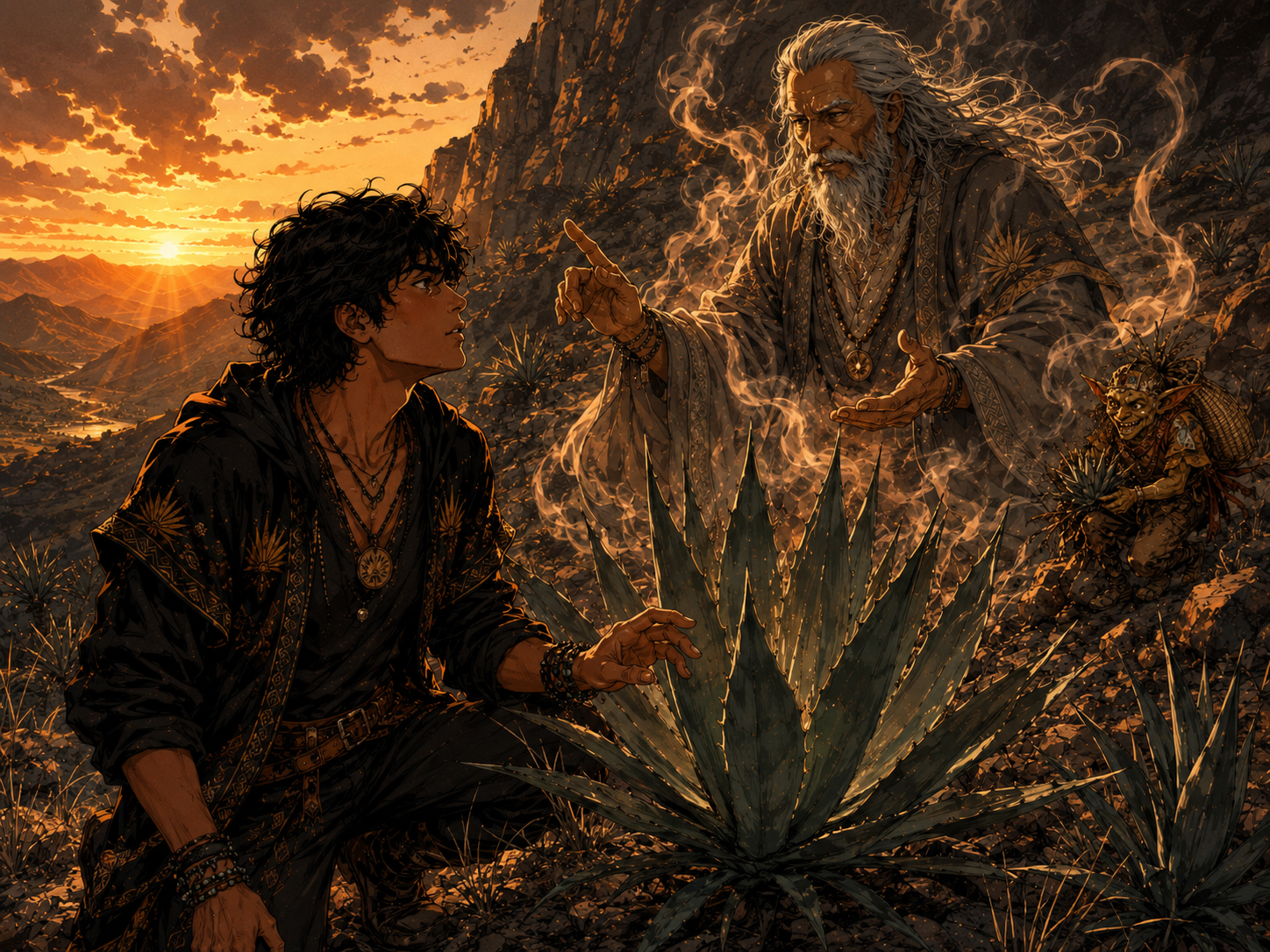
In Episode 6, Agave Boy has already learned about agave, roasting, tequila cousin drama, labels, and tahona crushing. Now he asks why two mezcals made from similar agave can taste so different.
Madame Terroir appears in a dramatic mountain breeze and answers: because place, method, and maker all matter.
Madame Terroir says:
“Flavor is not a random accident in a bottle. It is a conversation between land, plant, water, weather, yeast, tool, time, and human judgment.”
Panel 1: Agave Boy blames the bottle
The episode opens with Agave Boy comparing two tiny pours. Both are mezcal. Both are made from agave. One tastes brighter and greener. The other feels earthier, smokier, and more mineral.
“Why?” he asks.
The Label Goblin pops up and says, “Because one is more premium.”
Madame Terroir closes her fan. The temperature drops five degrees.
“Premium is not an explanation,” she says. “It is often a price tag wearing cologne.”
Panel 2: The mountain speaks first
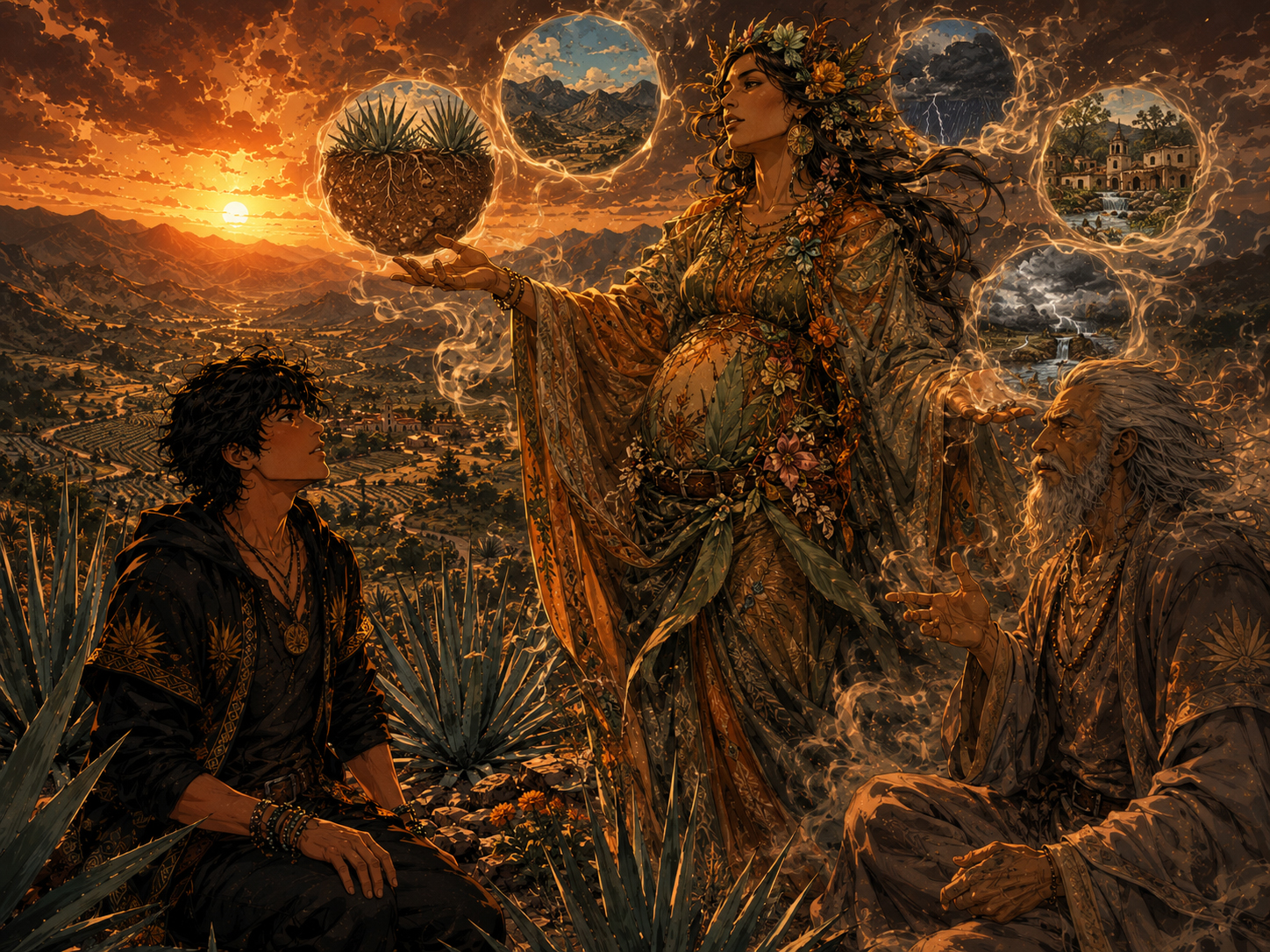
Madame Terroir points to the mountain. Elevation, temperature, rainfall, sun exposure, wind, and soil all influence how agave grows. Agave is not a factory widget. It is a living plant shaped by its environment.
A plant grown in one landscape may not develop exactly like a plant grown somewhere else. That difference can echo later through roasting, fermentation, and distillation.
| Place factor | Why it matters | Madame Terroir translation |
|---|---|---|
| Altitude | Can affect climate, plant growth, temperature shifts, and ripening conditions. | The mountain adjusts the tempo. |
| Soil | Influences plant growth, drainage, stress, and regional identity. | The ground signs the guestbook. |
| Water | Used in fermentation, proofing, cleaning, and production decisions. | The quiet ingredient with a loud impact. |
| Climate | Temperature, sun, rain, and wind influence agave and fermentation conditions. | The weather writes in invisible ink. |
| Village tradition | Local methods, tools, and family knowledge shape production. | The people complete the map. |
Panel 3: The village enters the glass
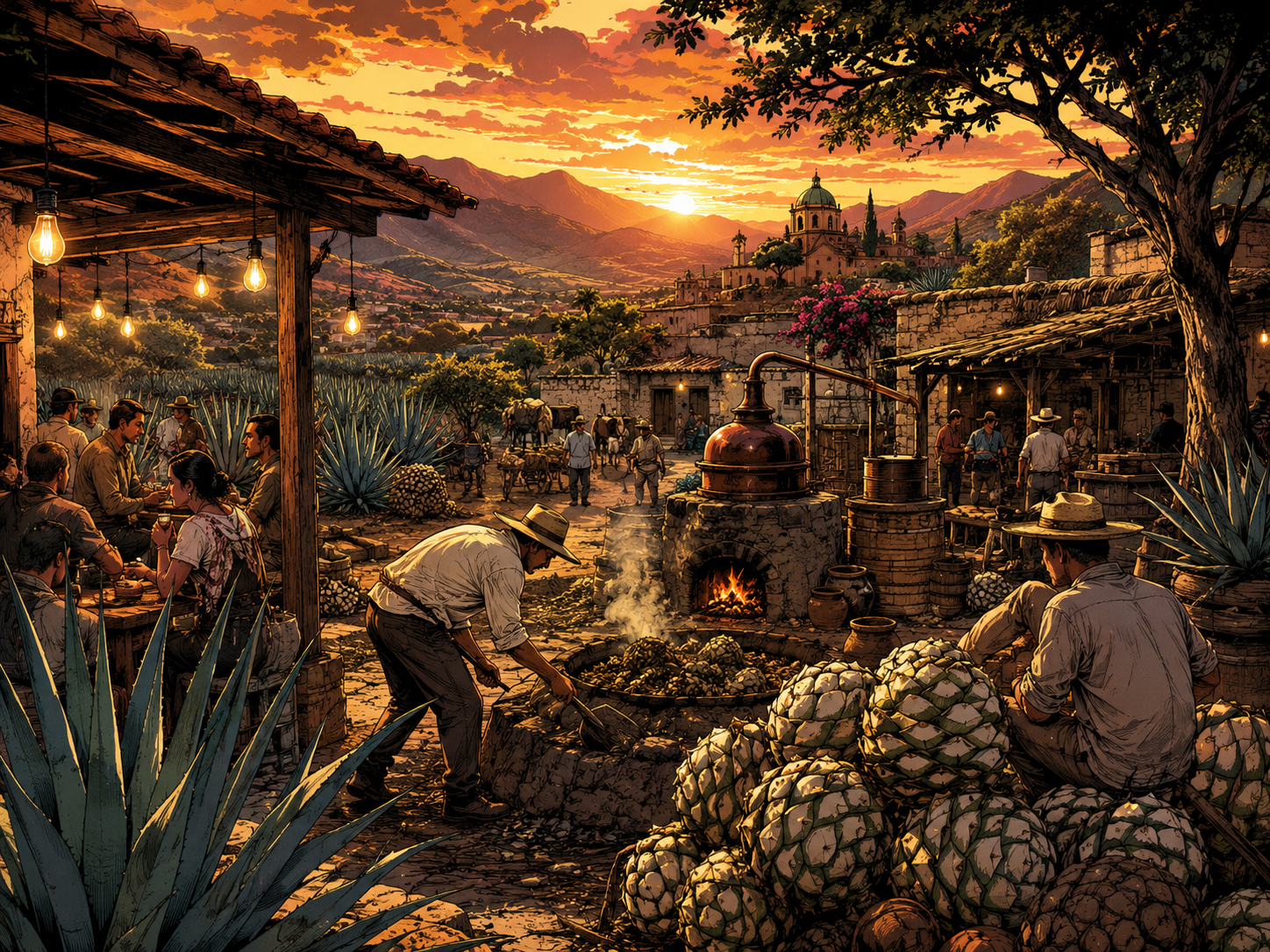
Madame Terroir walks Agave Boy toward a mezcal village. The palenque is not just a production site. It is a place where local tools, family decisions, inherited knowledge, water sources, fermentation habits, and practical constraints shape the spirit.
The same agave name on two labels does not mean the same result. A producer’s town, tools, and method matter.
Panel 4: Yeasts arrive without invitation
Fermentation is where tiny organisms perform enormous drama. Natural yeasts and local microbes can shape aromas, acidity, fruit, funk, texture, and complexity.
Agave Boy asks if the yeasts have a manager.
Madame Terroir replies, “No. That is part of the suspense.”
Fermentation warning
Fermentation is not just “waiting.” It is chemistry, environment, timing, vessel choice, temperature, and maker judgment quietly arguing in a vat.
Panel 5: Water refuses to be boring
Water appears as a calm blue spirit carrying a ledger. It explains that water can matter in fermentation, proofing, cleaning, and production logistics. In dry regions, water also becomes a sustainability concern.
“I am not just dilution,” says Water Spirit. “I am context.”
The Label Goblin tries to label the water “mystical mountain tears.” Madame Terroir confiscates the sticker.
Panel 6: Tools also have accents
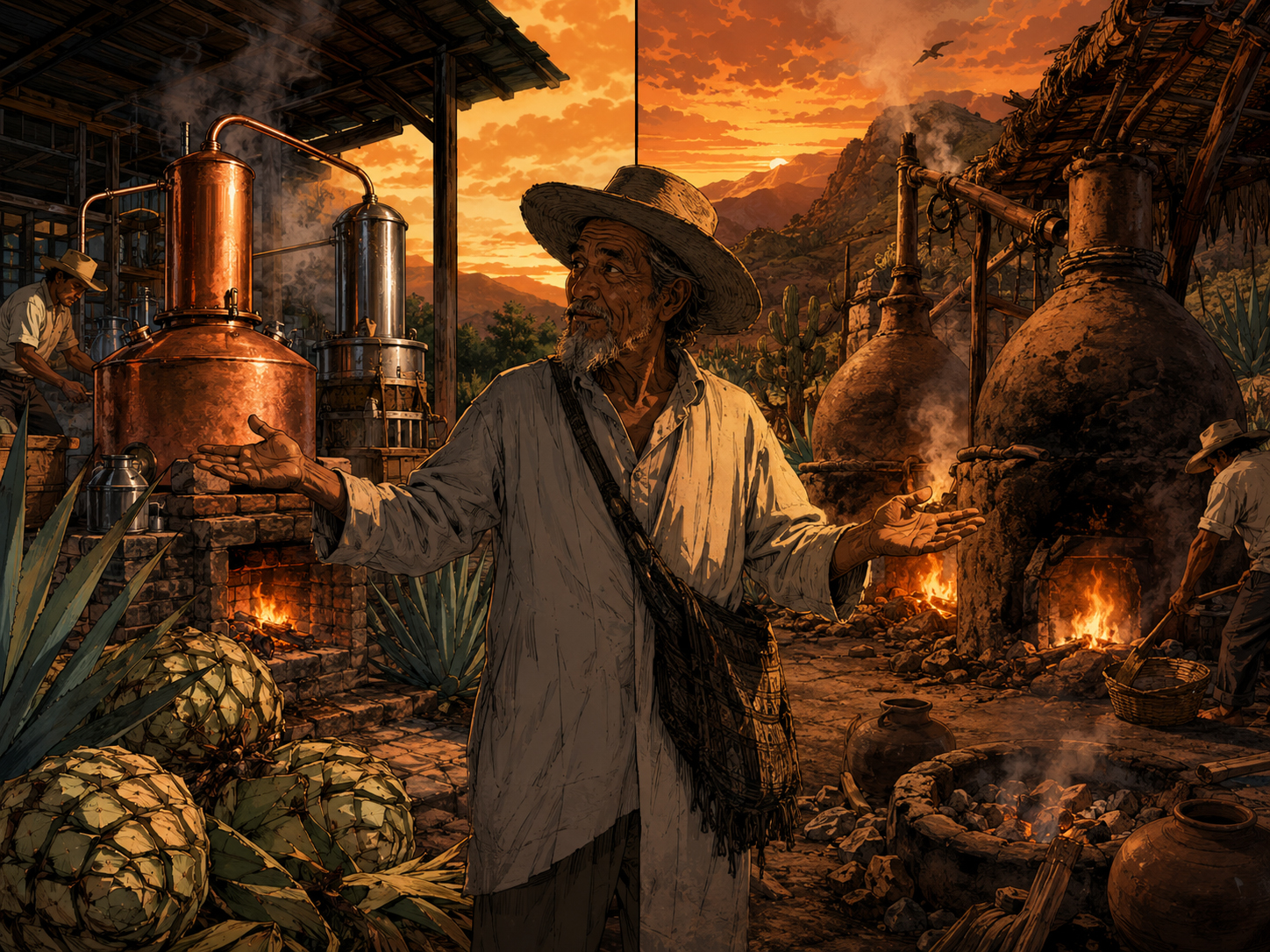
The roasting pit, tahona, fermentation vessel, copper still, clay still, and resting container all speak in the finished mezcal. Some tools create obvious effects. Others are subtle.
The point is not that one tool is always best. The point is that method matters. Clay, copper, wood, stone, earth, and time all leave different kinds of signatures.
| Tool or method | Possible influence | Goblin correction |
|---|---|---|
| Earthen pit oven | Roasted, smoky, earthy, caramelized notes. | Smoke is not the whole story. |
| Tahona | Crushing style and texture of fermentation material. | Iconic does not mean automatic quality. |
| Wood fermentation | Local yeast activity, texture, fruit, funk, acidity. | Fermentation is not idle time. |
| Copper still | Clean, expressive distillate when used skillfully. | Copper is not less “real.” |
| Clay still | Earthy, mineral, textured, or distinctive character. | Clay is not a magic wand. |
Panel 7: The producer completes the equation
Agave Boy now sees the mountain, the agave, the water, the village, the yeasts, and the tools. He thinks he has the full answer.
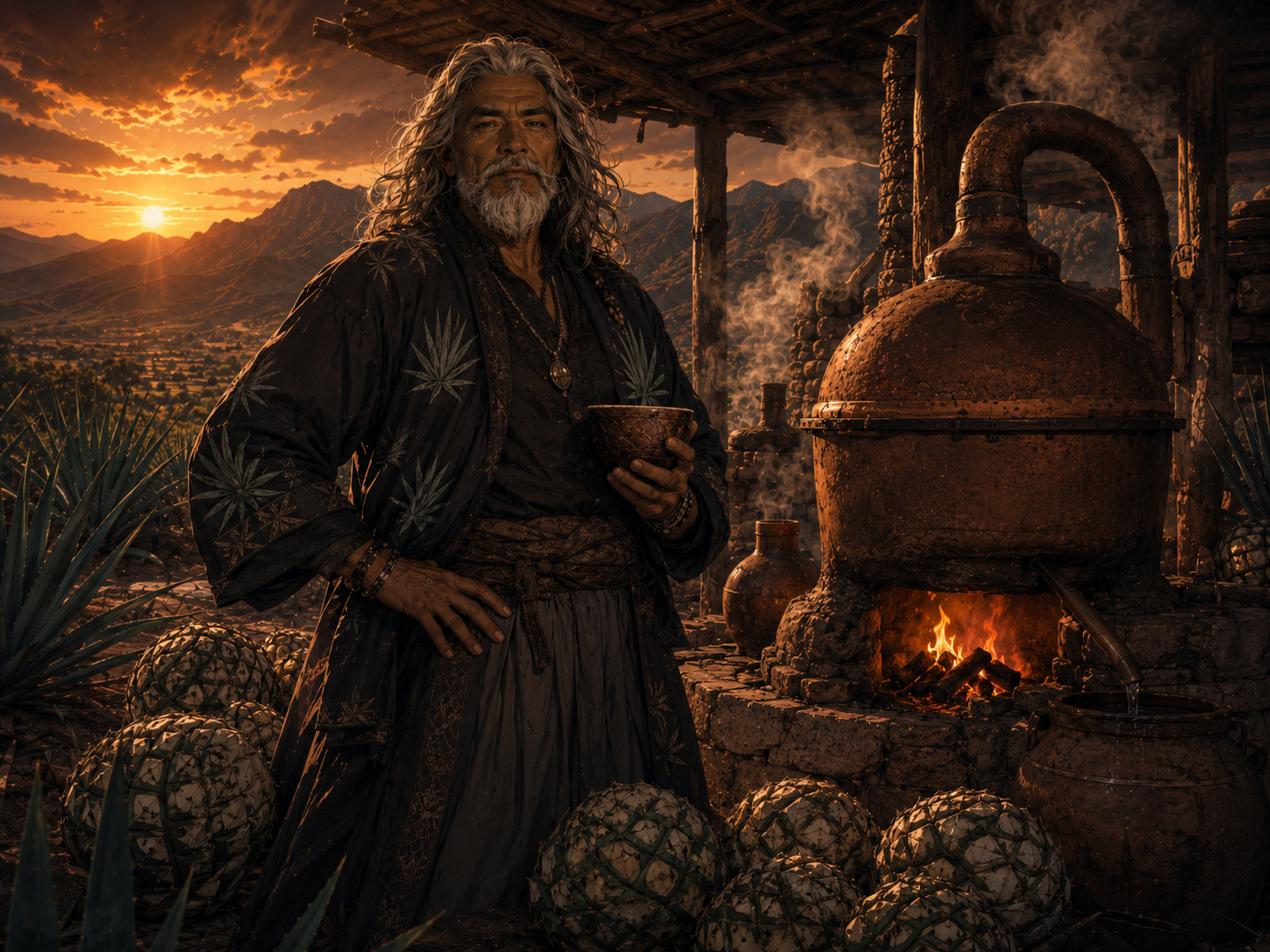
Madame Terroir points to the mezcalero.
“Do not forget the human hand.”
The maker decides when to harvest, how to roast, how to crush, when fermentation is ready, how to run the still, what cuts to keep, how to proof, whether to rest, and when the mezcal is ready to bottle.
Panel 8: The label becomes a map
Madame Terroir hands Agave Boy a label. This time, he reads it differently: agave, town, producer, category, ABV, batch, method notes.
He realizes the label is not just legal information or marketing. A clear label can be a map back to place.
Madame Terroir’s label rule
“A useful label should help the drinker find the mountain, the plant, the maker, and the method.”
What this episode teaches
- Terroir means place matters. Soil, altitude, water, weather, and landscape influence mezcal.
- Village matters. Local tradition and production culture shape the final spirit.
- Fermentation matters. Yeasts, vessels, temperature, and timing can create major flavor differences.
- Tools matter. Ovens, mills, vats, and stills all leave signatures.
- The producer matters most. Human judgment connects plant, place, and process.
- Labels should show place. Region, town, producer, and method make mezcal easier to understand.
Episode 6 tasting homework
Choose two mezcals from different regions or towns. Pour tiny tastes. Compare aroma, texture, smoke, fruit, mineral notes, herbs, heat, and finish. Then read each label again and see how place and method might explain the differences.
Responsible homework rule
Tiny pours only. Hydrate. Eat food. Do not drive after drinking. Madame Terroir does not approve of sloppy field research.
The final panel
At sunset, Agave Boy looks at the mountain, then at the glass. For the first time, he understands they are connected.
Region is not just where mezcal is from. Region is part of what mezcal is saying.
Responsible drinking note
MezcalDaily.com is for adults of legal drinking age. This episode is educational and cultural content about an alcoholic beverage. Sip slowly, hydrate, eat food, and do not drink and drive.