Fast orientation
Start here if mezcal feels smoky, mysterious, expensive, or goblin-coded.
Mezcal is not hard to begin learning. Start with the plant, then the process, then the label. The goal is not to become a snob. The goal is to understand what is in the glass and respect the people, plants, and places behind it.
Legal-age adults only
MezcalDaily.com is educational alcohol content for adults of legal drinking age. Sip slowly, hydrate, eat food, and do not drink and drive.
Basic Mezcal Questions
What is mezcal?
Mezcal is a Mexican agave spirit made by cooking, crushing, fermenting, and distilling agave. It can be smoky, but it can also be fruity, herbal, mineral, earthy, floral, peppery, or savory. Start with What Is Mezcal?.
Is mezcal just smoky tequila?
No. Mezcal and tequila are both agave spirits, but they have different rules, regions, agaves, production traditions, and flavor ranges. Calling mezcal “smoky tequila” makes the Label Goblin clap, and nobody wants that. Read Mezcal vs Tequila.
Is all mezcal smoky?
No. Many mezcals have smoke because of roasting methods, but smoke is only one possible note. A good mezcal can also show agave sweetness, herbs, minerals, fruit, pepper, earth, flowers, or fermentation complexity. See Smoke Myths.
Is mezcal stronger than tequila?
Not automatically. Alcohol strength varies by bottle. Always read the ABV. Higher-proof mezcal can be excellent, but it needs tiny sips and respect. “Read the ABV before the ABV reads you.”
Agave Questions
Is agave a cactus?
No. Agave is not cactus. It simply has dramatic spike energy and a desert-ready wardrobe. Mezcal is made from agave, also called maguey in many Mexican contexts. Read Agave 101.
What is a piña?
The piña is the heart of the agave after the leaves are trimmed away. It can look like a giant pineapple and contains the material that gets cooked, crushed, fermented, and distilled.
What is espadín?
Espadín is one of the most common agaves used for mezcal. It is widely cultivated, beginner-friendly, and absolutely not boring when handled well. Read Espadín Mezcal.
Are rare agaves better?
Not automatically. Tobalá, tepeztate, and other rare or wild agaves can be fascinating, but rarity is not quality by itself. Ask about sourcing, replanting, producer, region, and method. Read Tobalá, Tepeztate & Wild Agave.
Production Questions
How is mezcal made?
The basic path is: grow agave, harvest piñas, roast, crush, ferment, distill, and bottle. Each step changes the final flavor. Read How Mezcal Is Made.
Why is agave roasted?
Roasting softens the agave, develops cooked flavors, and helps prepare sugars for fermentation. Earthen pit roasting can create roasted, earthy, caramelized, and smoky notes.
What is a tahona?
A tahona is a heavy stone wheel used to crush cooked agave. It is iconic, useful, and not just rustic decoration. Tahona Donkey has strong opinions about this. Meet him on Tahona Donkey Character.
What is the difference between artesanal and ancestral mezcal?
These are production-method categories. Ancestral is generally more restrictive and often associated with older traditional tools such as clay-style distillation. Artesanal can also be highly traditional and excellent. Neither word guarantees quality. Read Mezcal Artesanal vs Ancestral.
Label Questions
What should I look for on a mezcal label?
Look for agave, producer, town or region, category, ABV, batch or lot, and method notes. The more useful details, the less room for Label Goblin fog. Read Mezcal Label Guide.
What does ABV mean?
ABV means alcohol by volume. It tells you how strong the mezcal is. A higher ABV can carry aroma and texture, but it also requires smaller sips and careful pacing.
Why does producer name matter?
Mezcal is craft. The maker’s decisions shape harvest, roasting, crushing, fermentation, distillation, cuts, proofing, and bottling. A label that names the producer gives credit and context. Meet Mezcalero Master.
What is the Label Goblin?
The Label Goblin is our tiny fictional villain of vague marketing, missing facts, smoky shortcuts, and “premium mystical ancient” nonsense. Meet him on Label Goblin Character.
Region Questions
Where is mezcal made?
Mezcal is protected by a Mexican Denomination of Origin and can be produced under approved regional rules. The region map can change through official decisions, so treat any website map as educational and verify official status when it matters. Read Mezcal Regions of Mexico.
Is Oaxaca the only mezcal region?
No. Oaxaca is the best-known and hugely important, but it is not the only mezcal region. Other regions have their own agaves, climates, methods, and traditions. Read Oaxaca Mezcal.
What does terroir mean in mezcal?
Terroir means place matters: soil, water, altitude, climate, local yeasts, village methods, tools, agave, and producer decisions can all shape flavor. Meet Madame Terroir.
Tasting Questions
How should a beginner taste mezcal?
Use a small pour. Look, smell gently, take tiny sips, notice texture, name at least three flavor notes, read the label, drink water, and do not rush. See How to Taste Mezcal.
Should mezcal be taken as a shot?
MezcalDaily votes no. Sip slowly. Mezcal often comes from years of plant growth and careful production. Treat it like something to understand, not something to defeat.
What glass should I use?
A small copita, tasting glass, small wine-style glass, or clay cup can work. The important thing is a small pour and careful attention, not fancy glassware theater.
What should mezcal taste like?
It depends. Mezcal can taste roasted, smoky, fruity, green, herbal, earthy, floral, mineral, peppery, savory, or funky. The label and production method help explain why.
Cocktail and Food Questions
Is mezcal good in cocktails?
Yes, when balanced. Mezcal can add smoke, roast, herbs, minerals, fruit, and depth. But it should not turn every cocktail into a fog machine with lime. Read Mezcal Cocktails.
What is the easiest mezcal cocktail?
A mezcal margarita or mezcal paloma is often a good starting point. Keep it balanced: mezcal, citrus, modest sweetness, proper dilution, and restrained garnish.
What food pairs with mezcal?
Citrus, dark chocolate, fresh or salty cheese, grilled food, fruit, roasted nuts, mole-style flavors, and spicy snacks can all work depending on the mezcal. Read Mezcal Food Pairing.
Can cocktails hide alcohol strength?
Yes. Cocktails can make strong drinks taste easy. Drink slowly, hydrate, eat food, and never drive after drinking.
Sustainability Questions
Why does sustainability matter in mezcal?
Agave takes time to grow. Mezcal production also involves land, water, wood, waste, workers, producers, and communities. Today’s bottle should not steal tomorrow’s field. Read Sustainable Mezcal.
What should I ask about wild agave?
Ask whether it was wild, semi-wild, or cultivated; who made it; where it came from; whether replanting or regeneration happens; and whether the label is transparent.
Is common agave more sustainable?
Not automatically, but cultivated agaves like espadín can help reduce pressure on fragile wild populations when grown and managed responsibly. Common does not mean careless.
MezcalDaily Questions
Is MezcalDaily selling alcohol?
No. MezcalDaily.com is an educational and cultural site. It is not a liquor store, not a drinking challenge, and not a substitute for official regulations or professional advice.
Why manga characters?
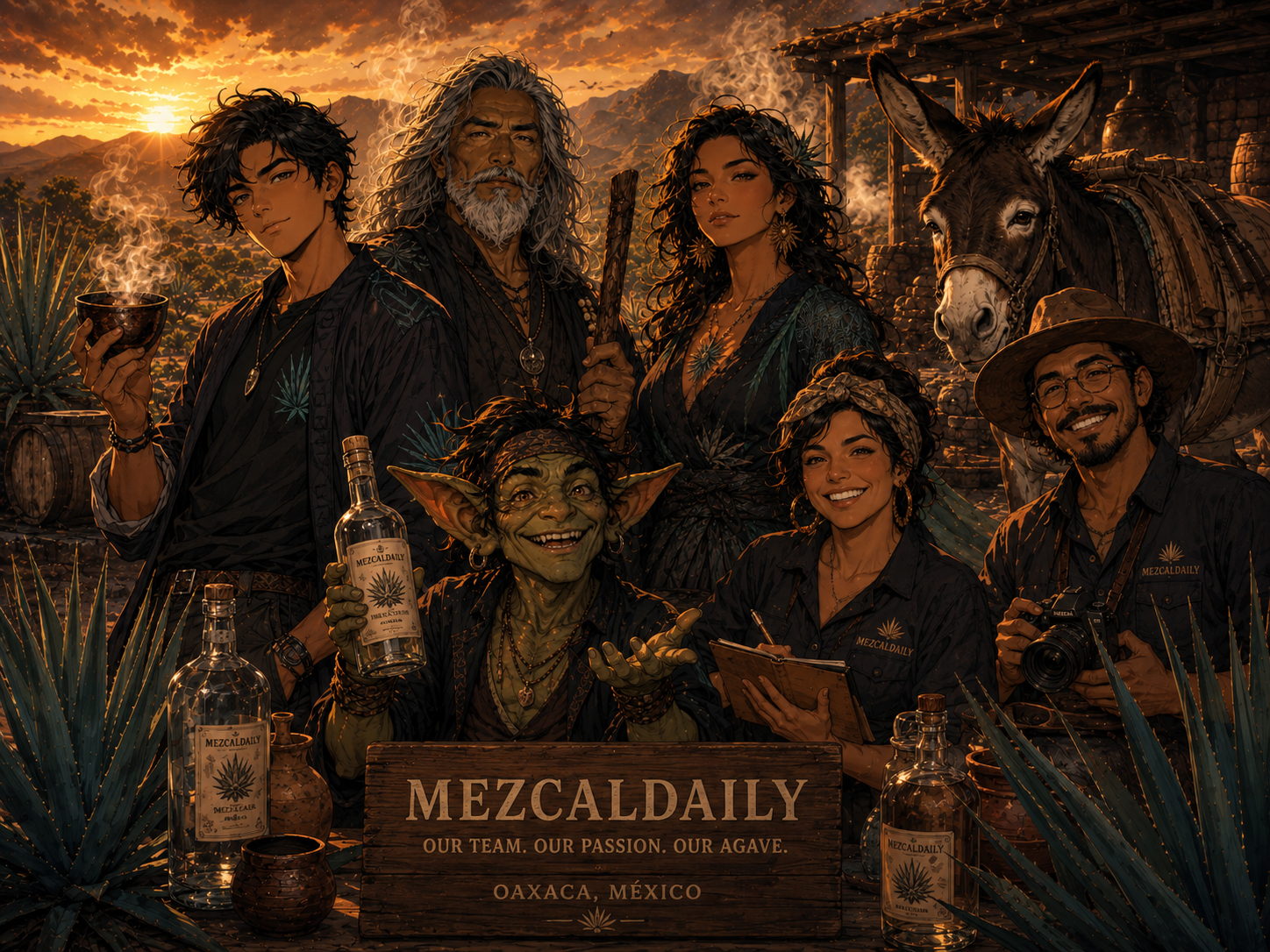
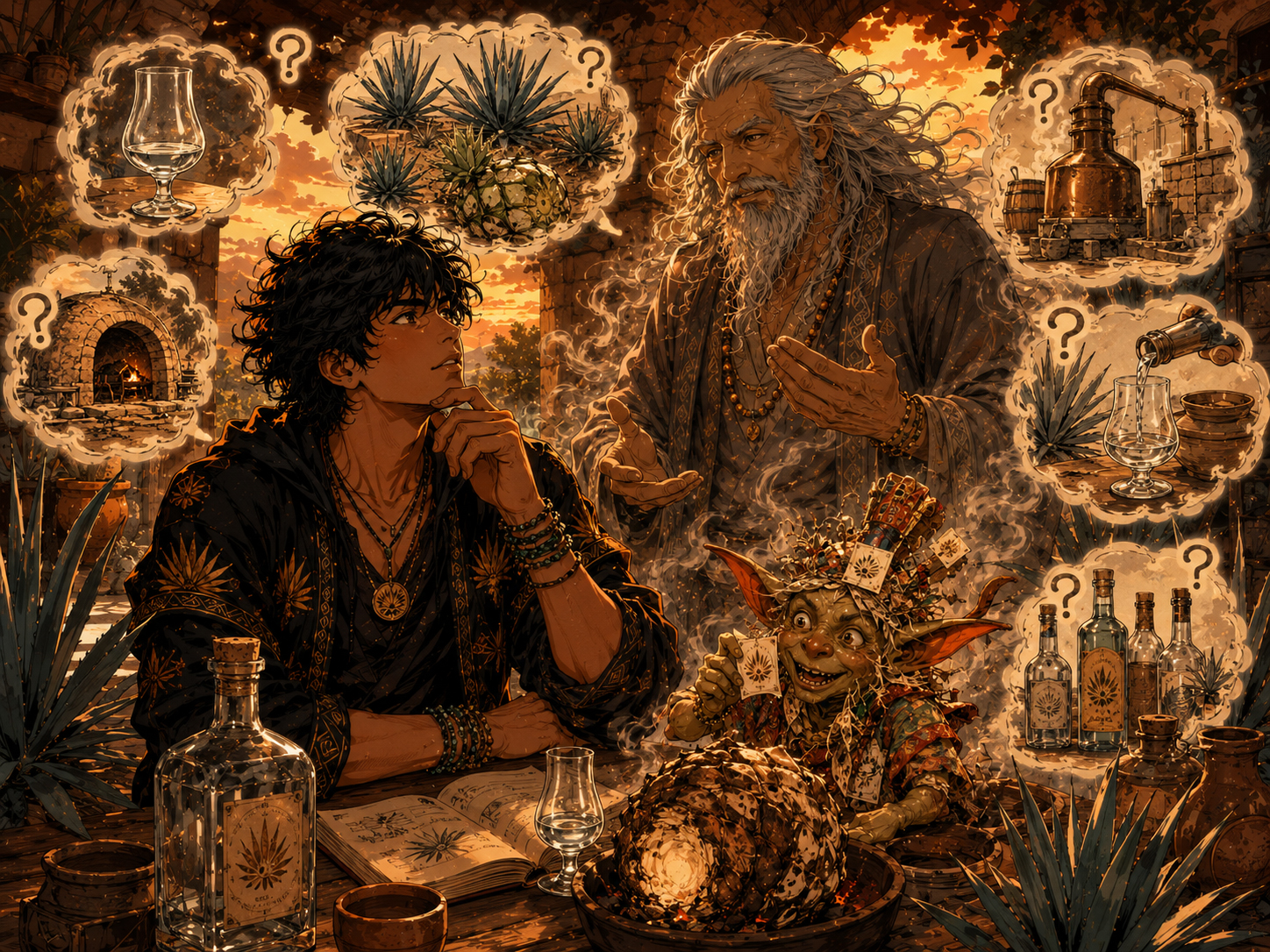
Because mezcal education should be memorable. Agave Boy, Smoke Sensei, Madame Terroir, Tahona Donkey, Mezcalero Master, and the Label Goblin make complex ideas easier to remember. The jokes are about confusion and bad marketing — not the makers or traditions.
Where should I start?
Start with What Is Mezcal?, then read Agave 101, How Mezcal Is Made, and Mezcal Label Guide. Then let the goblins try their worst.