The fast answer
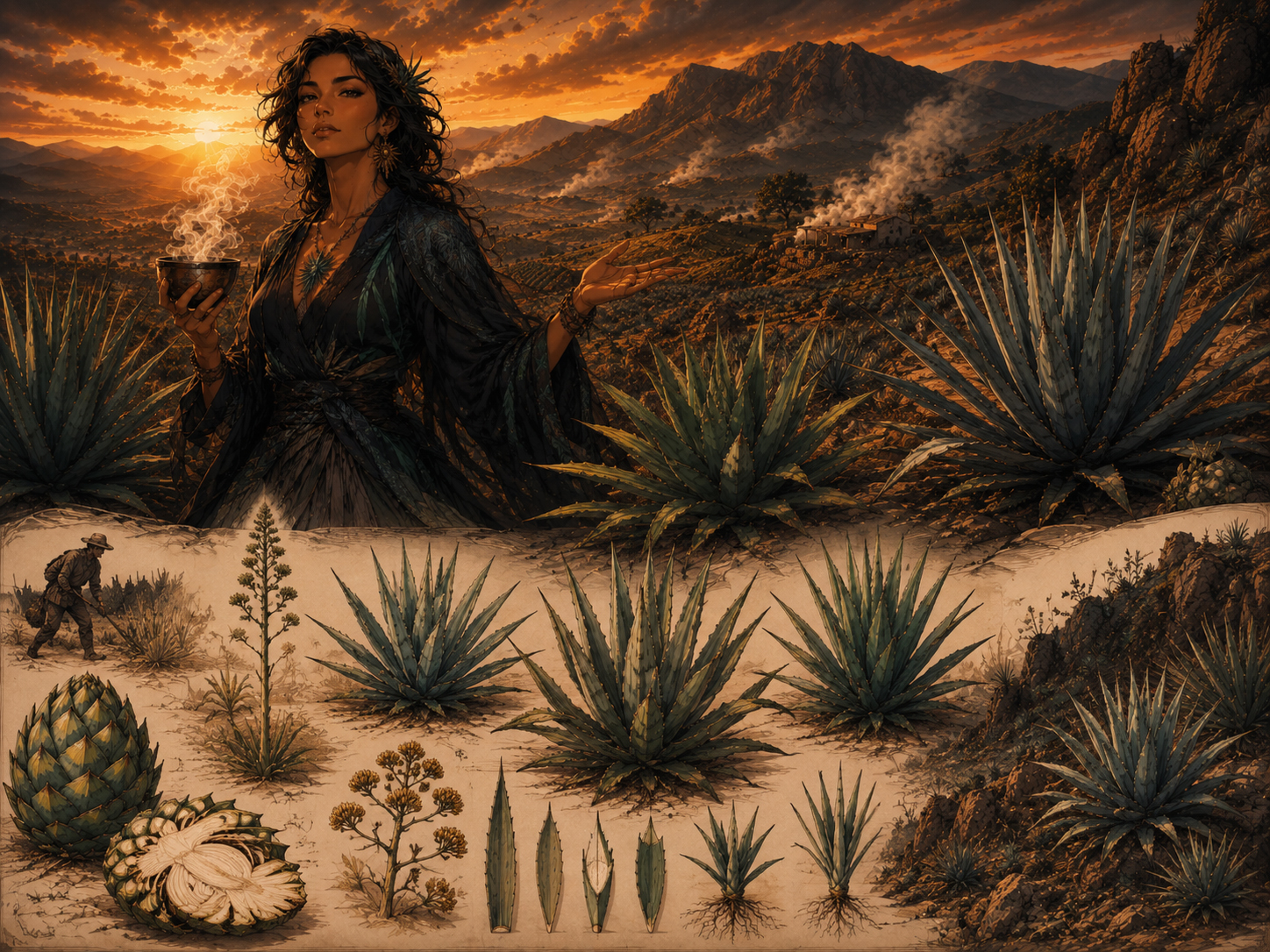
Agave is the plant that gives mezcal its soul.
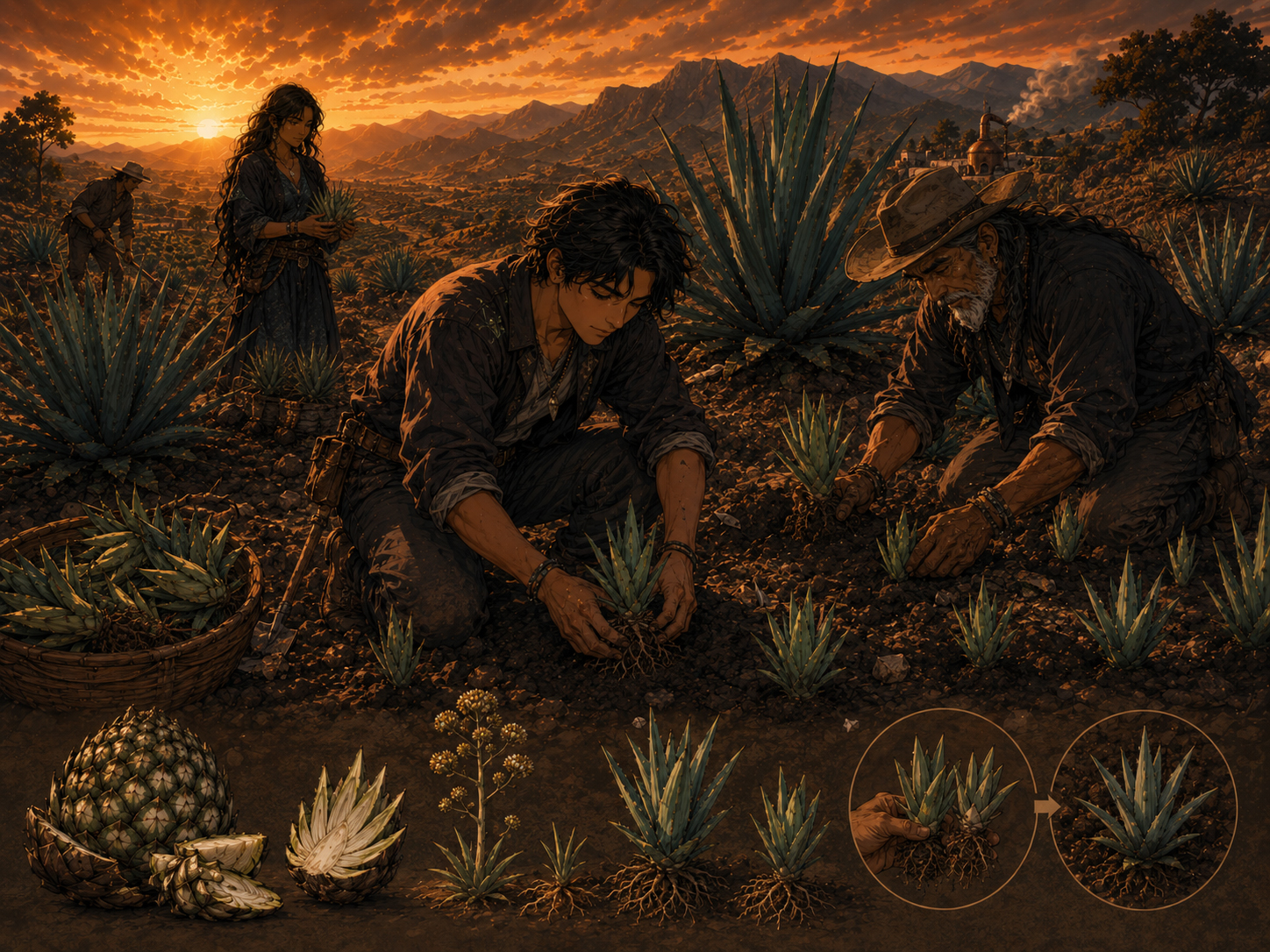
Mezcal is made from agave, also commonly called maguey in many Mexican contexts. The plant stores fermentable material in its heart, called the piña. After years of growth, that piña can be harvested, cooked, crushed, fermented, and distilled.
Agave is not just an ingredient. It affects flavor, texture, aroma, sustainability, farming, cost, rarity, and the entire personality of the mezcal. Ignore the plant and the Label Goblin wins.
Agave Boy’s first botanical panic
“Wait — mezcal is not made from smoke?” Correct. Smoke is a production note. Agave is the source. The plant is the main character.
Is agave a cactus?
No. Agave is often mistaken for cactus because it has dramatic spiky leaves and a desert-ready attitude. But agave is not a cactus. It belongs to a different plant group. It merely dresses like it might challenge a cactus to a duel at sunset.
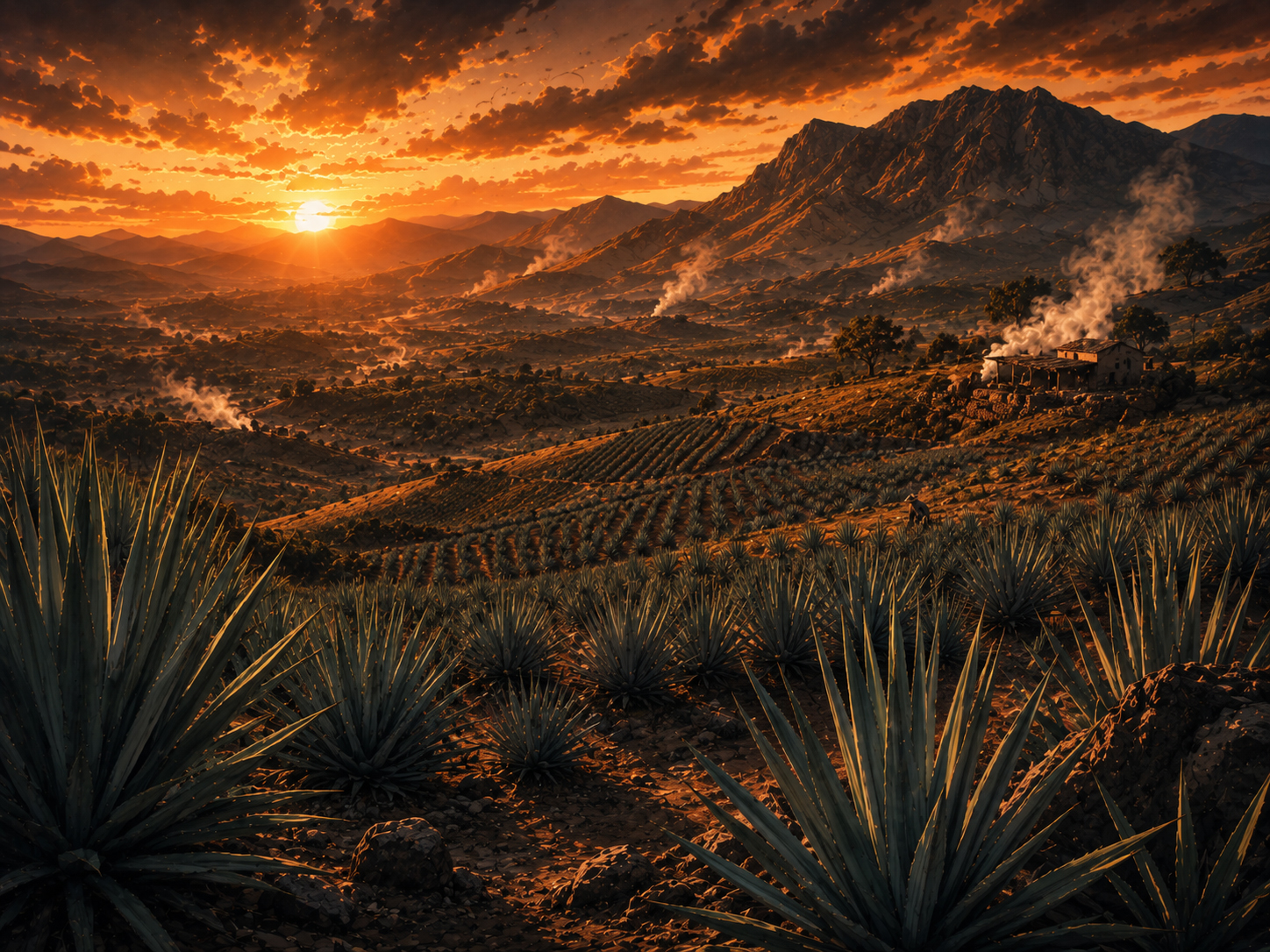
The important mezcal point is that agave grows slowly, stores sugars, and develops character from variety, place, climate, water, soil, maturity, and cultivation.
What part of the agave is used?
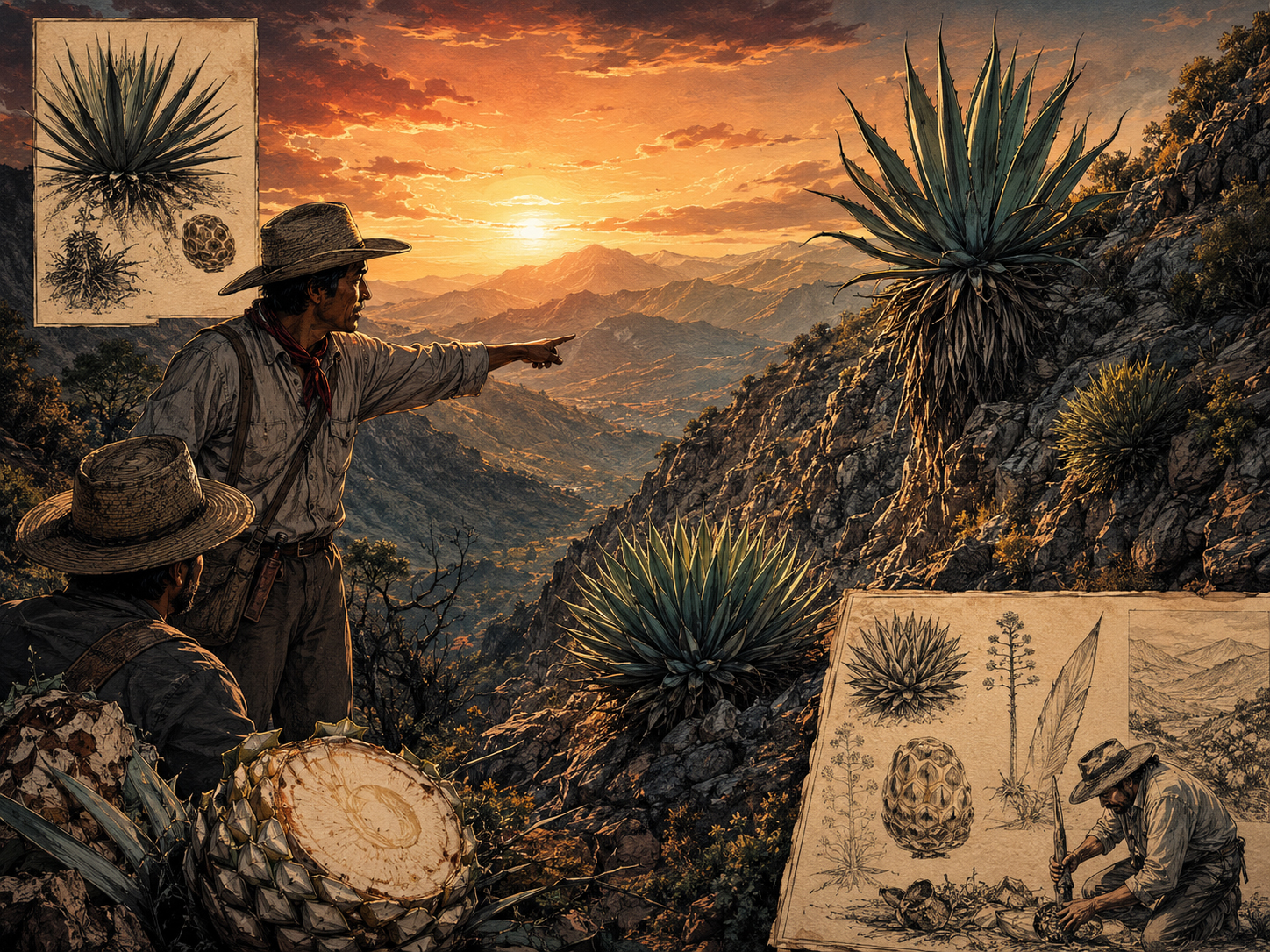
The central heart of the plant is used. Once the long leaves are trimmed away, the remaining heart is called the piña because it can look like a giant pineapple. A piña may be heavy, dense, and full of potential fermentable sugars.
| Agave term | Meaning | MezcalDaily translation |
|---|---|---|
| Agave / Maguey | The plant used to make mezcal. | The spiky hero with long-term plans. |
| Piña | The harvested heart of the agave. | A giant sugar battery wearing pineapple armor. |
| Pencas | The long leaves cut away during harvest. | The plant’s dramatic swords. |
| Quiote | The flowering stalk produced near the end of the plant’s life cycle. | The agave’s final “look at me” tower. |
Why does agave maturity matter?
Agave needs time to mature. The exact number of years depends on the species, growing conditions, and farming or wild environment. Harvest too early and the plant may not have developed enough sugars or character. Wait too long and other issues can affect yield or quality.
This is why mezcal is not just “make more tomorrow.” The plant’s timeline matters. A bottle can disappear in one party. An agave may take years to replace. This is the part where Sustainable Mezcal Sensei clears his throat loudly.
What is espadín?
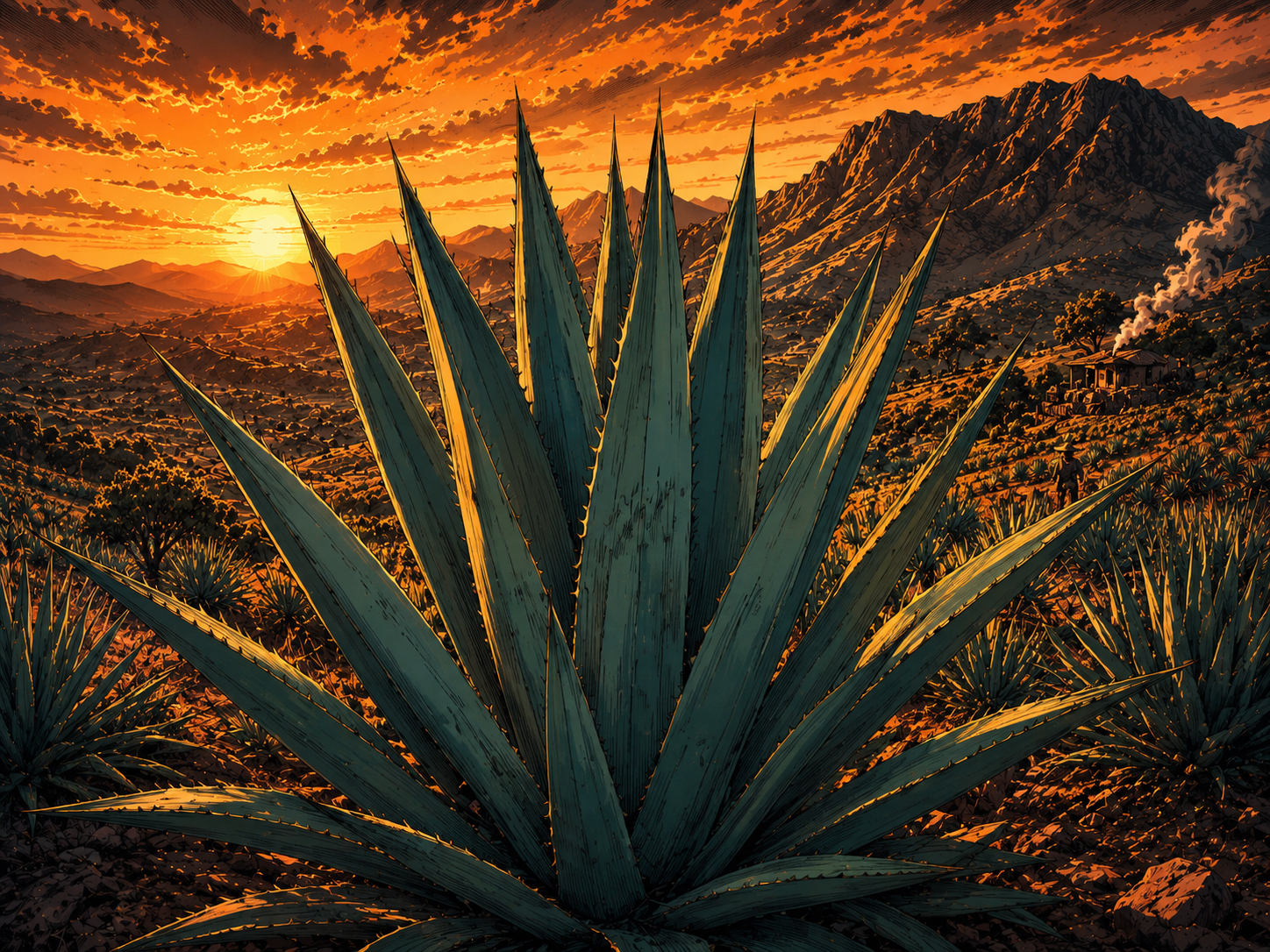
Espadín is one of the most common agaves used for mezcal. It is widely cultivated, relatively practical compared with slower or rarer agaves, and often serves as the starting point for many mezcal drinkers.
Espadín is not “basic” in a bad way. A great espadín mezcal can be beautiful, expressive, balanced, and deeply satisfying. Common does not mean boring. It means the plant showed up to work.
Espadín note
If you are new to mezcal, espadín is often a good first classroom. Not because it is simple, but because it is easier to find and compare.
What about tobalá, tepeztate, and wild agaves?
Some agaves are discussed as rare, wild, semi-wild, slow-growing, or especially distinctive. Names like tobalá and tepeztate often appear in mezcal conversations because people associate them with unique flavors and special production stories.
But rare does not automatically mean better. Rare can mean fragile, expensive, slow-growing, or vulnerable to overharvesting. A responsible mezcal drinker should ask: Was it harvested responsibly? Was it replanted? Is the producer treating the landscape well?
Does agave variety change flavor?
Yes. Agave variety can influence flavor, but it is not the only factor. Place, cooking, fermentation, still type, water, climate, harvest timing, and producer choices all matter.
Think of agave variety as the lead singer. Important, recognizable, and often dramatic — but still backed by the whole band.
| Flavor clue | Possible agave/production connection | Goblin warning |
|---|---|---|
| Green or herbal | Can come from agave character, fermentation, or production style. | Do not call everything “grass” like a lawnmower critic. |
| Mineral | May relate to place, water, still, or overall style. | “Mineral” does not mean “licking a driveway.” |
| Fruit or tropical notes | Can emerge from agave, fermentation, and distillation choices. | No, there may not be actual mango in it. |
| Smoke or roast | Often connected to cooking method and roasting conditions. | Smoke is not the entire personality. |
Why sustainability matters
Mezcal demand can create pressure on agave plants, land, water, wood, and local communities. Sustainability is not a decorative word to sprinkle on a bottle. It means thinking about replanting, biodiversity, fair production, responsible harvesting, waste, fuel use, and long-term community health.
Wild agaves deserve special care. If everyone wants rare agave but nobody supports responsible regeneration, then today’s excitement becomes tomorrow’s empty hillside.
Madame Terroir says:
“A beautiful mezcal should not leave an ugly field behind.”
What should a beginner remember?
- Agave is not cactus. It is its own dramatic plant hero.
- The piña is the heart. That is the part cooked for mezcal.
- Espadín is common, not inferior. Common can still be excellent.
- Rare agave needs respect. Ask about sourcing and regeneration.
- Flavor comes from the whole process. Plant, place, maker, method, and time all matter.
The MezcalDaily agave definition
Agave is the slow-growing, sugar-storing, sword-leafed plant that gives mezcal its body, memory, and troublemaking charm.
Responsible drinking note
MezcalDaily.com is for adults of legal drinking age. Learning about agave should increase respect, not speed. Sip slowly, hydrate, eat food, and do not drink and drive.