The short version
Mezcal is made by transforming agave into alcohol, then concentrating that alcohol through distillation.
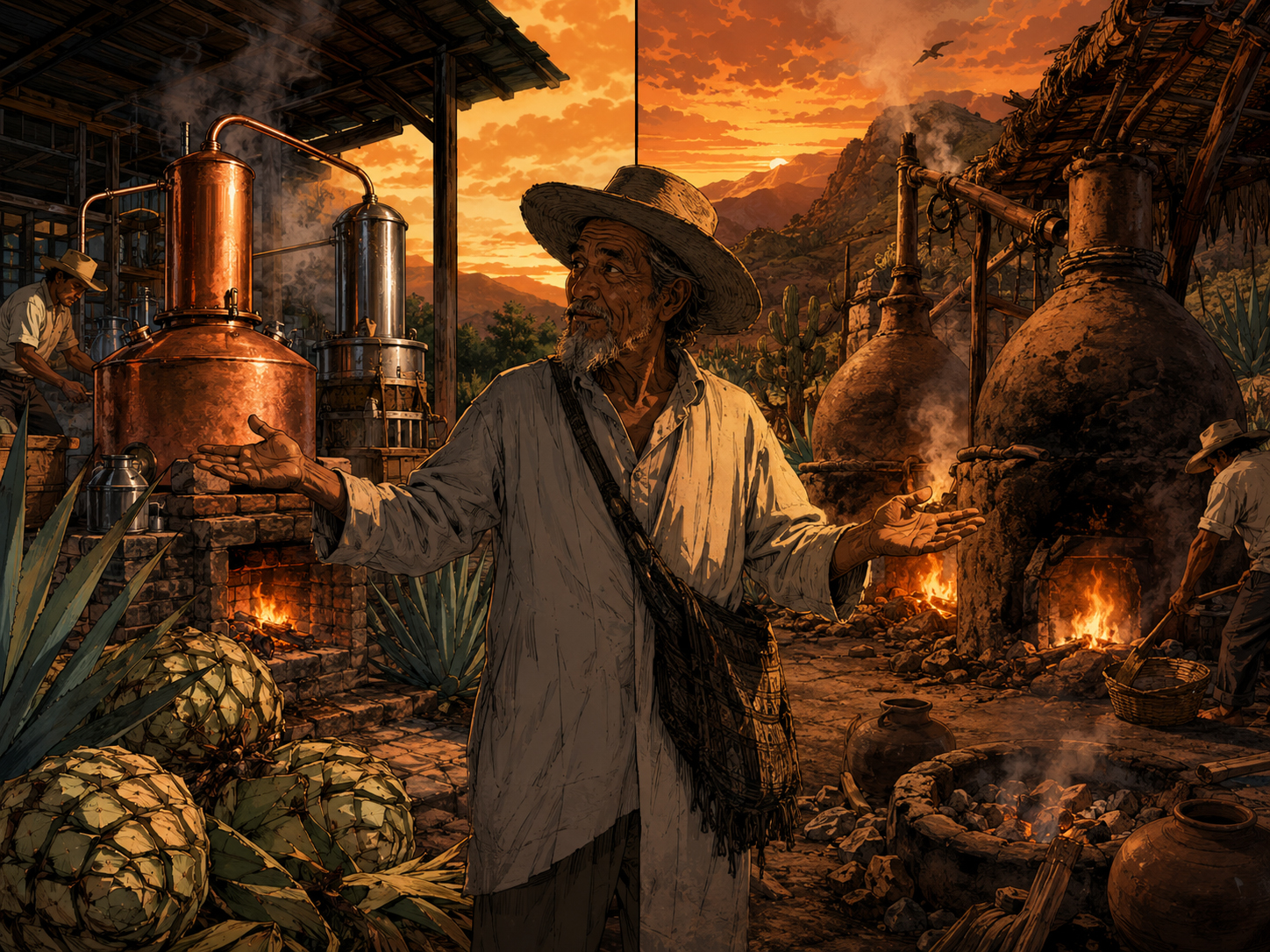
The basic process is simple to describe and difficult to master: mature agave is harvested, cooked, crushed, fermented, distilled, and bottled. Every step changes the final flavor. Every shortcut leaves fingerprints.
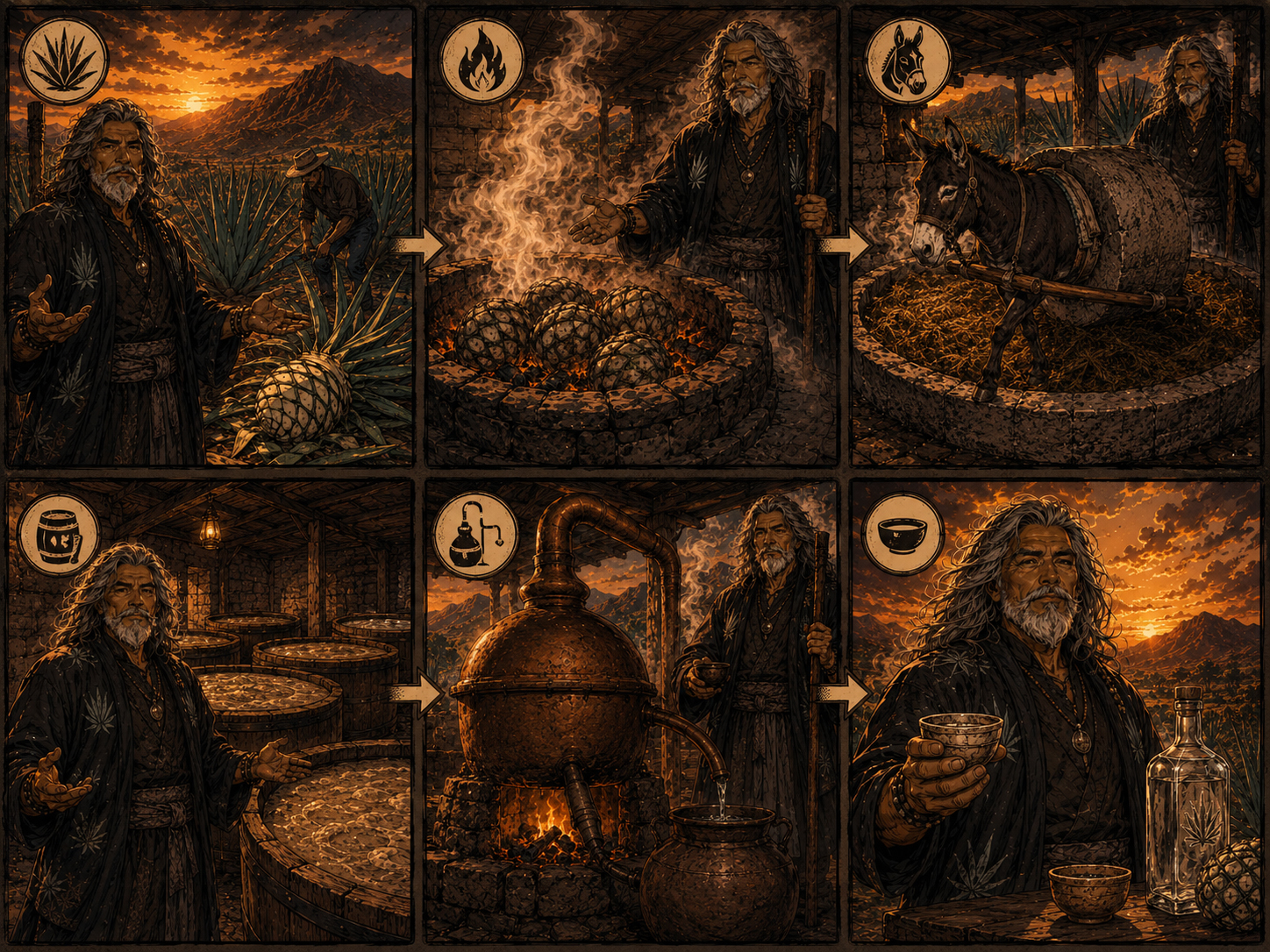
Agave Boy’s production map
Plant → harvest → roast → crush → ferment → distill → bottle. That is the path. The flavor comes from how each step is done, where it is done, and who is doing it.
Step 1: Grow the agave
Mezcal starts long before the oven. Agave plants can take years to mature, depending on the variety, climate, soil, altitude, and farming conditions. This is one reason mezcal should be treated with respect. You are not drinking something that appeared overnight because a bartender shook a tin dramatically.
Some agaves are cultivated, such as espadín, while others may be semi-wild or wild. Slow-growing agaves can be especially vulnerable to overharvesting, which is why sustainability, replanting, and responsible sourcing matter.
Step 2: Harvest the piñas
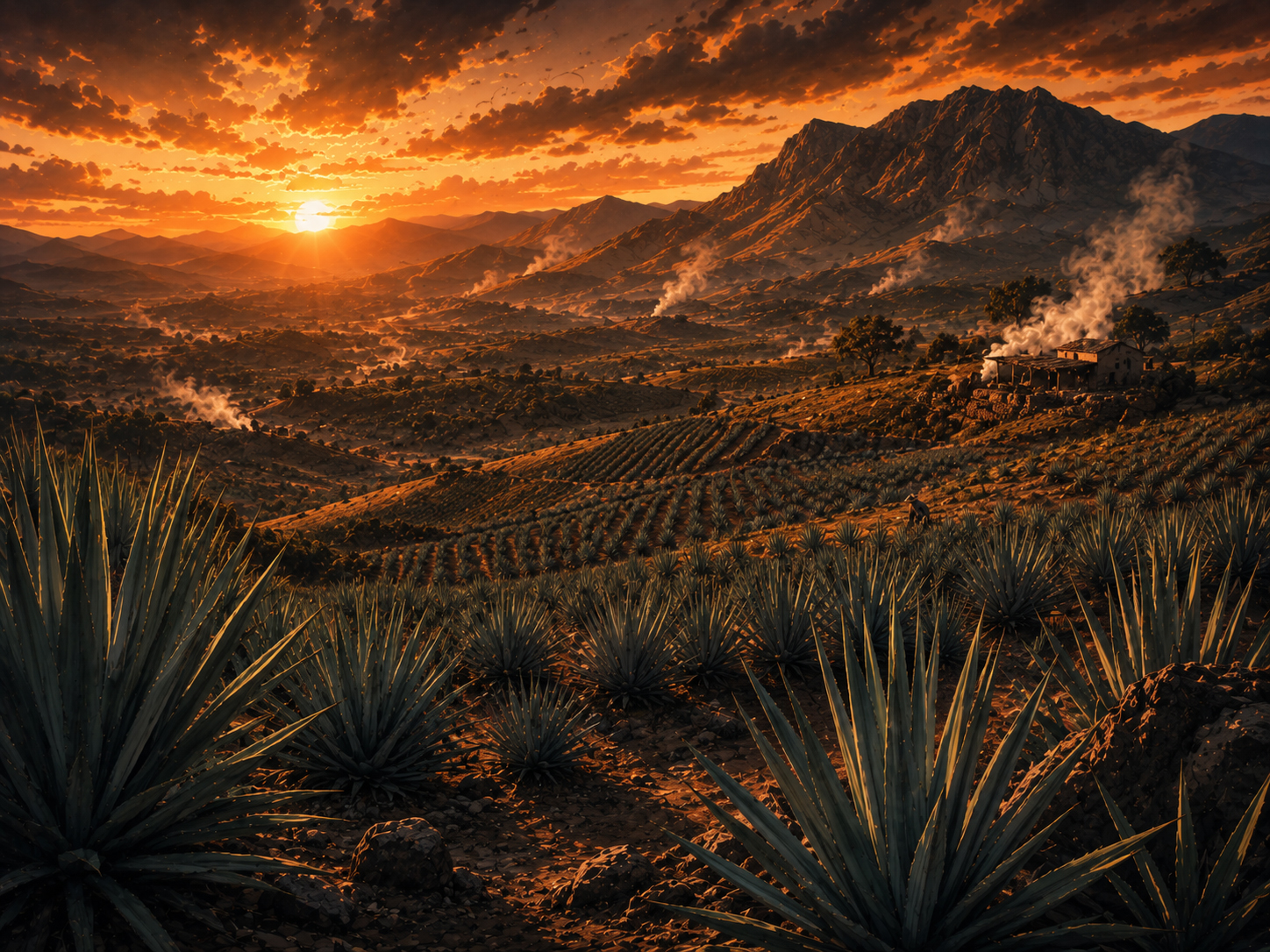
When agave is mature, the leaves are cut away to reveal the heart of the plant, called the piña. It is called that because it can resemble a giant pineapple. A very serious giant pineapple with a destiny.
Harvesting is skilled physical work. The person cutting the agave has to know when the plant is ready and how to prepare it for cooking. This is not decorative labor. This is where the bottle’s story begins.
| Term | Meaning | Why it matters |
|---|---|---|
| Agave / Maguey | The plant used to make mezcal. | Different agaves can produce different aromas, textures, and flavors. |
| Piña | The heart of the harvested agave. | This is the sugar-rich material that gets cooked and fermented. |
| Jimador / harvest worker | The skilled person who harvests and trims agave. | Harvest timing and technique affect quality and yield. |
Step 3: Roast the agave
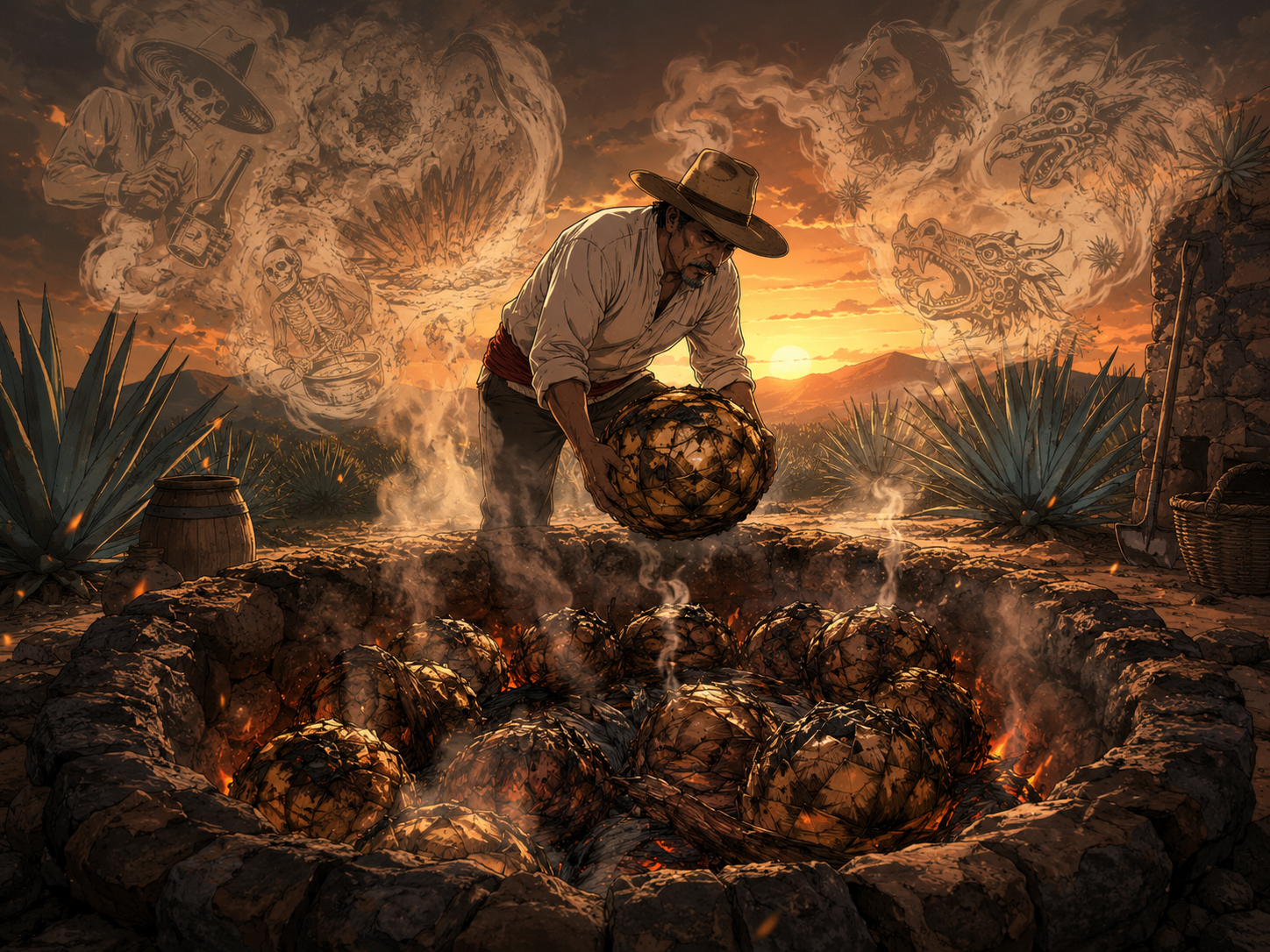
Many traditional mezcals are made by roasting agave in an earthen pit oven. Hot stones, wood, agave fibers, earth, and time help transform the piñas. The heat converts complex carbohydrates into fermentable sugars and creates roasted flavors.
This is also where smoke can enter the story. But smoke is not the entire story. Roasting can create sweetness, earthiness, caramelized notes, cooked fruit, spice, and roasted agave depth. Smoke is the dramatic narrator, not the whole book.
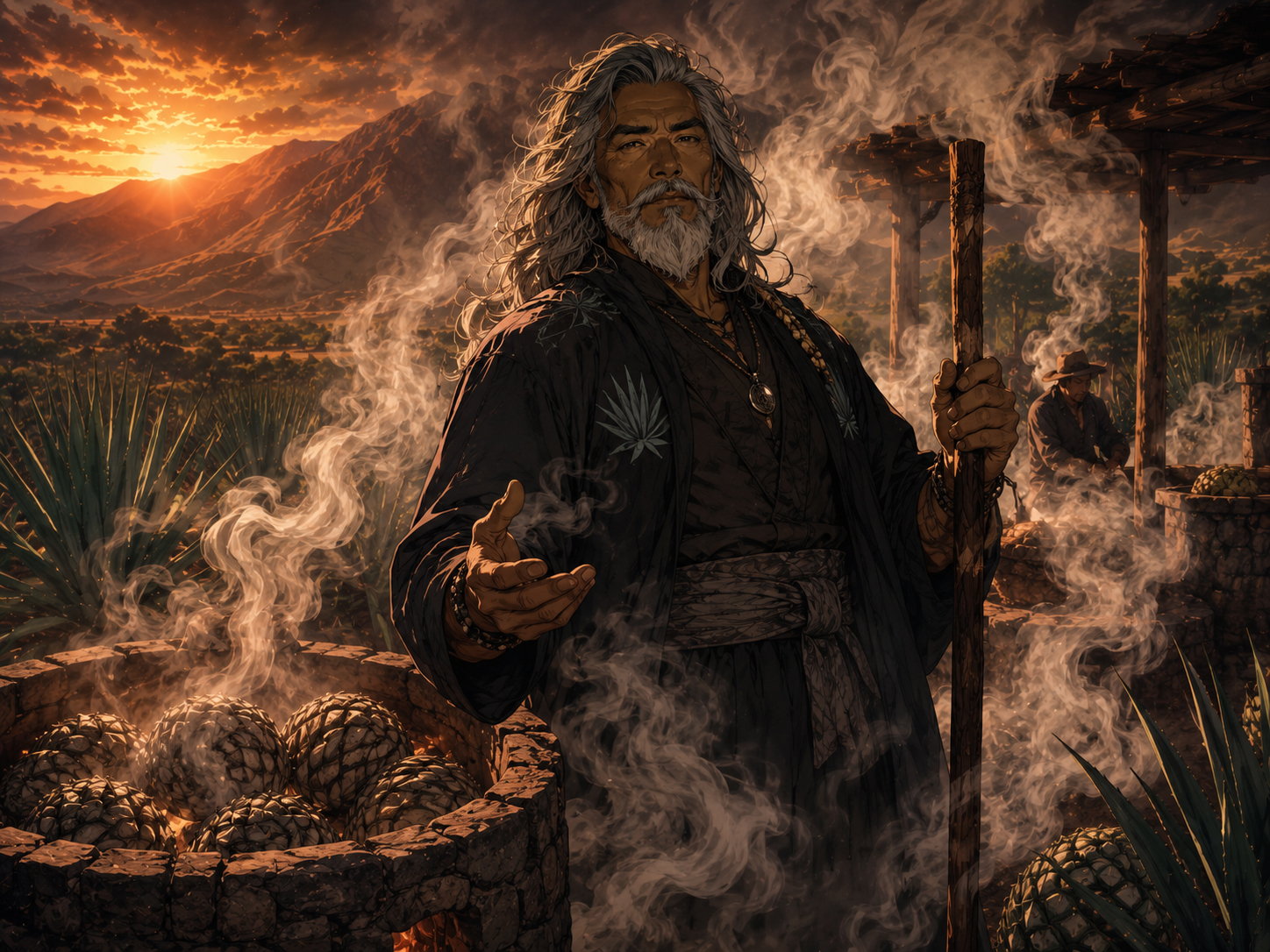
Smoke Sensei says:
“A roasting pit is not a barbecue gimmick. It is heat, patience, material, tradition, and timing. Respect the pit, or the pit will roast your confidence.”
Step 4: Crush the cooked agave
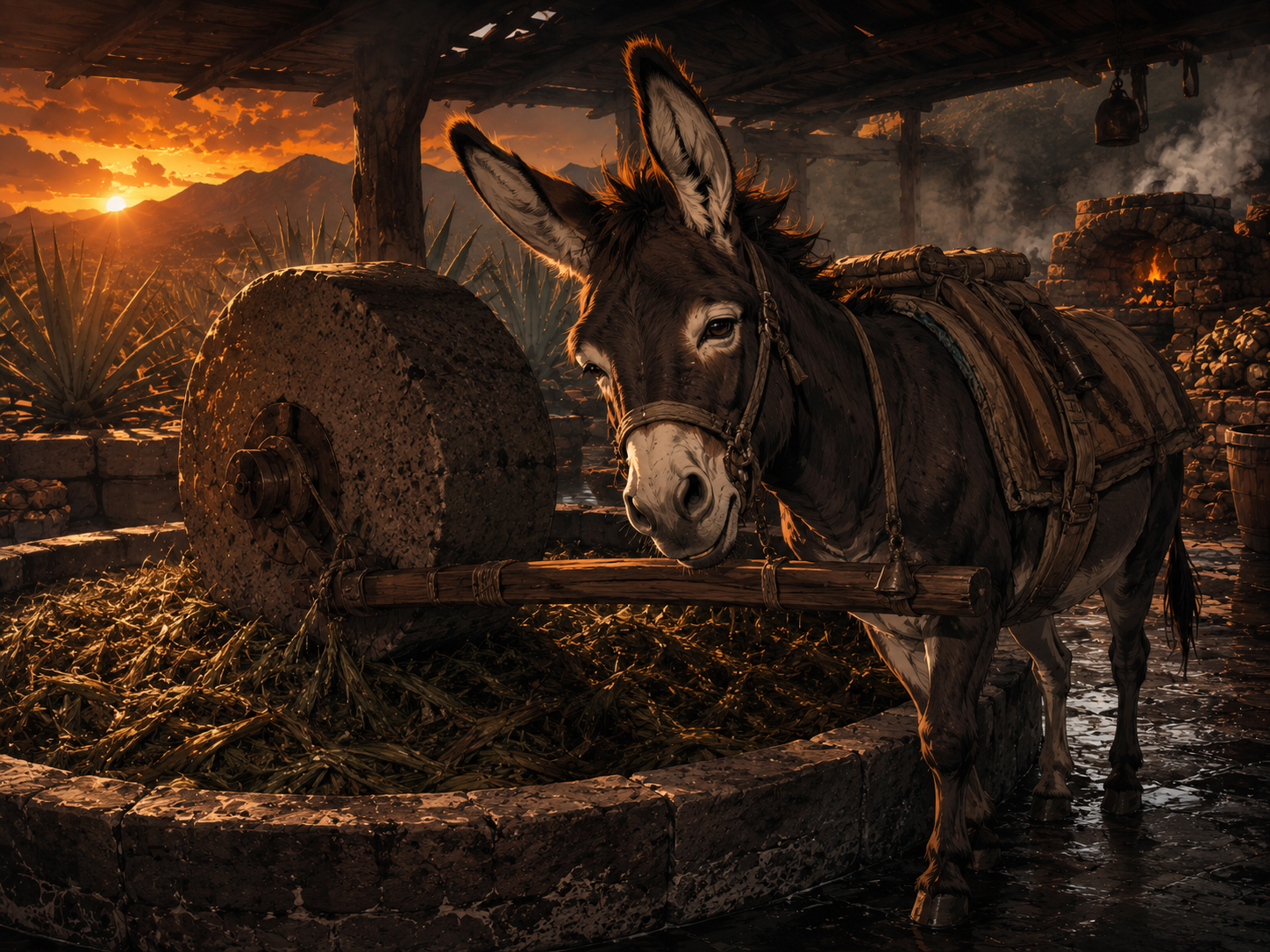
After cooking, the softened agave needs to be crushed so its sugars and juices can be available for fermentation. Some producers use a heavy stone wheel called a tahona. Others use mechanical mills, hand tools, or other crushing methods.
The tahona is iconic because it looks beautiful, old-world, and slightly like a fitness program invented by a mountain. Sometimes it is pulled by an animal. Sometimes it is powered mechanically. Either way, it turns cooked agave into fermentable material.
Step 5: Ferment the agave
The crushed agave, juices, fibers, and water are placed into fermentation vessels. Fermentation is where yeasts convert sugars into alcohol. It is also where many aromas begin to develop.
Fermentation can happen in wooden vats, stone, clay, hides, or other vessels, depending on the producer and tradition. Local yeasts, water, temperature, vessel material, and time all influence the final character.
Fermentation is where agave stops being cooked plant material and starts becoming a spirit with opinions.
Step 6: Distill the fermented liquid
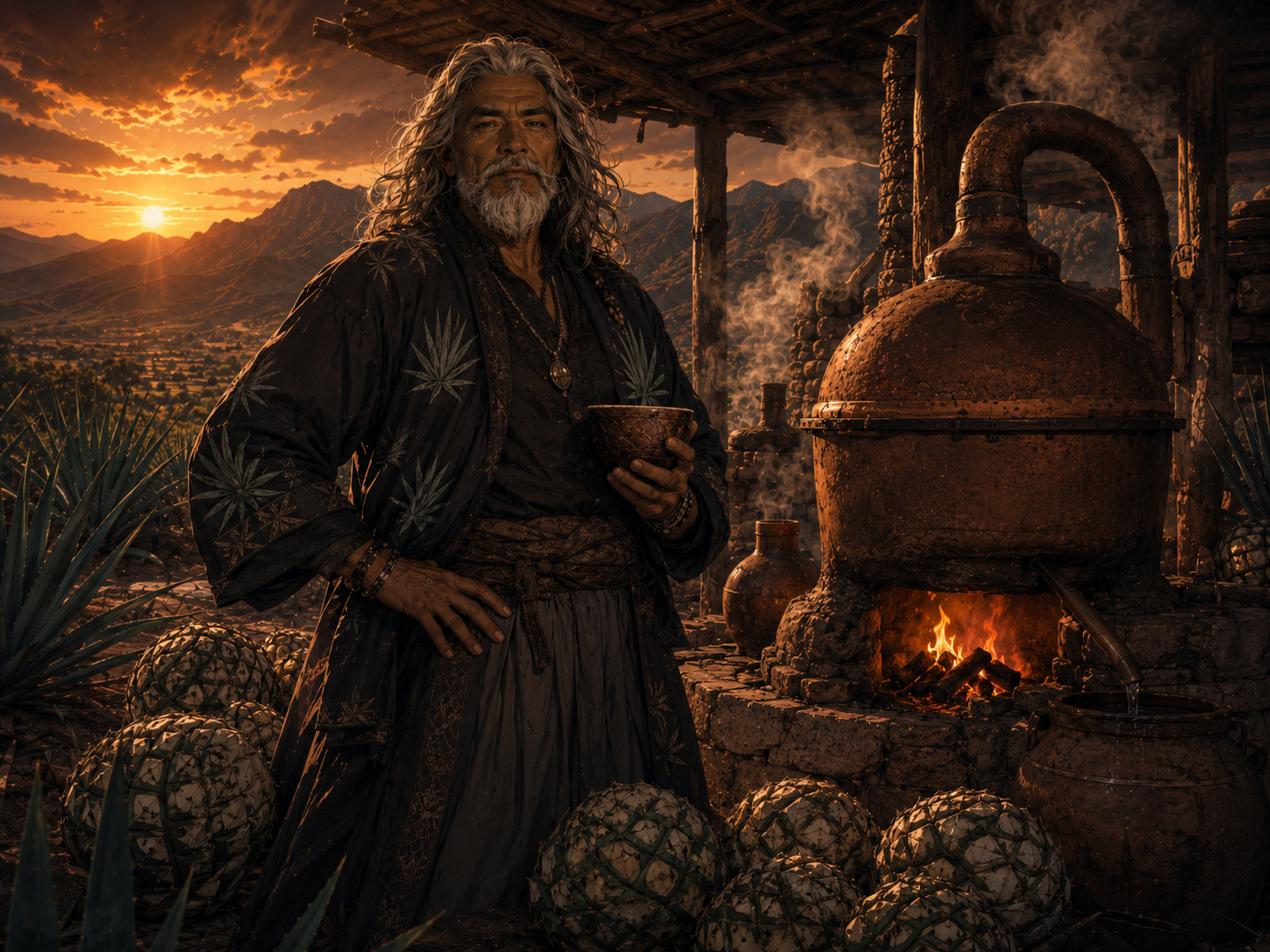
Distillation concentrates alcohol and aroma compounds from the fermented agave. Mezcal may be distilled in copper stills, clay pot stills, or other still types, depending on tradition, category, and producer.
The still matters. Clay can contribute a different texture and character than copper. Cut points matter too: the maker decides what portions of the distillate are kept, adjusted, blended, or rejected. This is craft, judgment, and experience.
Step 7: Rest, adjust, or bottle
After distillation, mezcal may be adjusted to bottling strength, rested, or bottled. Some mezcals are unaged and meant to show agave and production character clearly. Others may be rested in glass, clay, wood, or other containers depending on style.
Aging in wood can add color, vanilla, spice, sweetness, and roundness, but it can also cover the agave. Wood is a tool, not a trophy. If the barrel is louder than the plant, Madame Terroir raises one eyebrow and the room gets quiet.
Step 8: Read the label
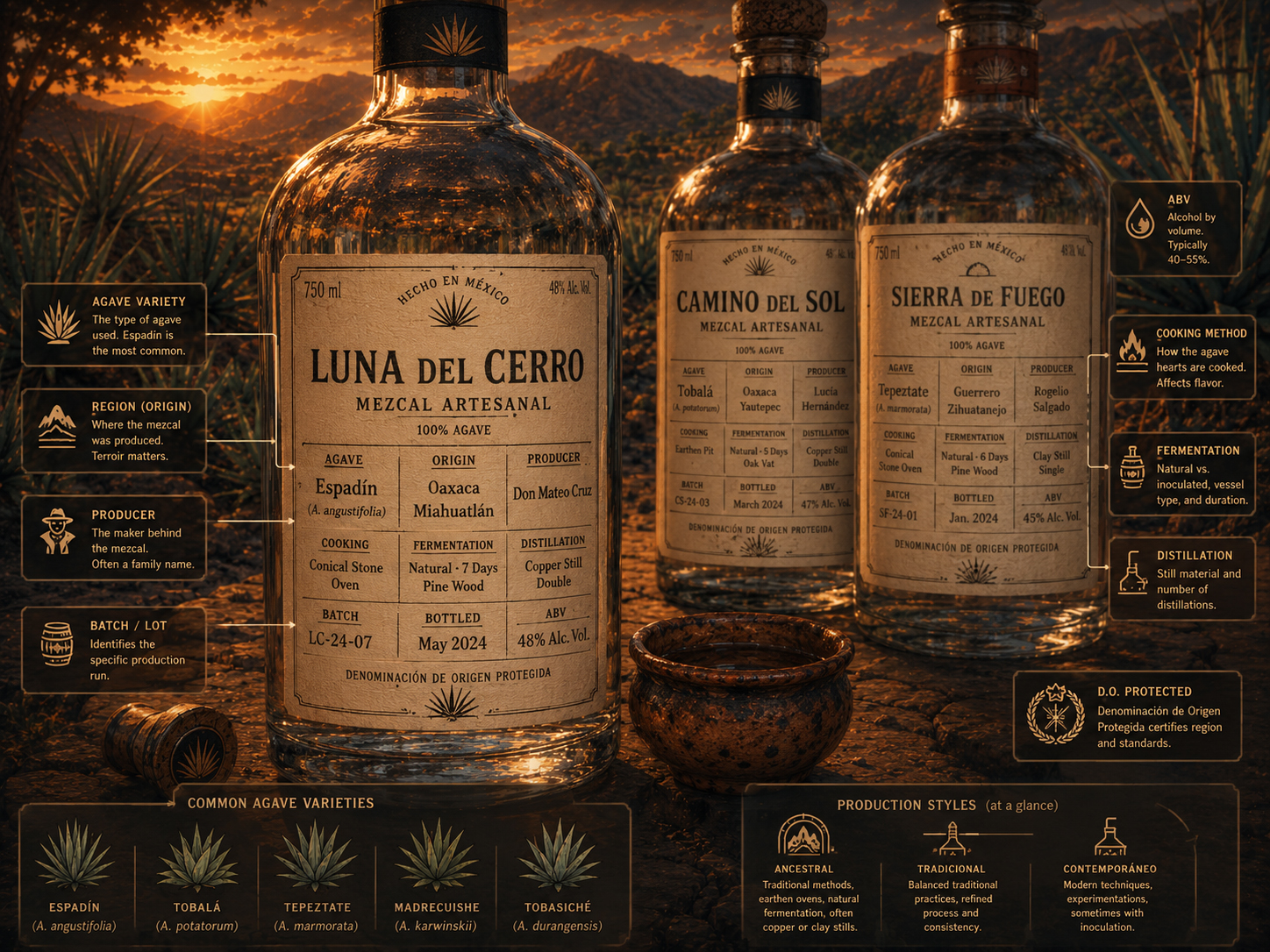
A useful label can tell you what agave was used, where it was made, who made it, the alcohol strength, the batch, and sometimes the method. Labels help connect the finished bottle back to plant, place, and maker.
The Label Goblin hates clear labels because clear labels reduce confusion. This is why we support clear labels.
How production choices affect flavor
| Production choice | Possible effect | Goblin translation |
|---|---|---|
| Agave variety | Can influence sweetness, herbal notes, minerality, texture, and aroma. | “The plant has a personality.” |
| Roasting method | Can add cooked, earthy, caramelized, smoky, or roasted flavors. | “Fire wrote a poem.” |
| Crushing method | Can affect extraction, texture, and fermentation material. | “The donkey has entered production.” |
| Fermentation | Can create fruit, funk, acidity, floral notes, and complexity. | “Tiny yeasts are doing unpaid theater.” |
| Still type | Can shape texture, mineral notes, and overall character. | “Copper and clay have different accents.” |
Why handmade does not mean careless
Traditional or artisanal production can look rustic, but that does not mean random. Good mezcal requires control, timing, sanitation, judgment, and deep knowledge. The tools may be old. The thinking is not sloppy.
A small producer may make decisions by smell, touch, taste, experience, weather, material, and tradition. That kind of knowledge is not primitive. It is sophisticated in a different language than factory spreadsheets.
The whole process in one sentence
Mezcal is agave transformed by fire, crushed by labor, awakened by fermentation, clarified by distillation, and signed by place.
Responsible drinking note
MezcalDaily.com is for adults of legal drinking age. Taste slowly, hydrate, eat food, and do not drink and drive. Production knowledge is for appreciation, not for turning mezcal into a stunt.