The fast answer
Tequila is not just mezcal in a fancy jacket. Mezcal is not just smoky tequila.
Both spirits come from agave. That is the family connection. But they differ in permitted agave, production rules, regions, cooking methods, flavor expectations, and cultural identity.
Agave Boy’s courtroom summary
Tequila and mezcal are related, but each has its own rulebook. The Label Goblin keeps trying to simplify everything into “one is smoky,” but the court rejects this nonsense.
The basic difference
| Question | Mezcal | Tequila |
|---|---|---|
| Plant | Made from agave, with multiple permitted agave types depending on rules and region. | Made from blue agave under tequila-specific rules. |
| Region | Associated with several Mexican states and many local traditions. | Associated especially with Jalisco and other tequila-approved areas. |
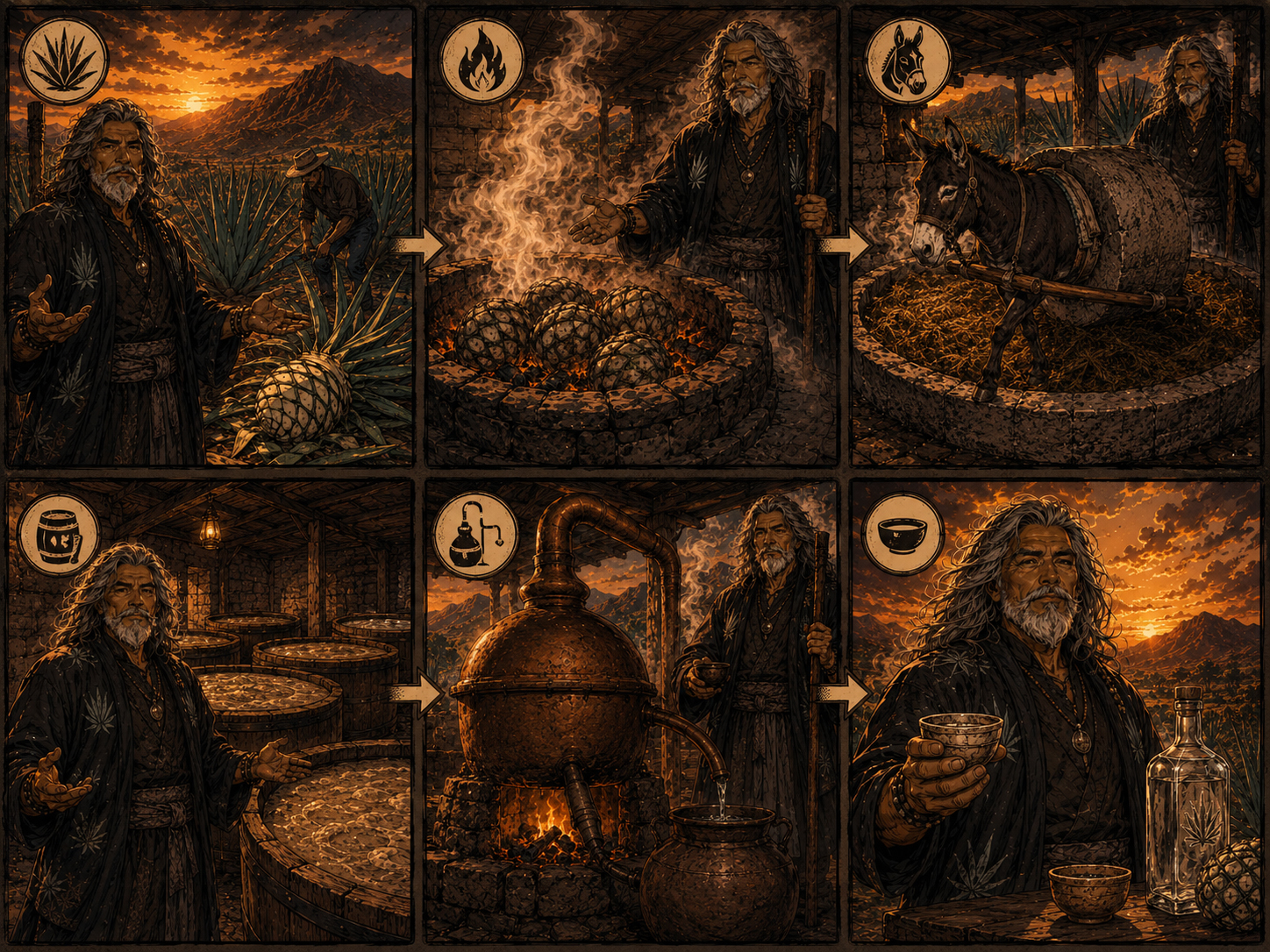
| Cooking | Often cooked in earthen pits, masonry ovens, or other methods depending on category and producer. | Typically cooked in ovens or autoclaves under tequila production systems. |
| Flavor stereotype | “Smoky,” though that is only one possible note. | “Clean, bright, peppery, citrusy,” though styles vary widely. |
| Best way to understand it | Plant + place + producer + method + time. | Blue agave + tequila region + production style + aging category. |
Are they both made from agave?
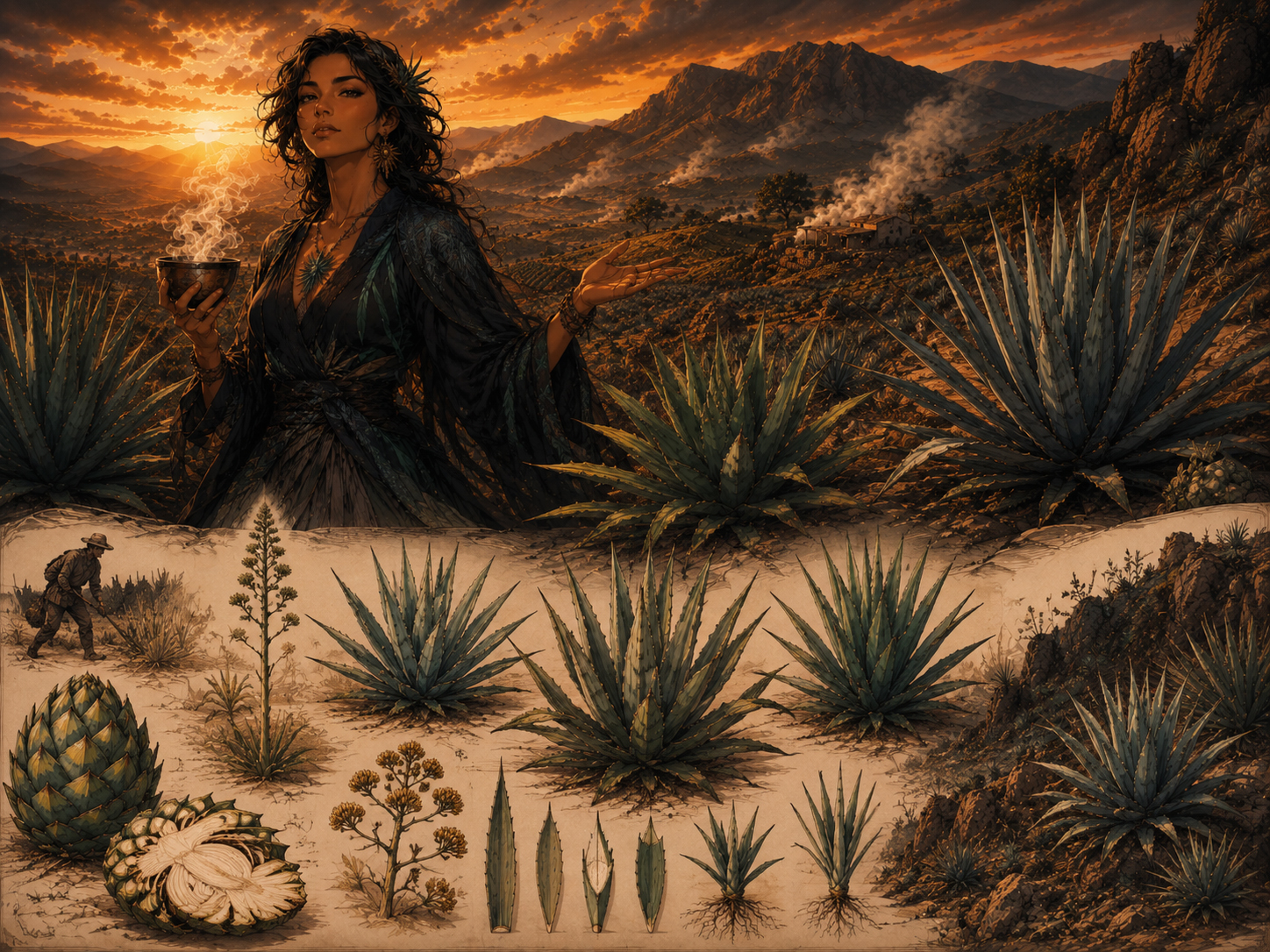
Yes. Agave is the shared root of the family tree. But tequila is made specifically from blue agave, while mezcal can be made from different agaves depending on the legal and regional context.
That is why mezcal can feel like a wide landscape, while tequila often feels like a more defined highway. Both can be excellent. Both can be terrible. The bottle still has to prove itself.
Why does mezcal often taste smoky?
Many mezcals get smoky or roasted notes from cooking agave in earthen pits with hot stones, wood, and covering materials. But smoke is not a quality score. It is just one possible part of the flavor.
Some mezcals are intensely smoky. Others are green, fruity, floral, mineral, cheesy, peppery, tropical, or savory. If someone says, “I hate mezcal because I hate smoke,” they may have only met the loud cousin.
Smoke Sensei interrupts
“Young taster, do not chase smoke like a raccoon chasing headlights. Look for balance. Look for agave. Look for the whole story.”
Is tequila smoother?
“Smooth” is one of the most overworked words in spirits. A spirit can be soft, harsh, elegant, boring, complex, hot, sweet, mineral, fruity, or beautifully strange. “Smooth” often means “I did not immediately regret my choices.”
Some tequilas are refined and gentle. Some mezcals are delicate and graceful. Some examples of both are rough. The category does not guarantee quality.
Is mezcal always stronger?
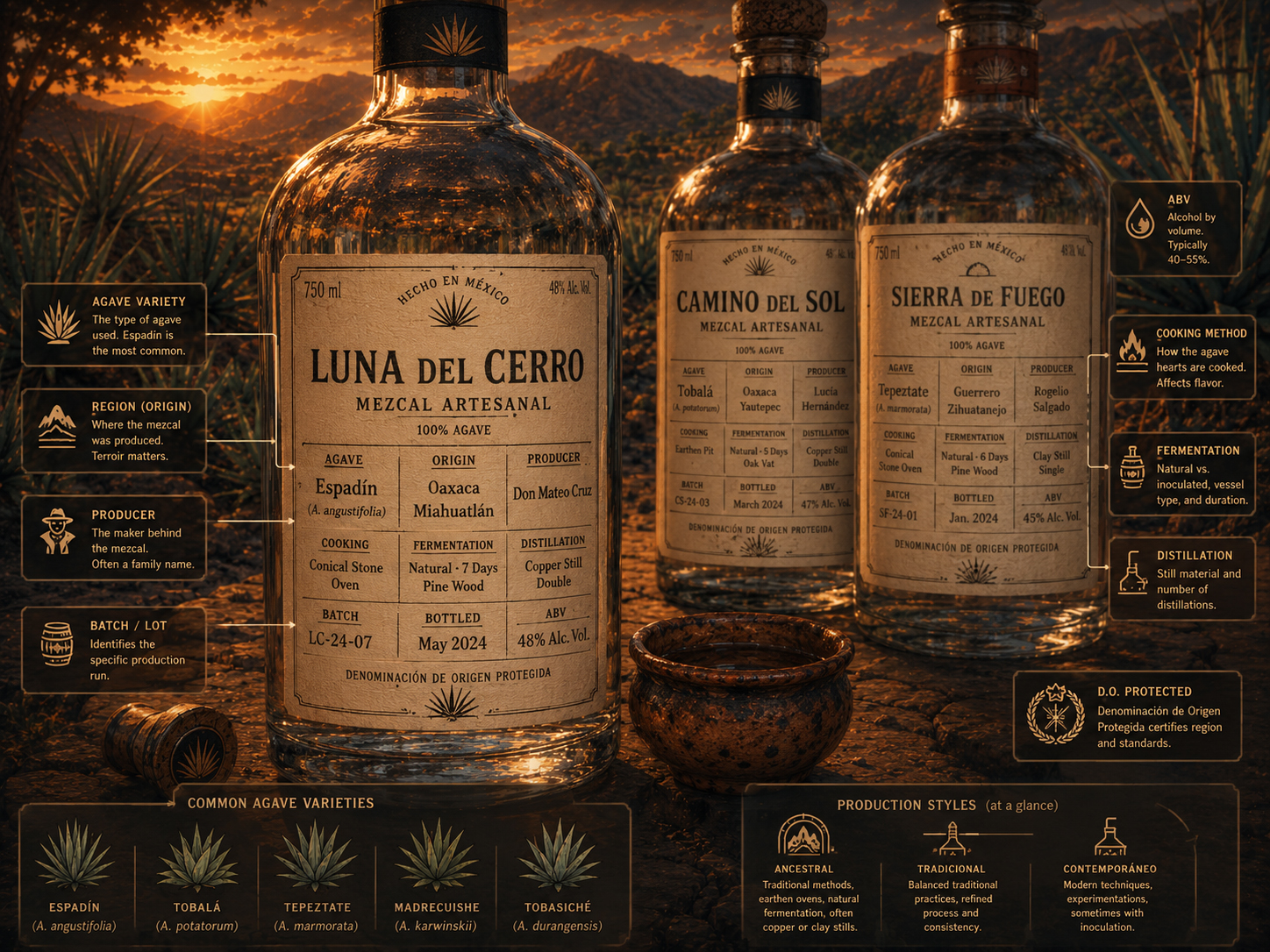
No. Alcohol by volume varies by bottle. Mezcal can be bottled at robust strengths, but tequila can also be strong. Always read the label. The ABV is not hidden treasure. It is printed right there, usually while the Label Goblin tries to distract you.
What about aging?
Tequila is often discussed through familiar aging categories like blanco, reposado, añejo, and extra añejo. Mezcal can also be unaged or aged, but many mezcal fans focus heavily on unaged expressions because they can show the agave, fermentation, and production method more directly.
Wood aging is not automatically better. It can add vanilla, spice, sweetness, and roundness, but it can also cover up the agave. The barrel should not walk into the room wearing tap shoes.
Which one should a beginner try?
Start with curiosity, not loyalty. A good beginner path is to taste a clean blanco tequila next to an approachable espadín mezcal. Sip slowly and compare aroma, texture, sweetness, roasted notes, pepper, fruit, and finish.
- Try tequila blanco: Look for blue agave character, citrus, pepper, herbs, or cooked agave sweetness.
- Try espadín mezcal: Look for roasted agave, earth, smoke, fruit, mineral, or green notes.
- Use small pours: This is education, not a pirate initiation.
- Drink water: Water is the responsible sidekick who never gets enough credit.
Which is better?
Wrong question. Better for what? Sipping? Cocktails? Food pairing? Learning about agave? Showing off at a dinner party? Defeating the Cocktail Shaker Goblin?
Tequila may be perfect for a crisp margarita, a clean sip, or classic agave cocktails. Mezcal may shine when you want roasted complexity, earthy depth, or a different kind of agave expression. Both categories have serious producers and mass-market noise.
The better way to remember it
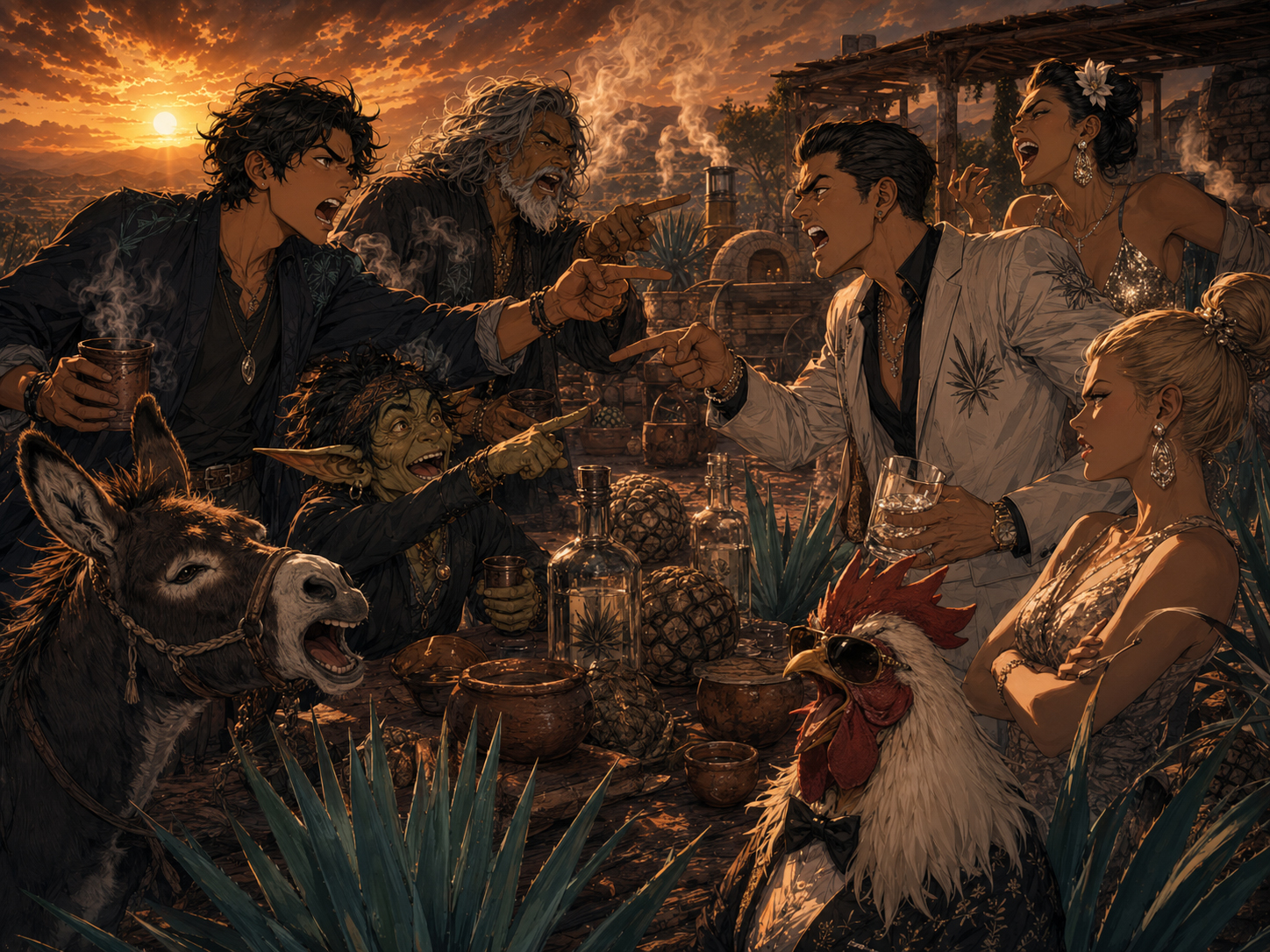
Tequila and mezcal are agave cousins. Tequila walks in with a polished belt buckle. Mezcal walks in with ash on its boots and a story about the mountain.
That is the fun version. The serious version: respect both categories, read labels, learn producers, avoid lazy myths, and never reduce either one to a single stereotype.
Responsible drinking note
MezcalDaily.com is for adults of legal drinking age. Taste slowly, hydrate, eat food, and do not drink and drive. Agave education should not become a stunt with citrus wedges.