The fast answer
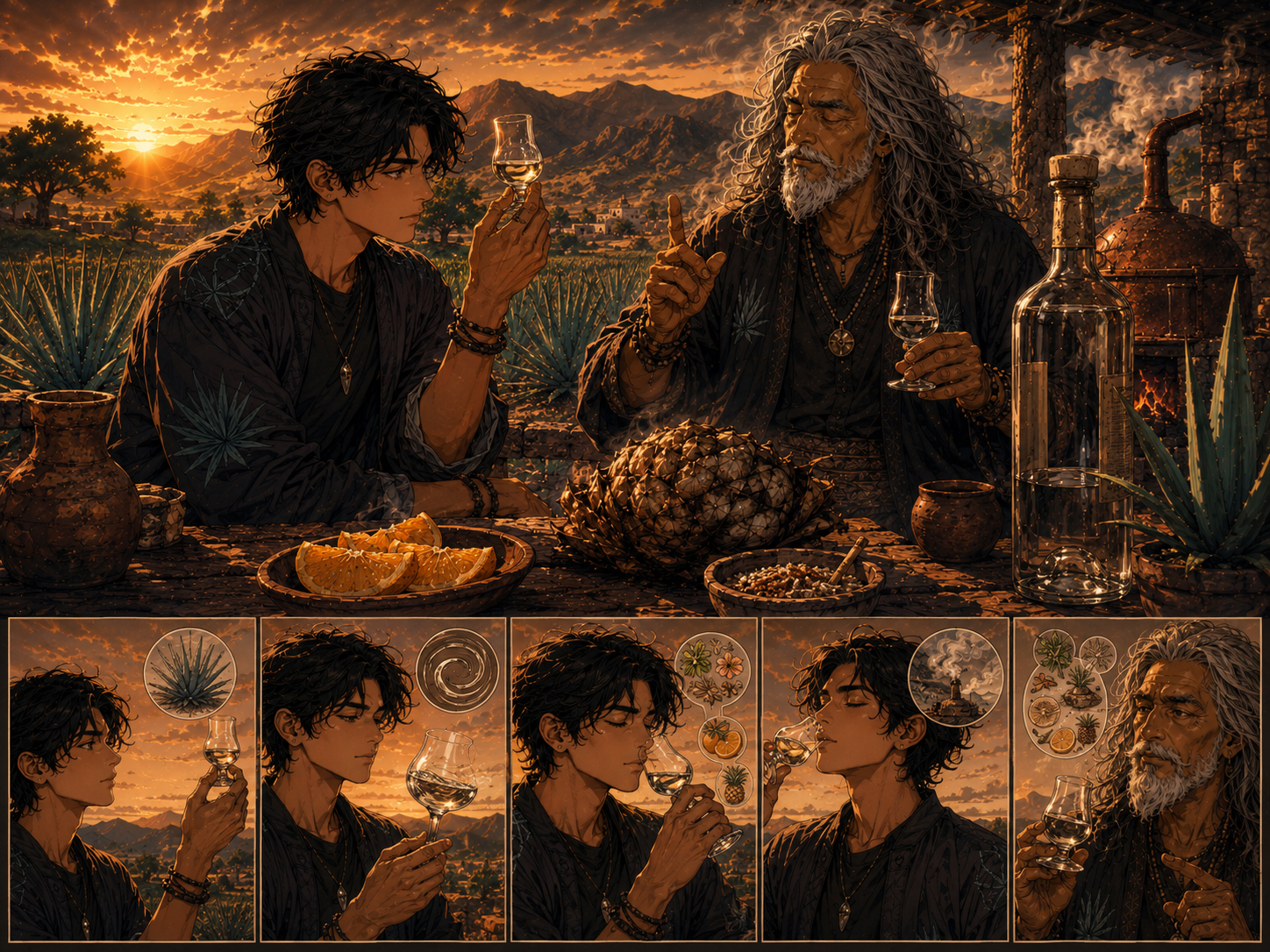
Taste mezcal slowly, in small pours, while paying attention to aroma, texture, flavor, and finish.
The goal is not to prove toughness. The goal is to understand what is in the glass. A good mezcal tasting asks: What agave? What region? What producer? What method? What aromas? What texture? What remains after the smoke leaves the room?
If someone slams mezcal like a shot and immediately shouts “smooth,” the Cocktail Shaker Goblin has taken control of the tasting room.
Agave Boy’s first tasting rule
Tiny sip. Big attention. Water nearby. Ego outside.
Step 1: Choose the right pour
Use a small pour. One ounce or less is plenty for learning. Mezcal can be aromatic and strong, and a careful small pour teaches more than a giant glass of smoky confusion.
A copita, small clay cup, tasting glass, or small wine-style glass can all work. Avoid a huge rocks glass if you are trying to study aromas. The bigger the glass, the more likely someone starts treating the tasting like a movie prop.

Step 2: Look before you smell
Notice clarity, color, and texture. Many mezcals are clear, especially unaged expressions. Some may have color from aging or resting. Swirl gently and watch how the liquid moves. Thick legs on the glass do not automatically mean quality, but texture can give clues.
| What you see | What it may suggest | Goblin warning |
|---|---|---|
| Clear spirit | Often unaged or lightly rested without wood color. | Clear does not mean simple. |
| Golden color | May indicate wood aging, resting, or other treatment. | Color is not a quality trophy. |
| Oily texture | May suggest body, proof, distillation choices, or agave character. | Do not lick the glass like a detective. |
Step 3: Smell gently
Do not bury your nose in the glass and inhale like you are starting a leaf blower. Mezcal can have high alcohol strength, and aggressive sniffing can numb your senses. Keep the glass below your nose, breathe gently, and approach in small passes.
Look for categories first: roasted, green, fruit, floral, mineral, smoky, earthy, spicy, lactic, savory, or herbal. You do not need fancy vocabulary. “Cooked pineapple,” “wet stone,” “green pepper,” “campfire,” or “warm tortilla” are all useful if they are honest.
Smoke Sensei says:
“Do not let smoke be the only word you know. The agave has a vocabulary. Listen before shouting ‘campfire!’”
Step 4: Take a tiny sip
Let the first sip be small. Let it coat your tongue. Notice heat, texture, sweetness, dryness, smoke, fruit, herbs, minerals, and finish. The first sip often wakes up your palate. The second sip may tell you more.
Do not judge instantly. Mezcal can unfold. The flavor may move from roasted agave to fruit, then smoke, then herbs, then minerals, then pepper. Give it time to walk across the stage.
Step 5: Notice texture
Texture is a major part of mezcal. Some mezcals feel sharp and bright. Others feel oily, round, silky, dry, hot, rustic, or dense. Texture can change how flavors land.
| Texture word | Plain meaning | MezcalDaily translation |
|---|---|---|
| Silky | Smooth movement across the tongue without harsh edges. | The mezcal brought manners. |
| Oily | Coating, rich, or full-bodied feeling. | The glass has shoulders. |
| Dry | Less sweet, sometimes mineral or tannic-feeling finish. | The mountain left dust on your boots. |
| Hot | Strong alcohol burn or warming sensation. | The ABV has entered with cymbals. |
Step 6: Look past the smoke
Smoke is easy to notice, but it should not be the whole review. After naming smoke, ask what else is there. Fruit? Herbs? Earth? Minerals? Pepper? Cooked agave? Fermentation funk? Fresh green notes?
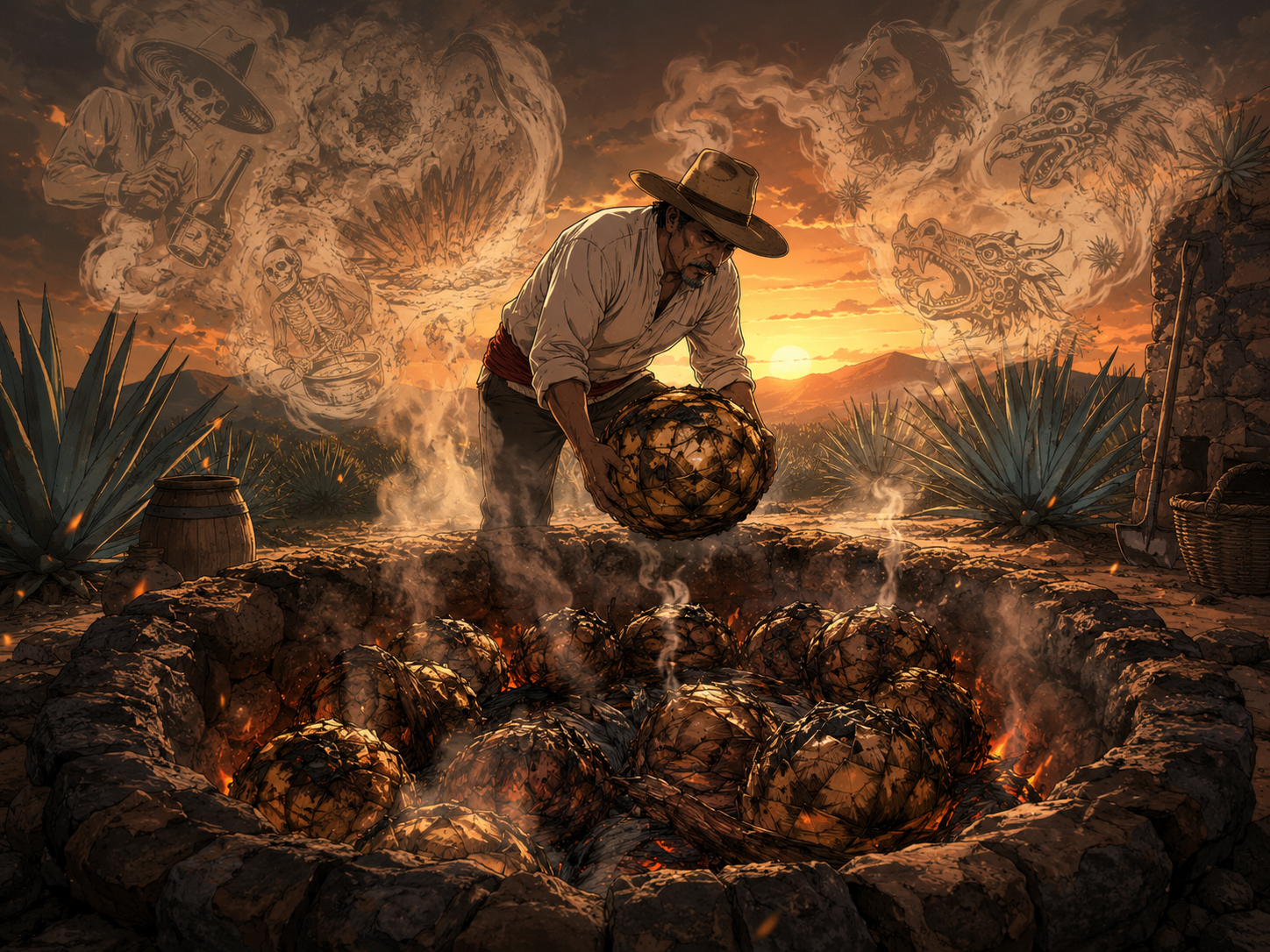
A balanced mezcal can have smoke that supports the agave. An unbalanced mezcal can have smoke that covers everything like a theatrical fog machine stuck on maximum.
Step 7: Read the finish
The finish is what remains after you swallow. Does it fade quickly? Does it linger? Does it leave smoke, pepper, fruit, minerals, sweetness, bitterness, herbs, or heat? Sometimes the finish tells you whether the mezcal is balanced or just loud.
The finish is where mezcal stops performing and tells the truth.
Step 8: Add food carefully
Food can make mezcal easier to understand. Citrus, salt, chocolate, grilled foods, mole-style flavors, cheese, fruit, nuts, and roasted vegetables can frame different notes. The point is not to drown the mezcal. The point is to create conversation.

Beginner tasting checklist
- Small pour: Enough to study, not enough to become a legend in your own bad story.
- Look: Notice clarity, color, and texture.
- Smell gently: Find broad aroma families first.
- Sip tiny: Let it move slowly across your palate.
- Name three notes: One smoke note and two non-smoke notes is a good start.
- Notice finish: What remains after the first drama fades?
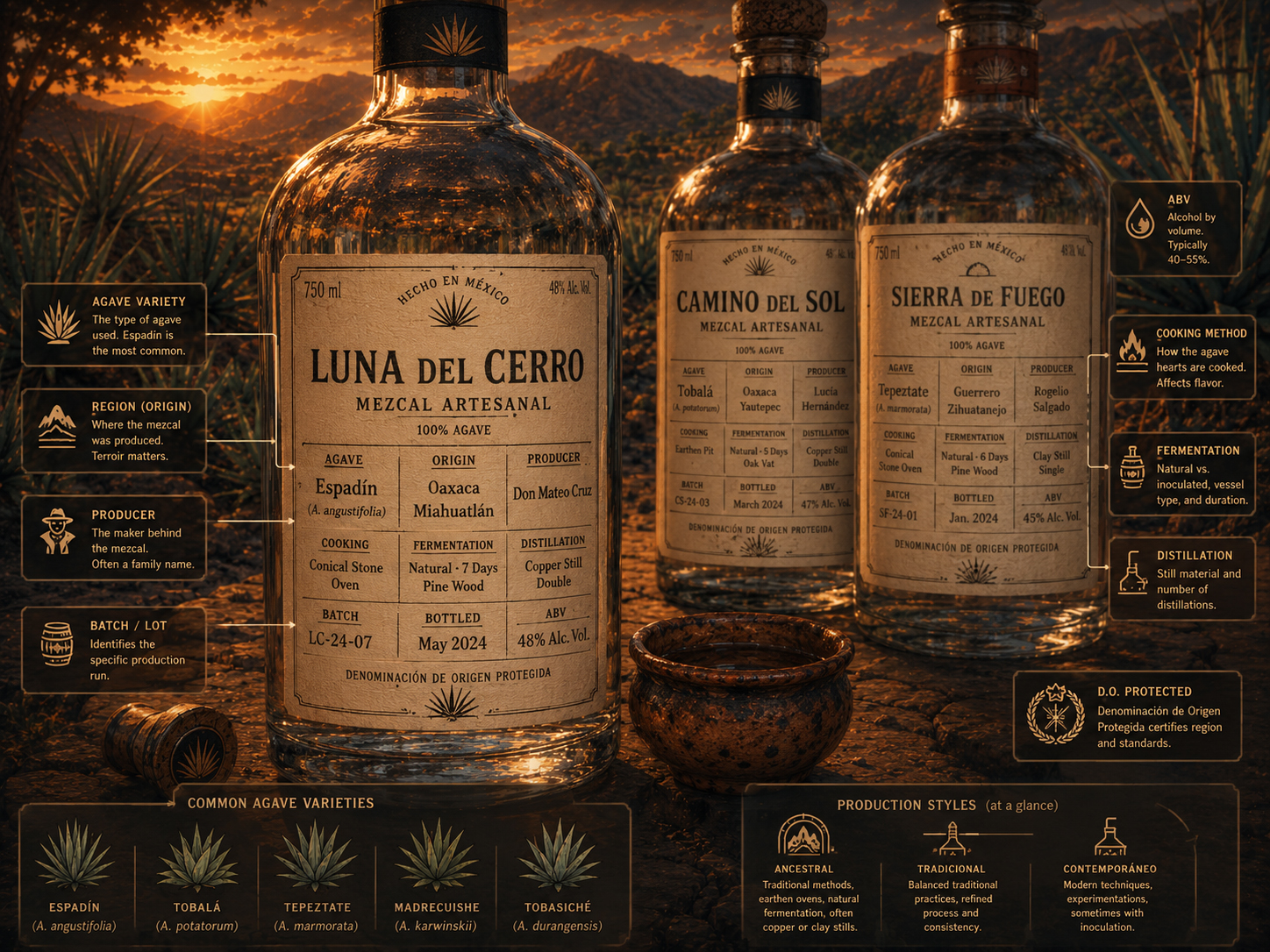
- Read label: Agave, region, producer, category, ABV, batch.
- Hydrate: Water is the hero wearing sensible shoes.
How to compare two mezcals
Compare carefully. Try two small pours side by side. Keep one thing similar if possible: two espadín mezcals from different regions, or two Oaxaca mezcals from different producers, or two mezcals of different agaves but similar proof.
Write simple notes. You do not need poetry. “More herbal,” “less smoke,” “pepper finish,” “fruitier,” “hotter,” or “rounder” is useful. The goal is to train your own senses.
Common tasting mistakes
| Mistake | Better move |
|---|---|
| Taking it as a shot | Sip slowly and let the mezcal unfold. |
| Only saying “smooth” | Name aroma, texture, flavor, finish, and balance. |
| Judging by smoke level | Look for agave, fruit, herbs, minerals, and texture too. |
| Ignoring ABV | Read the label and adjust expectations. |
| Forgetting water | Hydrate before, during, and after tasting. |
Cocktail Shaker Goblin warning
If the tasting becomes loud, fast, competitive, or citrus-wedge theatrical, the goblin has seized the agenda. Slow down. Drink water. Eat something.
The MezcalDaily tasting rule
Taste mezcal like someone spent years growing the plant — because someone did.
Mezcal rewards patience. The more slowly you taste, the more the glass can tell you: agave, region, roasting, fermentation, still, proof, balance, and the maker’s hand.
Responsible drinking note
MezcalDaily.com is for adults of legal drinking age. Sip slowly, hydrate, eat food, and do not drink and drive. Tasting is not a challenge. It is attention in a glass.