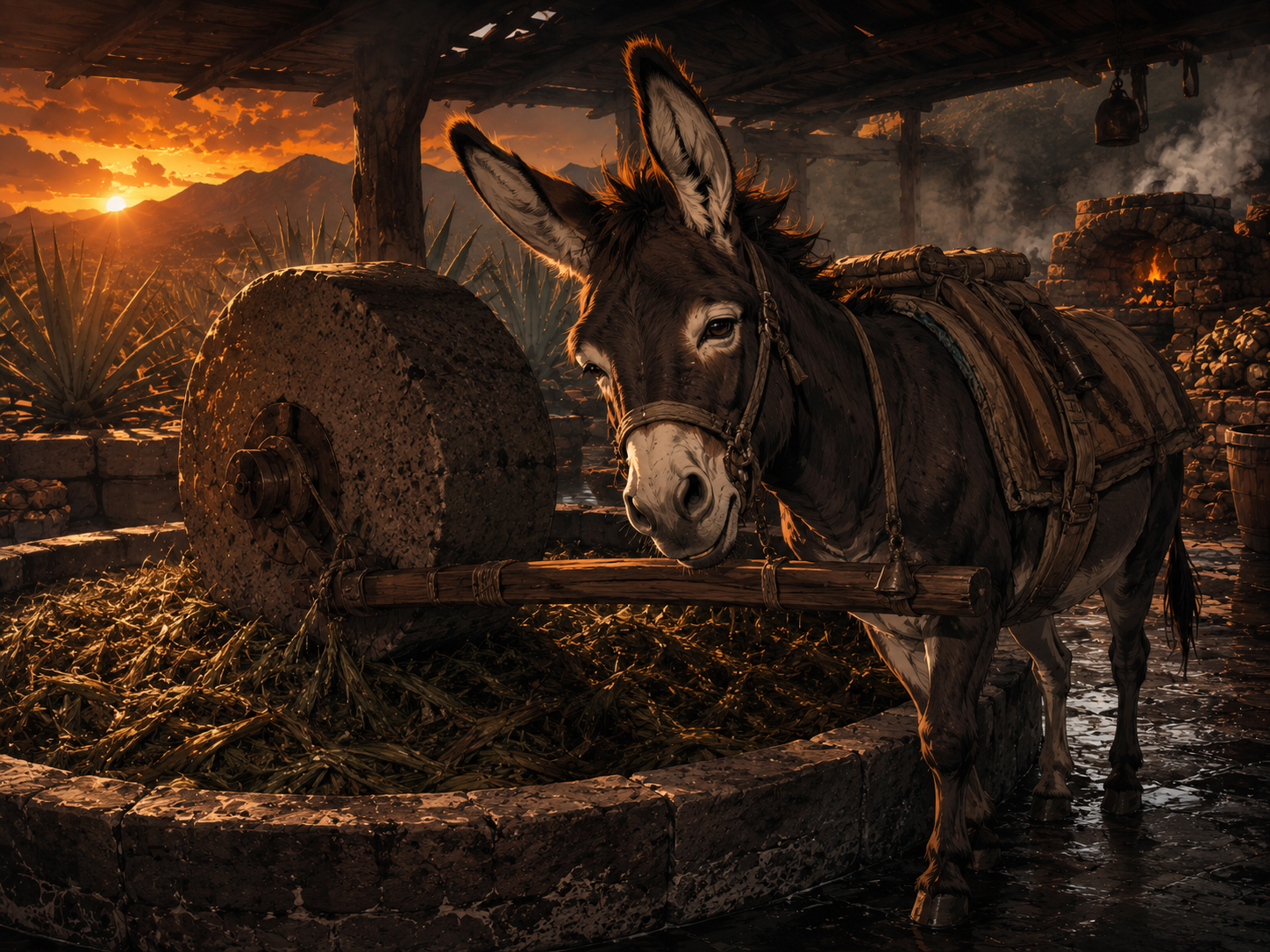
Character role
Tahona Donkey teaches that tradition has weight.
In the MezcalDaily universe, Tahona Donkey appears whenever someone says, “Oh, that old stone wheel is so cute.” He then points to the cooked agave, the courtyard, the wheel, the heat, the labor, and the time involved.
His lesson is simple: a tahona is not decoration. It is a production tool. It crushes cooked agave so sugars and fibers can move toward fermentation. It is iconic because it is useful, not because it looks good in a travel photo.
Tahona Donkey says:
“Before calling this charming, please pull the stone wheel for six hours. I will wait here with a carrot and a labor contract.”
Character profile
| Trait | Details | MezcalDaily translation |
|---|---|---|
| Role | Teacher of crushing, labor, method, and production humility. | The stone-wheel reality check. |
| Superpower | Can flatten vague romance with one slow lap around the courtyard. | Cardio-based truth. |
| Favorite tool | The tahona stone wheel. | The boulder with a job. |
| Natural enemy | People who treat traditional labor as cute scenery. | Rustic postcard blindness. |
| Main episode | Episode 5: Tahona Donkey Saves the Day. | The donkey gets top billing. |
What is a tahona?
A tahona is a large stone wheel used to crush cooked agave. After the agave piñas are roasted, they need to be broken down so the sugars and fibers are ready for fermentation. The tahona rolls over the cooked agave and helps turn roasted plant material into fermentable mash.
Sometimes the wheel is pulled by an animal. Sometimes it is powered mechanically. The important point is that crushing method is part of mezcal’s production story. It is not just a visual symbol.
Why Tahona Donkey matters
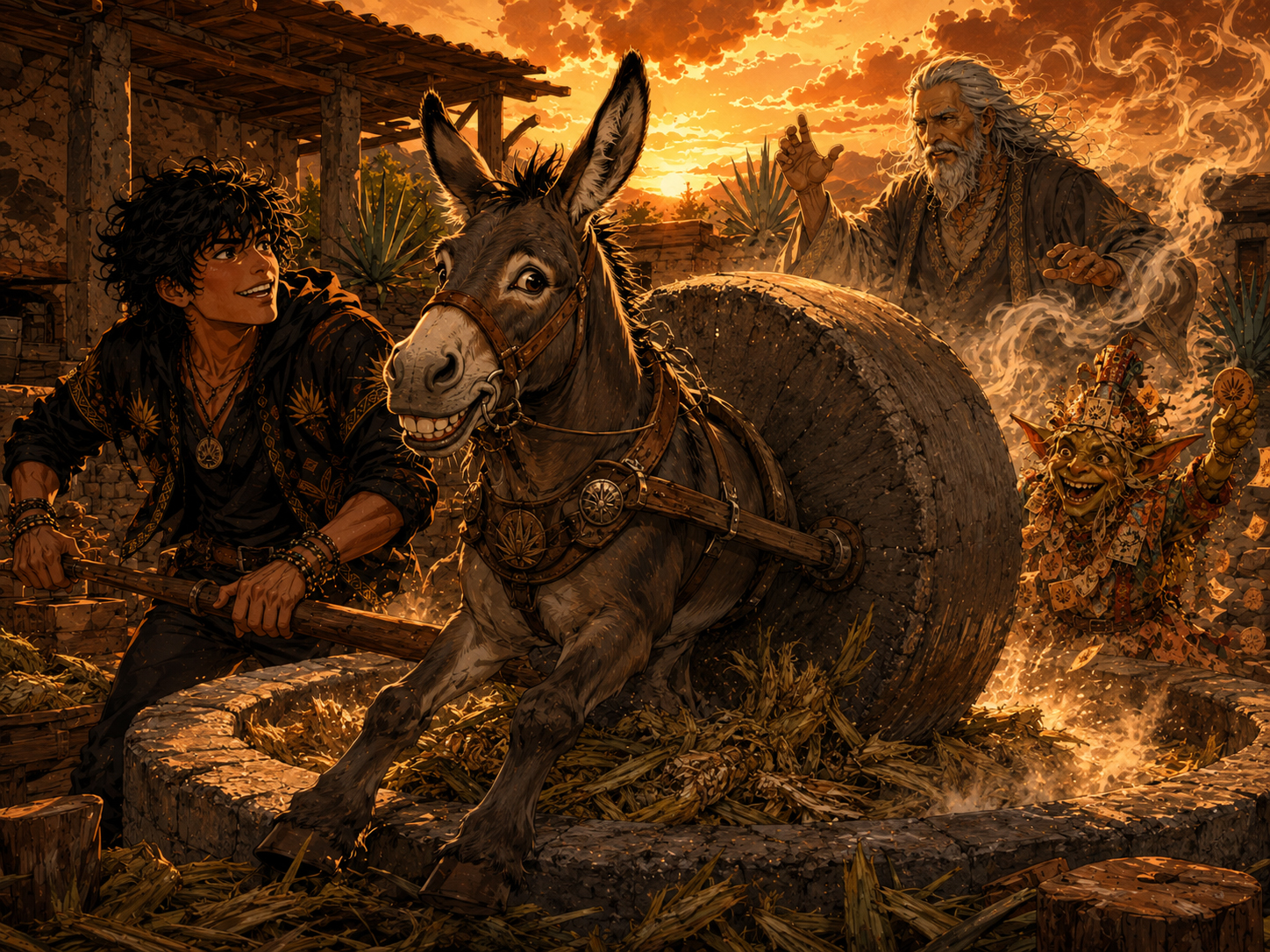
Tahona Donkey keeps MezcalDaily from becoming too dreamy about old tools. Traditional methods deserve respect, but respect means understanding the labor, not turning the tool into a romantic sticker.
He teaches that production methods can influence texture, fermentation, extraction, and final character. He also teaches that no single tool automatically guarantees quality. A tahona is meaningful, but the agave, maker, fermentation, distillation, proof, and balance still matter.
Donkey doctrine
“Tahona is useful information. It is not a magic quality stamp. Read the full label and taste the mezcal.”
Tahona vs. mechanical mill
Tahona Donkey does not hate mechanical mills. He hates lazy assumptions. A mezcal made with tahona can be excellent or flawed. A mezcal made with a mechanical mill can also be excellent or flawed.
The real question is how the whole production chain works. Was the agave mature? Was it roasted well? Was fermentation managed with skill? Was distillation careful? Is the bottle balanced? Does the label explain what happened?
| Method | What it means | Donkey correction |
|---|---|---|
| Tahona | Stone wheel crushes cooked agave. | Iconic and meaningful, but not automatic greatness. |
| Hand crushing | Cooked agave is broken down manually with tools. | Labor-intensive and serious, not folk decoration. |
| Mechanical mill | Machine crushes or shreds cooked agave. | Efficient does not automatically mean bad. |
| Producer choice | The maker chooses tools based on style, tradition, scale, and practicality. | Judge the whole mezcal, not one tool name. |
His feud with the Label Goblin
The Label Goblin loves using words like “stone-crushed” and “traditional” without explaining anything else. Tahona Donkey does not approve.
If a label says tahona but hides the producer, town, agave, ABV, batch, or fermentation details, the donkey raises one eyebrow and slowly rolls the wheel toward the marketing department.

What Tahona Donkey wants you to notice
- Crushing comes after roasting. The cooked agave must be broken down.
- The tool affects the process. Crushing method can influence extraction and fermentation material.
- Labor matters. Traditional production involves real work, not just scenery.
- Labels should explain method. Tahona is helpful, but method notes should not stop there.
- Quality depends on the whole chain. Agave, roasting, crushing, fermentation, distillation, and maker all matter.
- Respect beats romance. A production tool should not become a costume.
Signature quotes
On tradition
“Tradition is not a filter you put on a photo. It is work repeated with knowledge.”
On labels
“If the bottle says tahona, good. Now tell me the agave, producer, town, ABV, batch, and still.”
On labor
“Romance is lighter when someone else is pulling the wheel.”
Main episode
Tahona Donkey’s main story is Episode 5, where he saves Agave Boy from thinking that crushing is merely a charming old-world visual. The episode explains how roasted agave becomes ready for fermentation and why tools should be understood, not fetishized.
Tahona Donkey Saves the Day
The stone wheel rolls in, and everyone learns that tradition has weight.
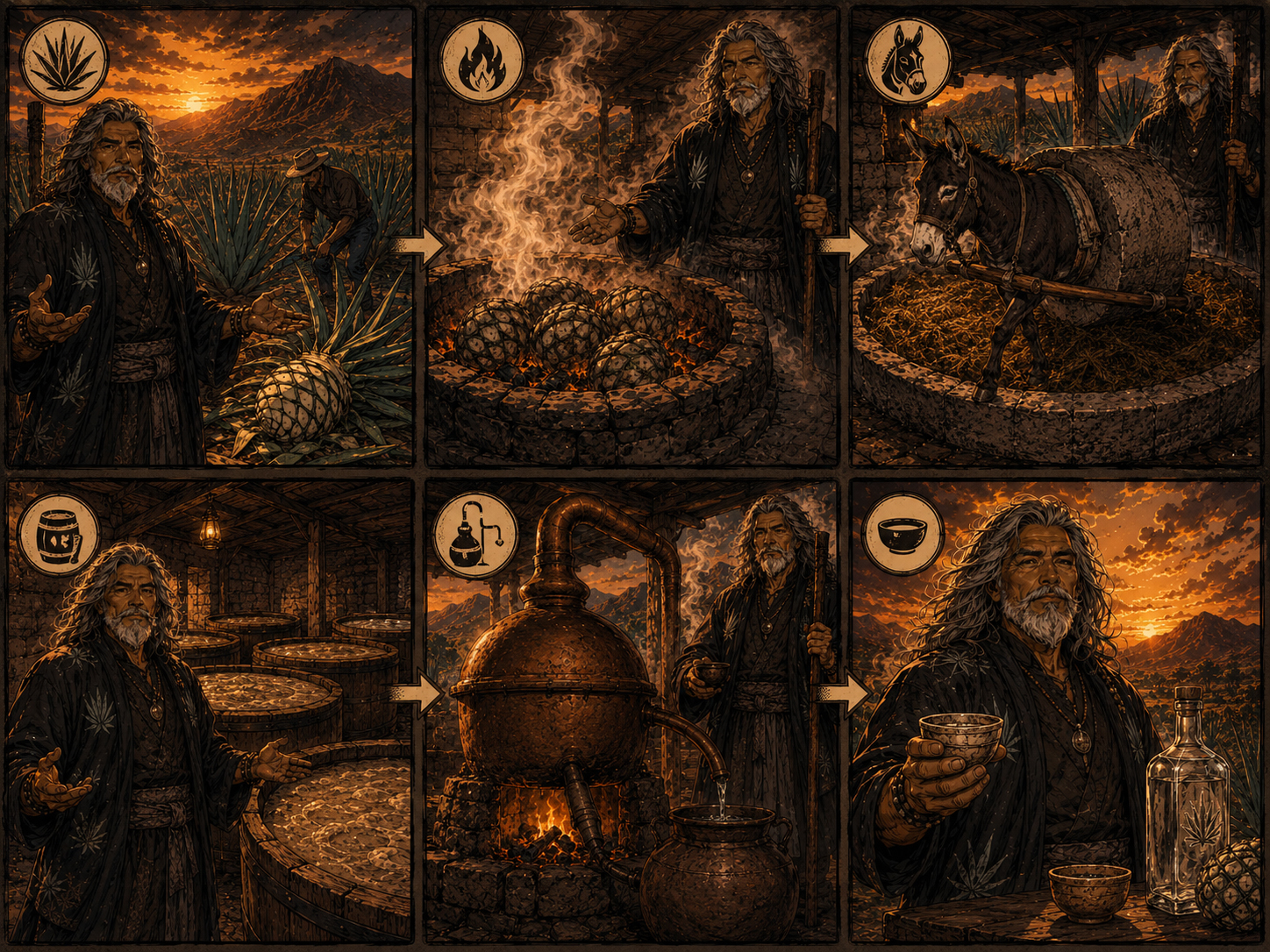
How Mezcal Is Made
See where crushing fits between roasting and fermentation.
The Tahona Donkey rule
Traditional tools deserve respect because they do work — not because they look good on labels.
Responsible drinking note
MezcalDaily.com is for adults of legal drinking age. This character page discusses alcoholic beverages for education and culture. Sip slowly, hydrate, eat food, and do not drink and drive.