The character lesson
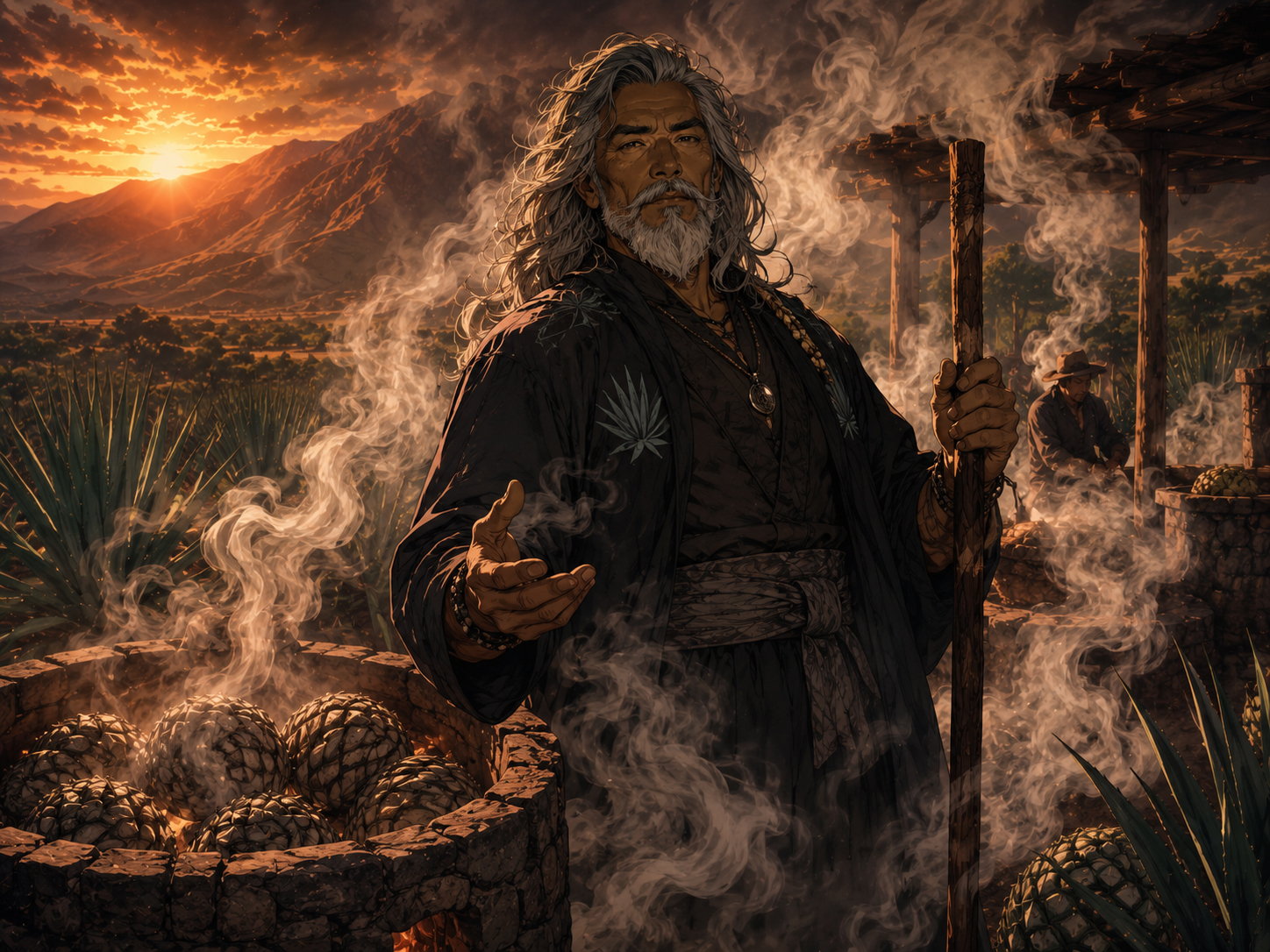
Agave Boy asks beginner questions. Smoke Sensei answers with fire, patience, and unnecessary dramatic entrances.
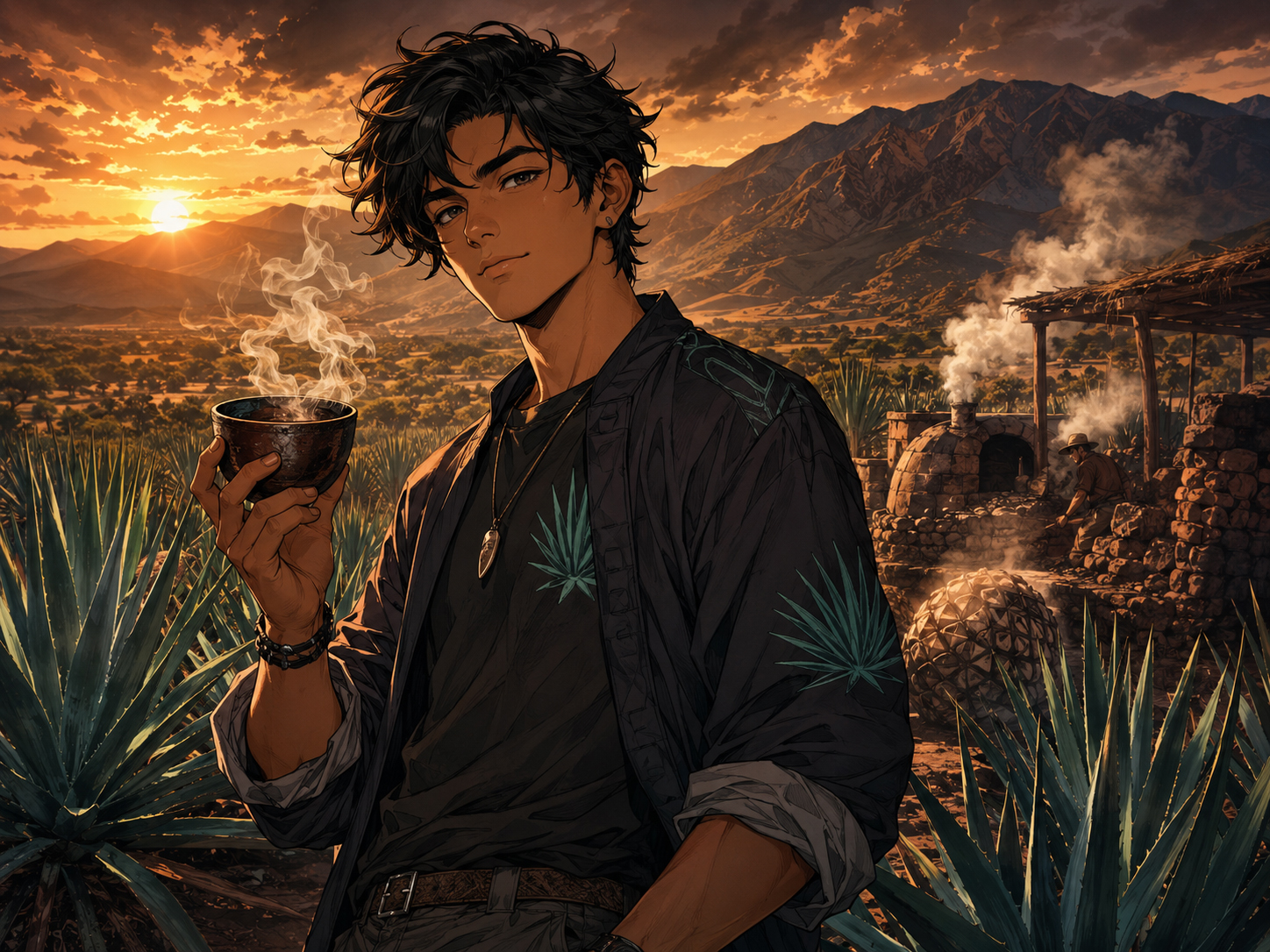
Agave Boy is the student of MezcalDaily. He is curious, easily impressed, and occasionally in danger of believing the Label Goblin. Smoke Sensei is the ancient pit teacher who appears whenever someone reduces mezcal to “just smoke.”
Together, they teach the first great mezcal balance: respect the plant, respect the fire, but do not let smoke steal the whole bottle.
Smoke Sensei’s first rule
“Smoke is the doorway. Agave is the house. Fermentation is the strange room in the back. Distillation is where everyone becomes honest.”
Agave Boy: the student hero
Agave Boy represents the beginner who wants to understand mezcal without pretending to already know everything. He asks simple questions: What is agave? Why is it roasted? Why does mezcal taste smoky? Why does this label have twelve words and only three facts?
His job is important because beginners deserve clear explanations. Mezcal can be complex, but it should not be explained like a secret society with better glassware.
Smoke Sensei: the pit master of perspective
Smoke Sensei appears from roasting pits, steam clouds, bar arguments, and overconfident tasting notes. He is not anti-smoke. He loves smoke. He simply refuses to let smoke become the only word anyone uses for mezcal.
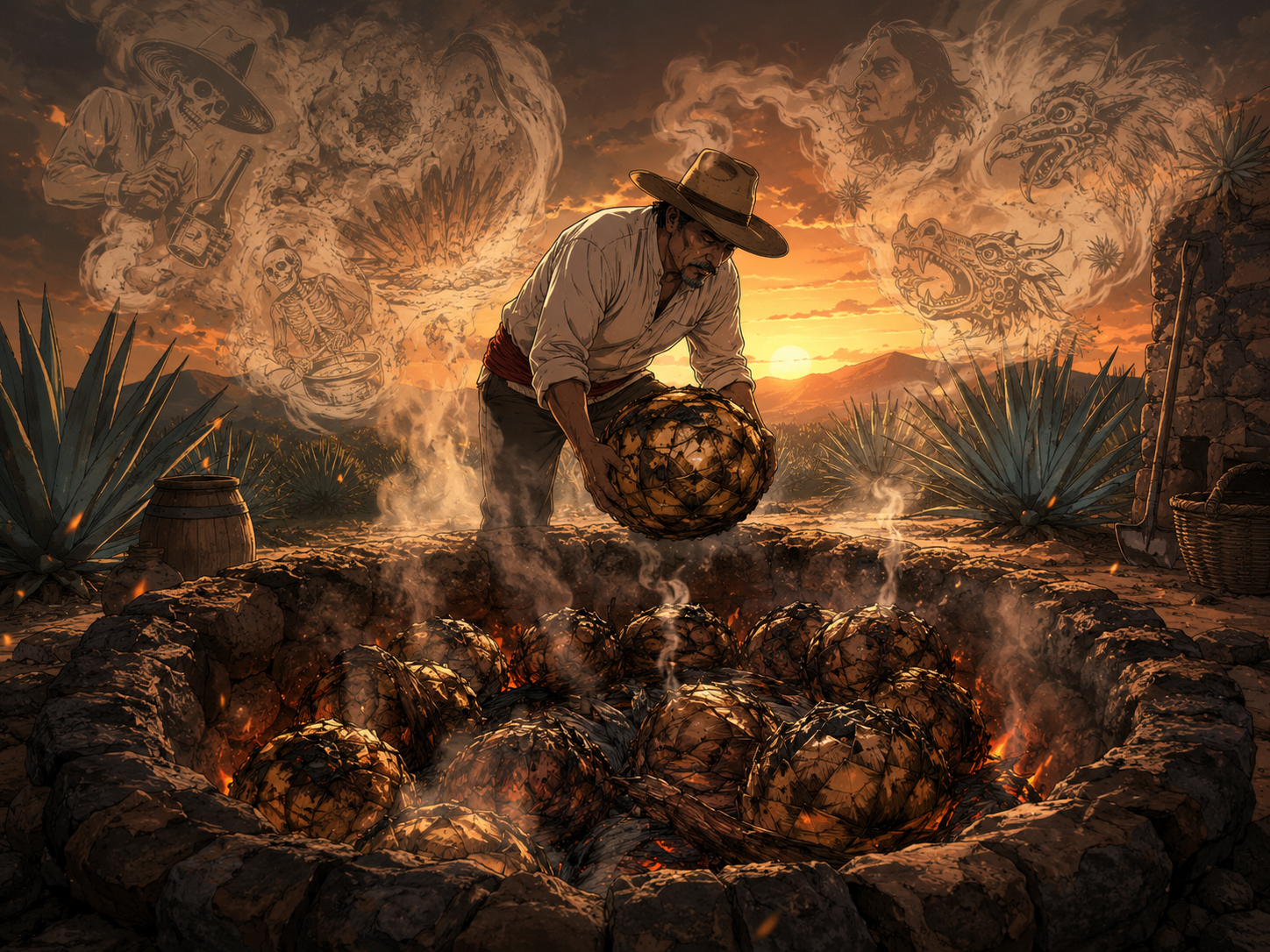
He teaches that smoke can come from the cooking stage, especially when agave piñas are roasted in earthen pits with hot stones, wood, earth, and time. But he also teaches that smoke should support cooked agave, minerals, herbs, fruit, texture, and finish.
| Character | Role | Favorite lesson |
|---|---|---|
| Agave Boy | Curious beginner and mezcal student. | Start with the plant. |
| Smoke Sensei | Dramatic teacher of roasting, smoke, and balance. | Smoke is not the whole story. |
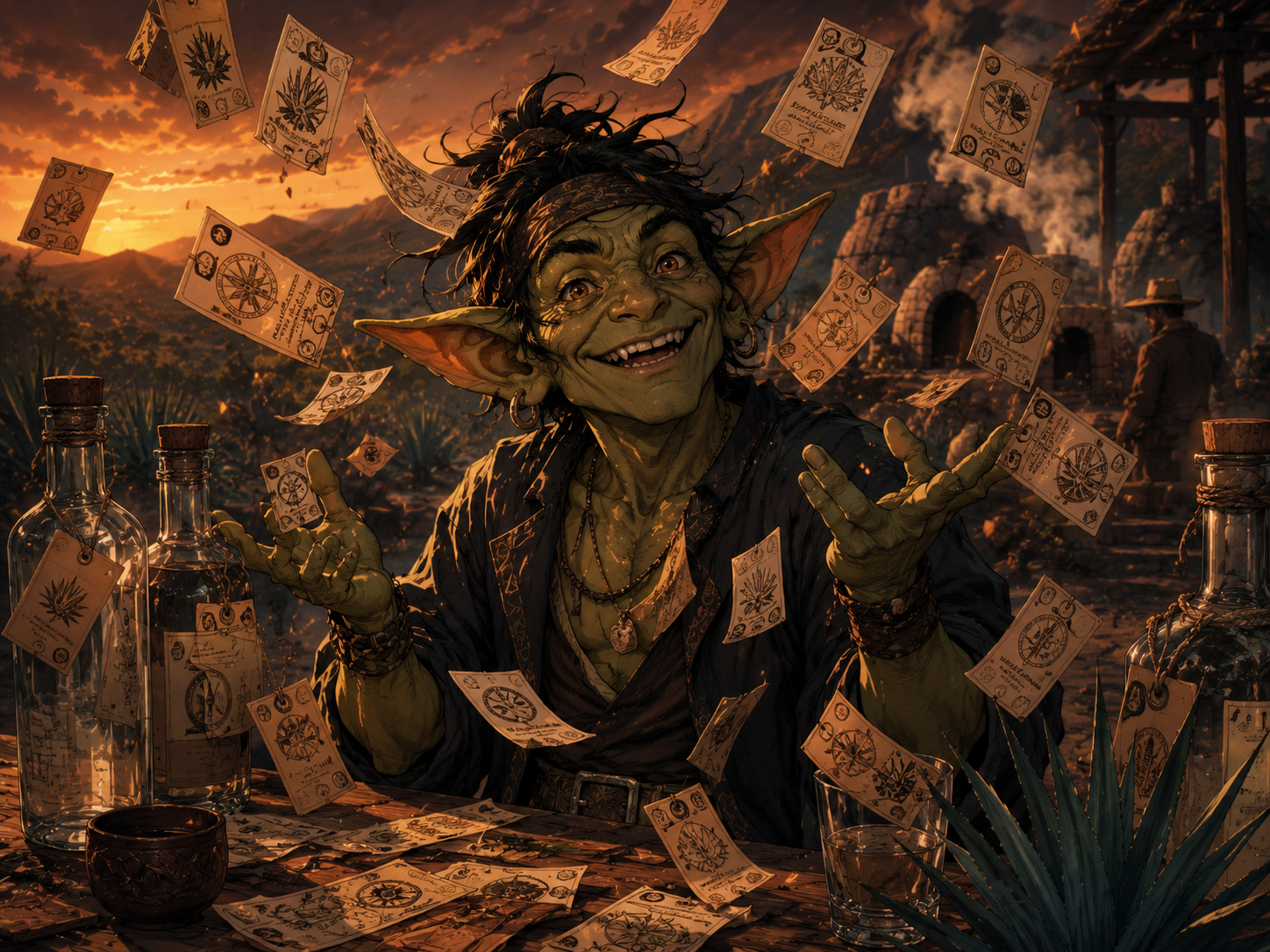
| Label Goblin | Villain of vague labels and marketing fog. | Confuse first, clarify never. |
| Madame Terroir | Elegant teacher of place, soil, water, and village. | The mountain is in the glass. |
The meeting scene
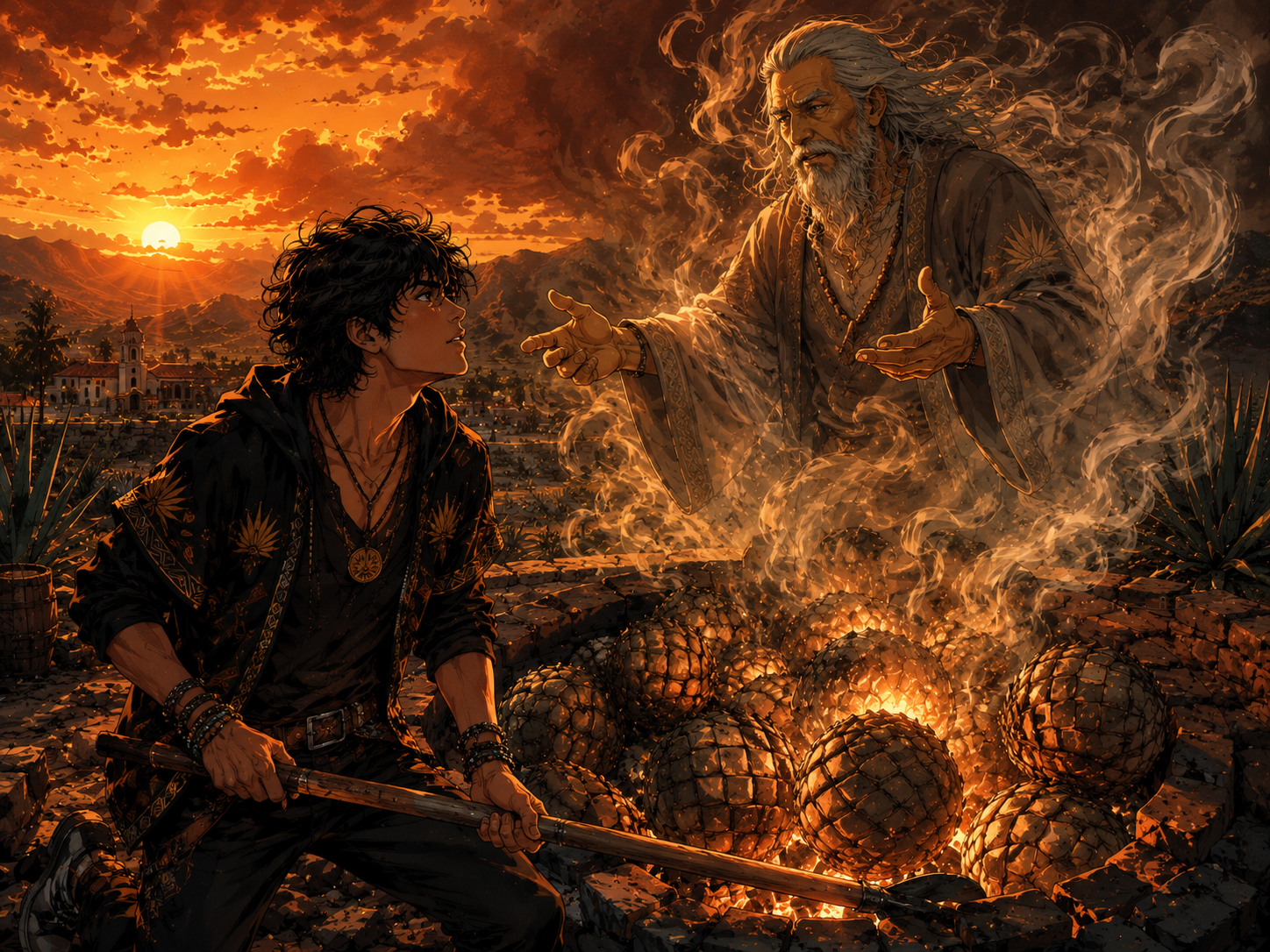
Agave Boy approaches the roasting pit holding a notebook. He has just learned that mezcal begins with agave, not with smoke. But then the pit opens, the piñas glow, and the air fills with roasted, earthy sweetness.
“So smoke is the main flavor?” asks Agave Boy.
The smoke rises. A silhouette forms. Smoke Sensei appears, robes swirling, eyebrows glowing, voice echoing like a barrel cellar after too much confidence.
“Young student,” says Smoke Sensei, “that is exactly the kind of sentence that wakes me from the pit.”
What Agave Boy learns
- Agave comes first. Smoke cannot exist in mezcal without the plant being transformed.
- Roasting changes the piña. Cooking softens agave and develops roasted flavors.
- Smoke can be beautiful. But only when it supports the rest of the mezcal.
- More smoke is not automatically better. Balance matters more than volume.
- Flavor has layers. Look for agave, fruit, herbs, minerals, earth, pepper, texture, and finish.
- Marketing loves shortcuts. Smoke Sensei does not approve of lazy shortcuts.
The smoke mistake
The most common beginner mistake is using “smoky” as the entire review. Smoke Sensei allows the word “smoky” only if the taster also looks for at least two other useful notes.
| Lazy note | Better tasting question |
|---|---|
| “It is smoky.” | Is the smoke gentle, balanced, dominant, or harsh? |
| “It tastes strong.” | What is the ABV, and does the heat feel integrated? |
| “It is smooth.” | What is the texture: oily, dry, soft, sharp, round, or hot? |
| “It is weird.” | Weird how: herbal, mineral, fruity, earthy, savory, lactic, or peppery? |
The pit lesson
Smoke Sensei explains the roasting pit like a sacred classroom. Hot stones hold heat. Wood creates fire. Earth traps warmth. Agave slowly transforms. The result is not simply smoke; it is cooked agave ready for crushing, fermentation, and distillation.
The pit is not a gimmick. It is part of a production chain that requires labor, judgment, tradition, and care.
When the Label Goblin interrupts
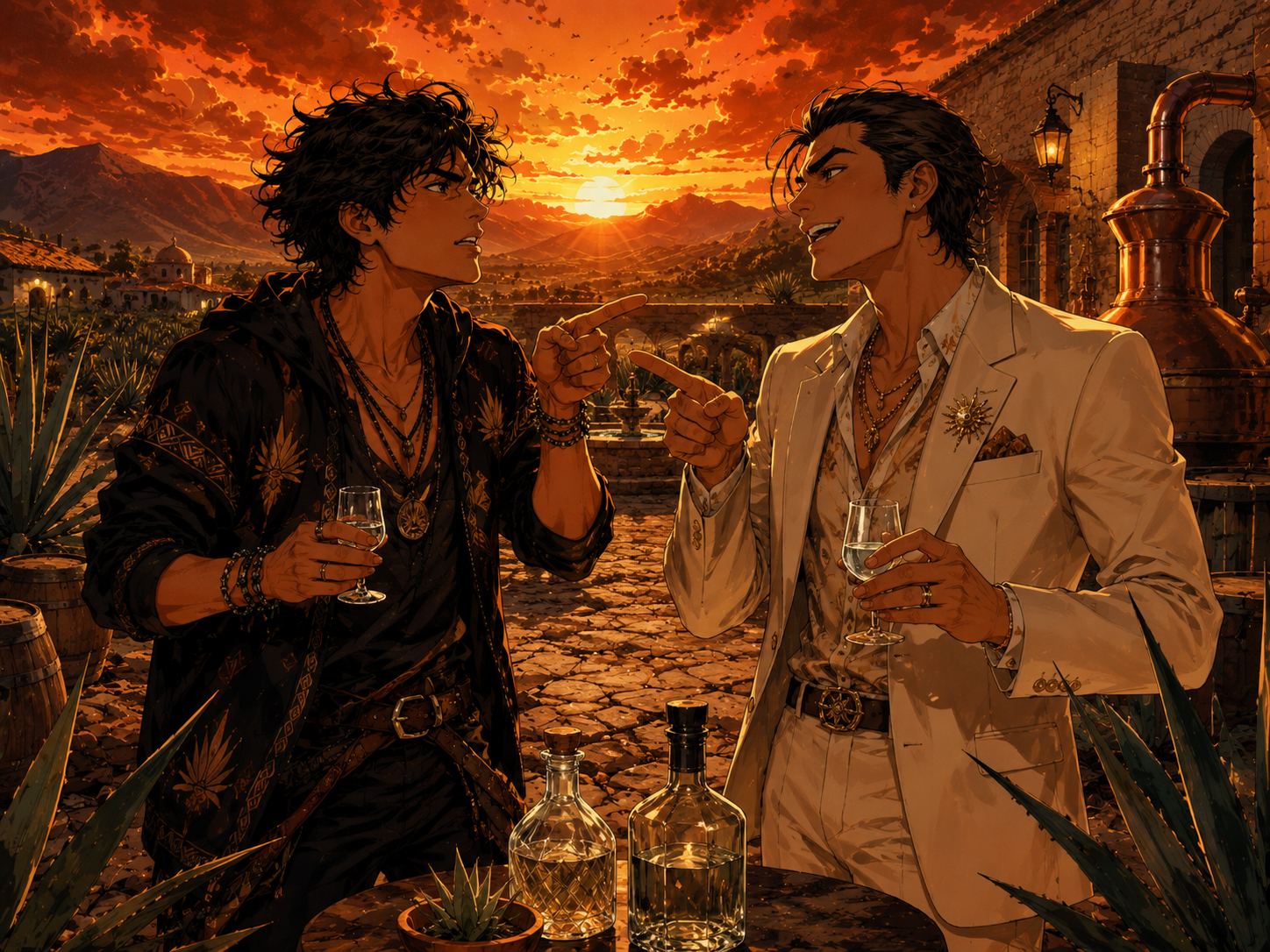
No Smoke Sensei lesson is safe from the Label Goblin. In this character scene, the goblin appears carrying stickers that say “EXTRA SMOKY,” “ANCIENT FIRE,” and “MYSTICAL PREMIUM PIT ENERGY.”
Smoke Sensei burns the stickers with a look. Agave Boy learns that useful labels should explain agave, producer, region, ABV, category, batch, and method — not just shout romance words over the facts.
Character dialogue
Agave Boy
“So mezcal can be smoky, but I should also taste agave, fruit, minerals, herbs, texture, and finish?”
Smoke Sensei
“Correct. You may now use the word smoky without embarrassing the pit.”
Why this character pairing works
Agave Boy keeps the site beginner-friendly. Smoke Sensei keeps it honest. The combination lets MezcalDaily be fun without flattening mezcal into a cartoon stereotype. The joke is not the tradition. The joke is how easily beginners and marketers misunderstand it.
That matters. Mezcal deserves clear teaching, cultural respect, and a little laughter aimed at confusion rather than at the people who make the spirit.
Smoke is funny because it is dramatic. Mezcal is serious because it comes from real plants, real places, and real people.
Read the full episodes
The Agave Awakens
Agave Boy learns that mezcal begins with the plant.
Smoke Sensei Enters the Pit
The fire arrives, and smoke gets properly explained.
Responsible drinking note
MezcalDaily.com is for adults of legal drinking age. This character page discusses alcoholic beverages for education and culture. Sip slowly, hydrate, eat food, and do not drink and drive.