The fast answer
Learn the words and the bottle gets less mysterious.
Mezcal vocabulary helps you understand what you are drinking: the plant, place, producer, production method, category, strength, and tasting experience. You do not need to memorize everything at once. Start with the words that show up on labels.
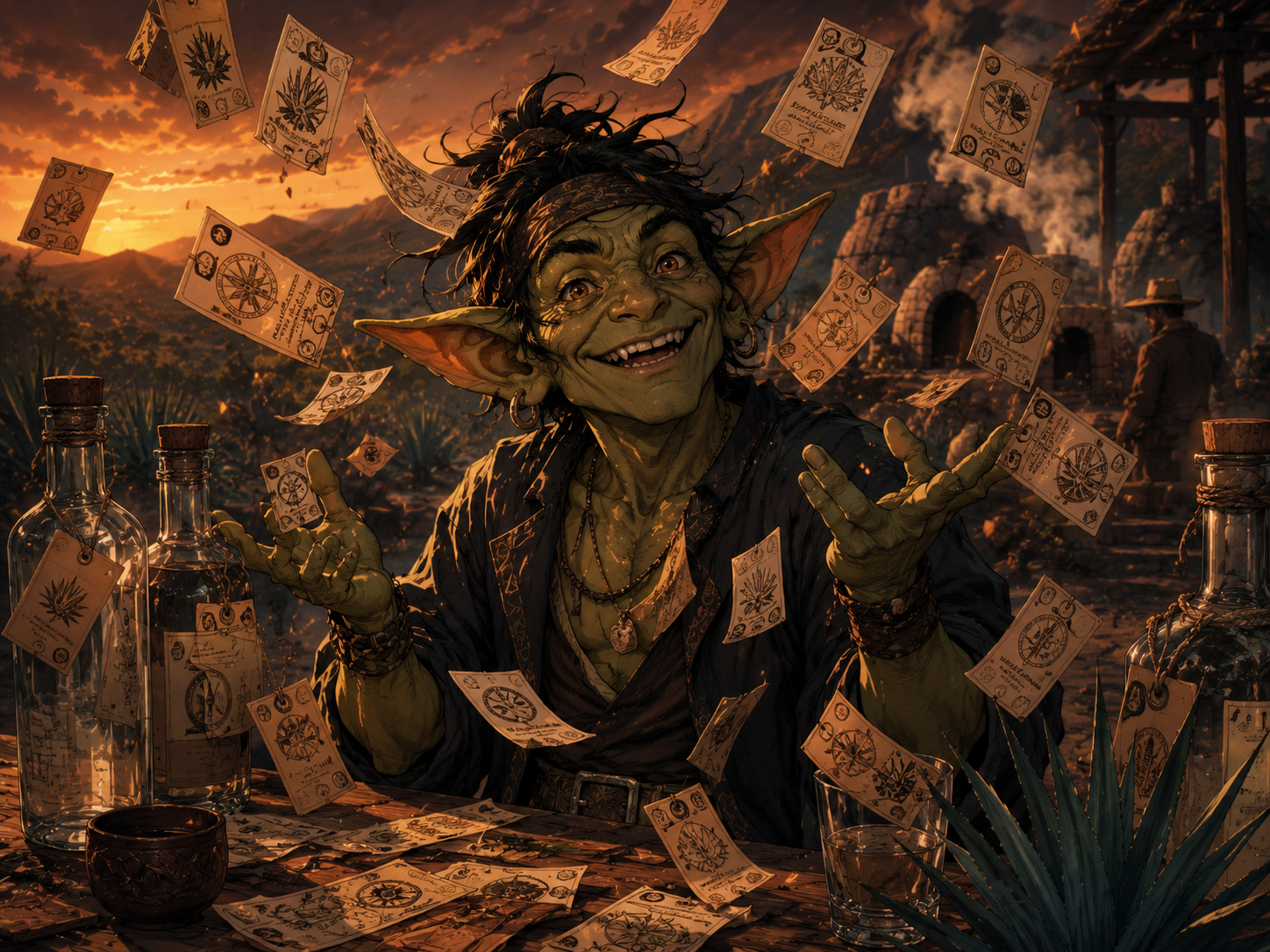
Label Goblin warning
If a word sounds important but the label gives no useful details, ask questions. “Mystical,” “premium,” and “ancient vibes” are not production methods.
A
ABV
Alcohol by volume. This tells you how strong the mezcal is. Always read it before tasting. A small sip of high-proof mezcal teaches. A heroic gulp writes incident reports.
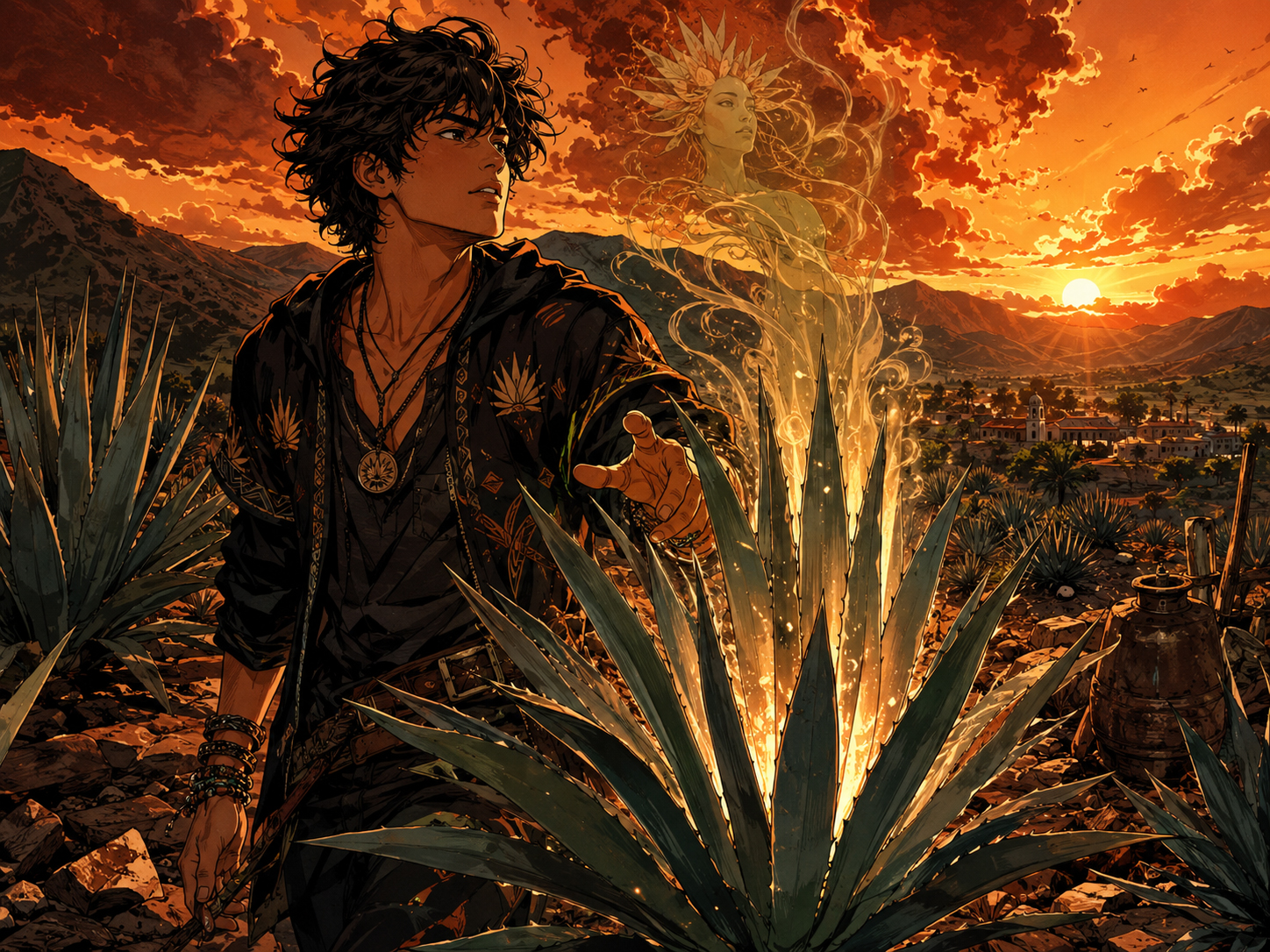
Agave
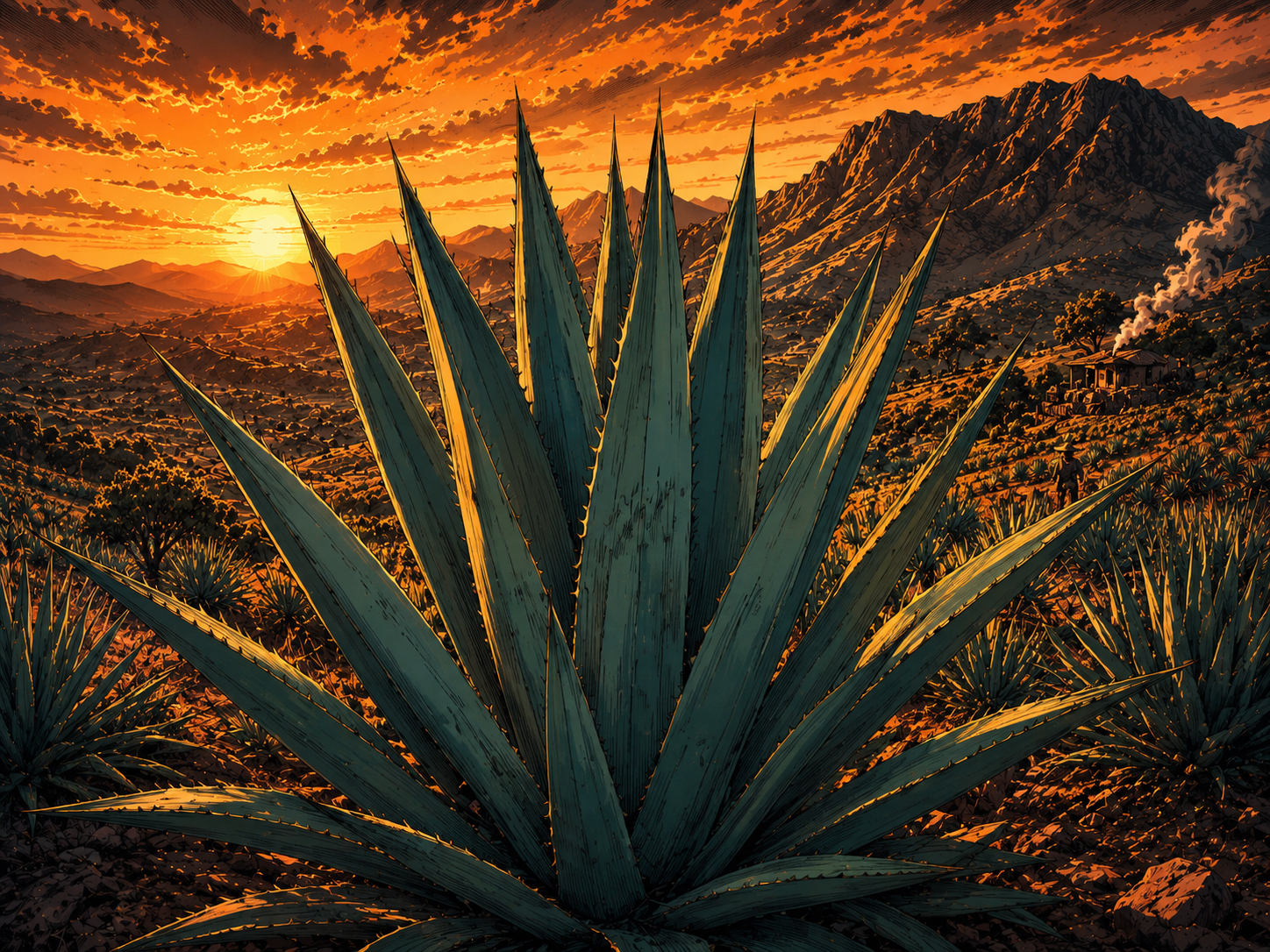
The plant used to make mezcal. Agave is not a cactus, although it has mastered cactus cosplay. Different agaves can produce very different mezcal personalities.
Añejo
An aged spirit term often seen in tequila and sometimes in agave-spirit conversations. Wood aging can add color, vanilla, spice, and roundness, but it can also cover agave character.
Artesanal
A mezcal production category associated with traditional or craft methods. Artesanal does not automatically mean great, and non-ancestral does not mean fake. Read the full label.
Ancestral
A more restrictive traditional production category, often associated with older methods such as hand or stone crushing and clay-style distillation. Beautiful when done well. Still not a magic quality spell.
B
Bagazo
Spent agave fiber left after production steps. It must be handled responsibly because mezcal production creates real waste, not just romantic smoke.
Batch
A specific production lot. Mezcal can vary by batch, so batch numbers help you track what you tasted and whether you can find it again.
Blanco
Usually means unaged or clear spirit, especially common in tequila language. For mezcal, many clear expressions are valued because they show agave and production clearly.
C
Category
On a mezcal label, category may refer to Mezcal, Mezcal Artesanal, or Mezcal Ancestral. This gives production-method clues, not automatic quality rankings.
Cenizo
An agave name often associated with certain regional mezcal traditions, especially outside the most common Oaxaca espadín conversation. The key is always producer, place, and method.
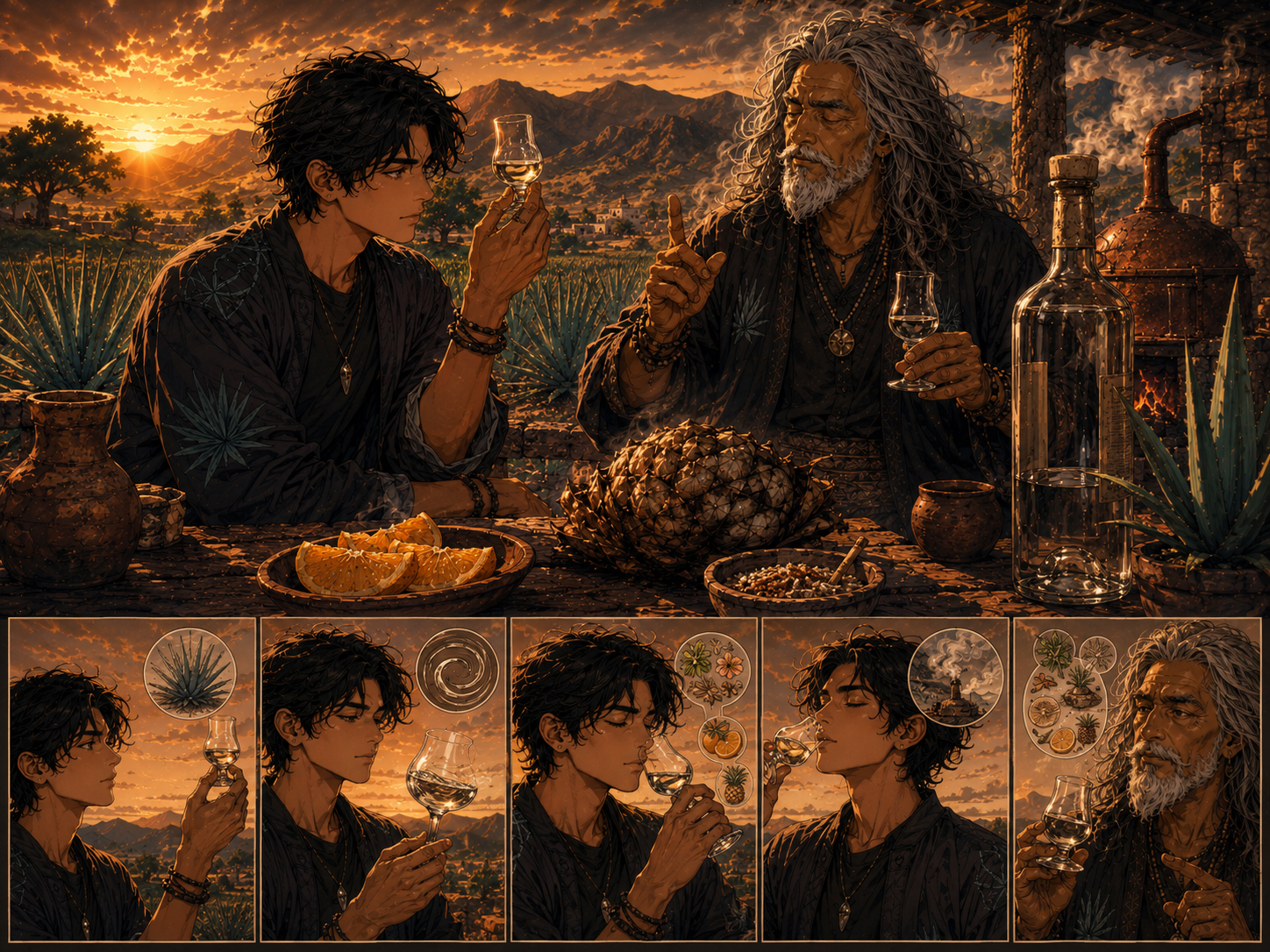
Copita
A small cup used for tasting mezcal. It encourages small sips, careful smelling, and fewer Cocktail Shaker Goblin incidents.
D
Denomination of Origin
A legal protection tying the word “mezcal” to approved Mexican regions and production rules. The map can change through official decisions, so current legal status should be checked through official sources when it matters.
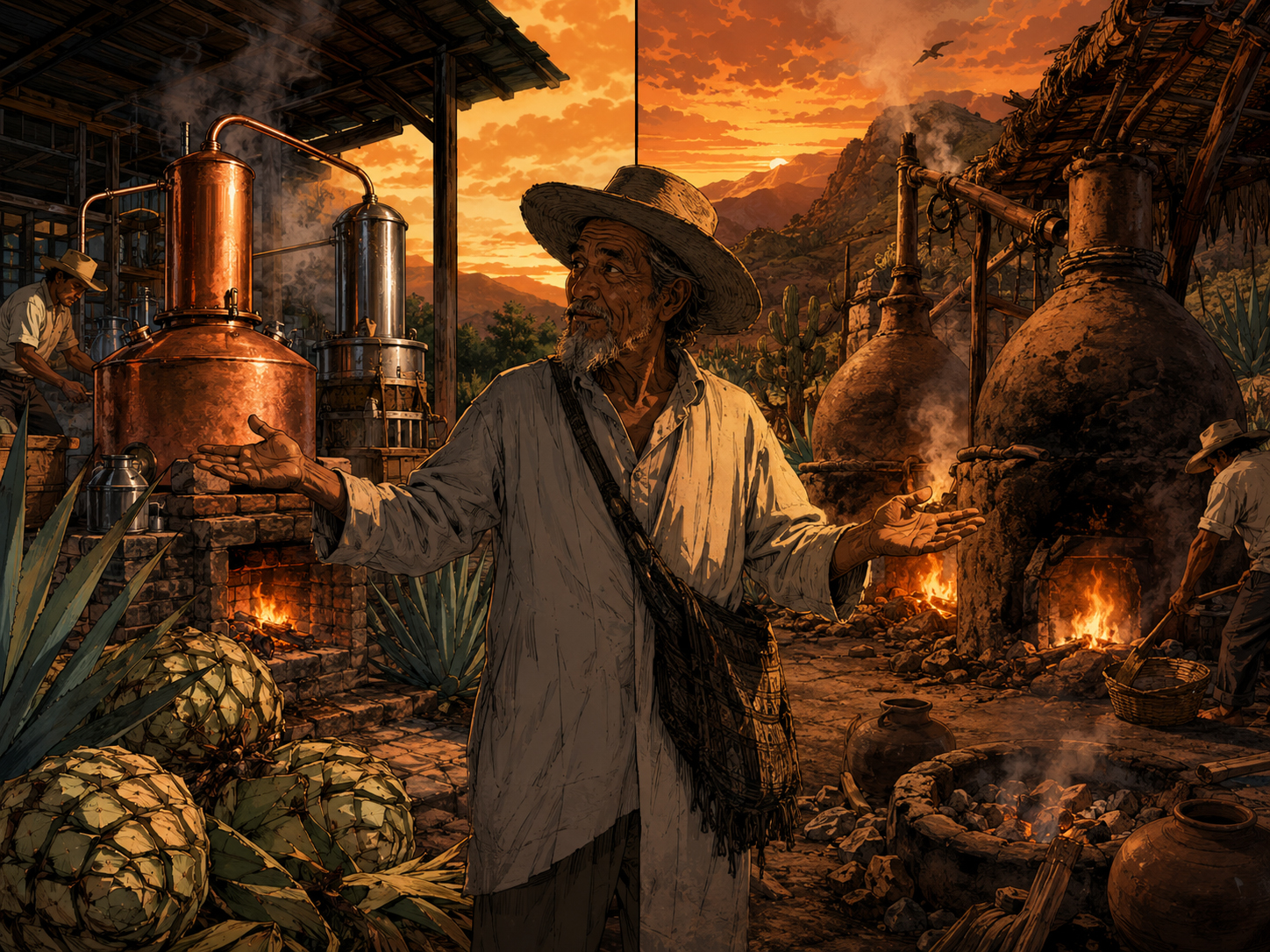
Distillation
The process that concentrates alcohol and aroma compounds from fermented agave liquid. Still type, cuts, proofing, and maker judgment all matter.
E
Earthen Pit Oven
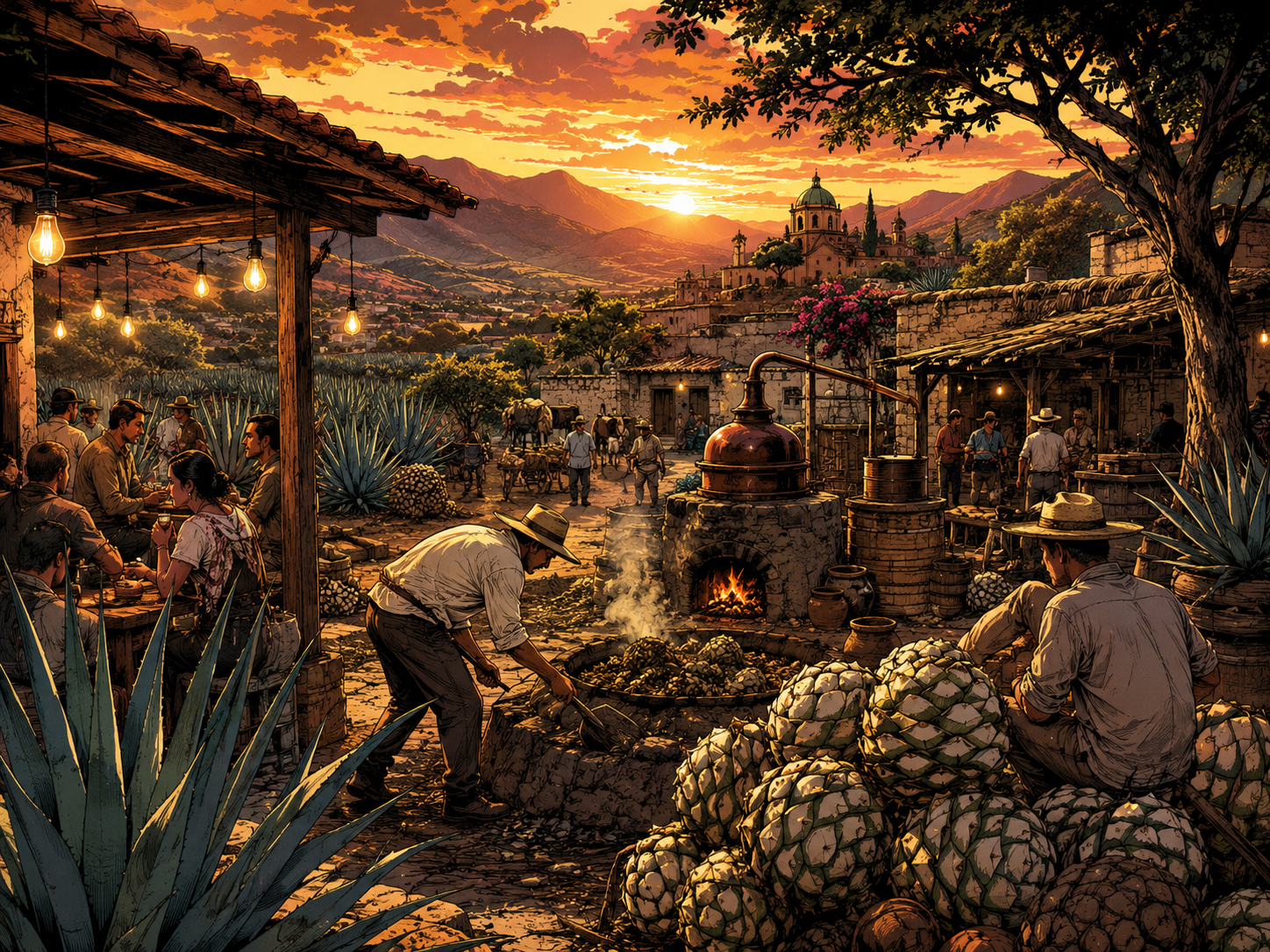
A traditional cooking method where agave piñas are roasted with hot stones, wood, earth, and time. This can create roasted, earthy, caramelized, and smoky flavors.
Espadín
One of the most common agaves used for mezcal. It is widely cultivated, beginner-friendly, and capable of excellent flavor. Common does not mean boring.
F
Fermentation
The stage where yeasts convert agave sugars into alcohol. Fermentation can create fruit, funk, acidity, herbs, flowers, savory notes, and texture. Tiny yeasts, enormous drama.
Finish
The flavors and sensations that remain after you swallow. A finish might be smoky, mineral, peppery, fruity, bitter, sweet, dry, hot, or clean.
H
Horno
Oven. In mezcal, this often refers to the cooking setup for agave, including traditional pit ovens and other methods depending on producer and category.
J
Joven
Young or unaged. In mezcal, many serious bottles are joven because they let agave, fermentation, and distillation show without wood taking over the microphone.
L
Label Goblin
MezcalDaily’s fictional troublemaker who loves vague marketing, missing producer names, unclear agave details, and romantic fog. Defeat him by reading the label.
Lot
Similar to batch. A lot number helps identify a specific production run. Useful for tasting notes and future bottle hunting.
M
Maguey
A common word for agave in Mexico. If the label says maguey, it is talking about the plant behind the mezcal.
Mezcal
A Mexican agave spirit made by cooking, crushing, fermenting, and distilling agave under specific rules and regional protections. It is not simply “smoky tequila.”
Mezcalero / Mezcalera
The maker of mezcal. This person’s knowledge, skill, timing, and judgment shape the bottle. Producer credit matters.
Milling
Crushing cooked agave to prepare it for fermentation. Methods may include tahona, mechanical mills, hand tools, or other systems.
N
NOM
A Mexican official standard or regulatory reference. In mezcal conversations, NOM details can appear on labels and certification materials. Useful, but not a magic spell.
O
Oaxaca
The best-known mezcal region and a major production center. Oaxaca is hugely important, but it is not the only mezcal region.
P
Palenque
A mezcal production site, especially in Oaxaca usage. It can be a workplace, family site, and cultural space — not a tourist prop.
Pencas
The long agave leaves cut away during harvest. They look like swords because agave enjoys dramatic entrances.
Piña
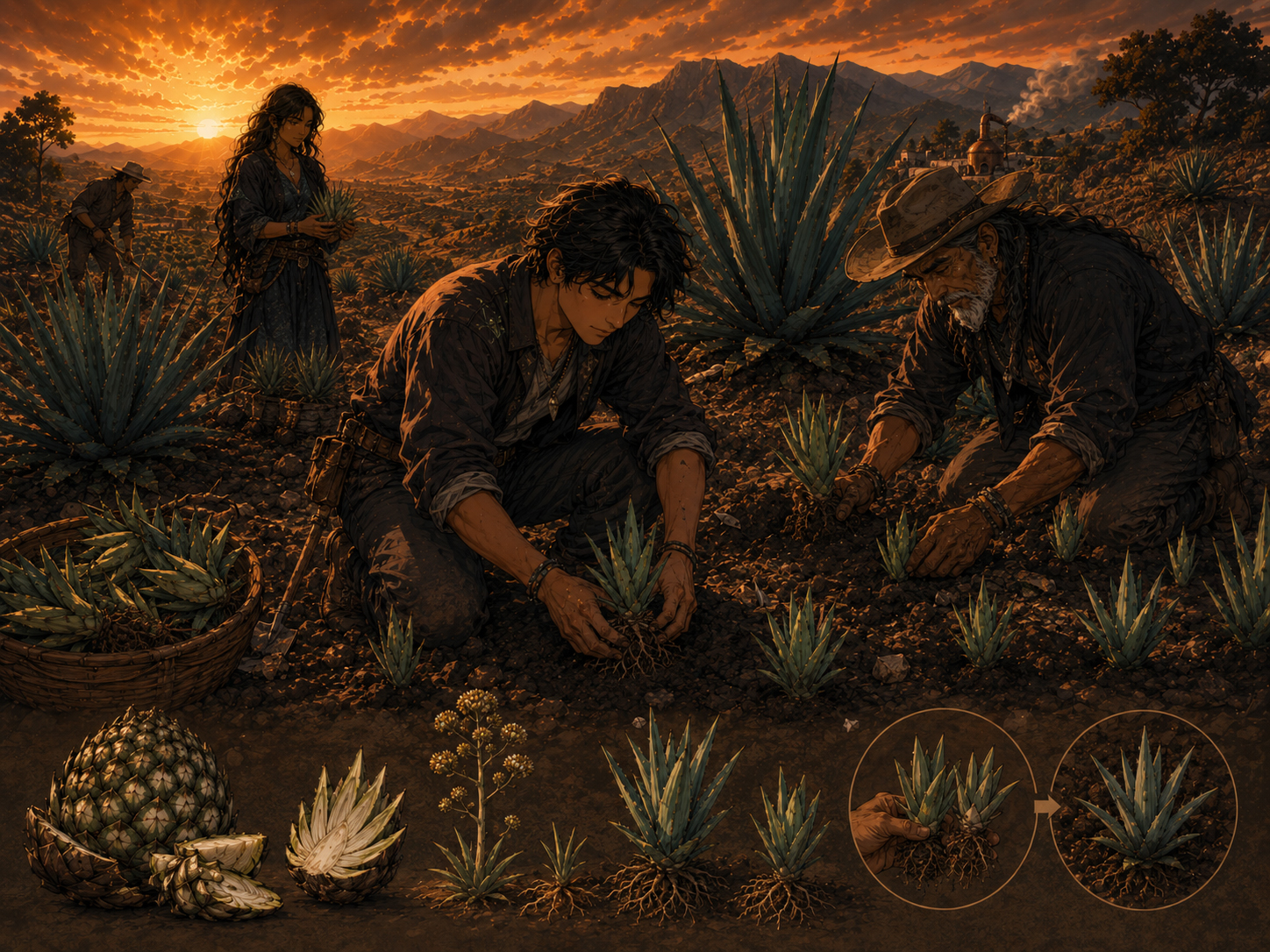
The heart of the agave plant after the leaves are removed. It is called piña because it can resemble a giant pineapple. This is the sugar-rich part cooked for mezcal.
Proof
Another way of describing alcohol strength. ABV is more common on labels in many contexts. Strength affects aroma, heat, body, and balance.
Q
Quiote
The flowering stalk of the agave. Letting some agaves flower can matter for reproduction, biodiversity, and pollinators. Agave’s final dramatic tower.
R
Reposado
Rested or lightly aged, especially common in tequila language. In mezcal, wood or resting can change color, aroma, sweetness, spice, and texture.
Roasting
Cooking agave before fermentation. Roasting can create sweetness, smoke, earth, caramelized notes, and cooked agave depth.
S
Smoke
A flavor note often connected to pit-roasted agave. Smoke can be beautiful, but it is not the whole definition of mezcal.
Sustainability
The long-term health of agave, land, water, wood, producers, workers, communities, biodiversity, and future production. A bottle should not steal tomorrow’s field.
T
Tahona
A large stone wheel used to crush cooked agave. Sometimes animal-powered, sometimes mechanically powered. Tahona Donkey demands respect for the cardio.
Tepeztate
A distinctive agave name often associated with complex, herbal, mineral, or unusual mezcals. It may be slow-growing or limited, so sourcing and sustainability matter.
Terroir
The influence of place: soil, climate, altitude, water, local yeasts, plants, and human tradition. Madame Terroir insists it is not just a fancy word.
Tobalá
A smaller, often celebrated agave associated with distinctive and sometimes delicate mezcals. Rare-agave excitement should come with sourcing questions.
V
Vinata
A term used in some mezcal-producing regions for a production site. Like palenque, it connects mezcal to a real place and maker.
W
Wild Agave
Agave harvested from non-cultivated or less-managed landscapes. Wild agave can be exciting, but responsible harvesting, regeneration, and transparency are essential.
MezcalDaily beginner checklist
- Plant: What agave or maguey?
- Place: What state, town, or production site?
- Maker: Who is the mezcalero or mezcalera?
- Method: Oven, crushing, fermentation, still?
- Strength: What ABV?
- Batch: Is there a lot or batch number?
- Responsibility: Is sourcing clear, especially for wild agave?
If you know the plant, place, maker, method, strength, and batch, the Label Goblin loses most of his power.
Responsible drinking note
MezcalDaily.com is for adults of legal drinking age. Use glossary knowledge to sip more thoughtfully, not faster. Hydrate, eat food, and do not drink and drive.