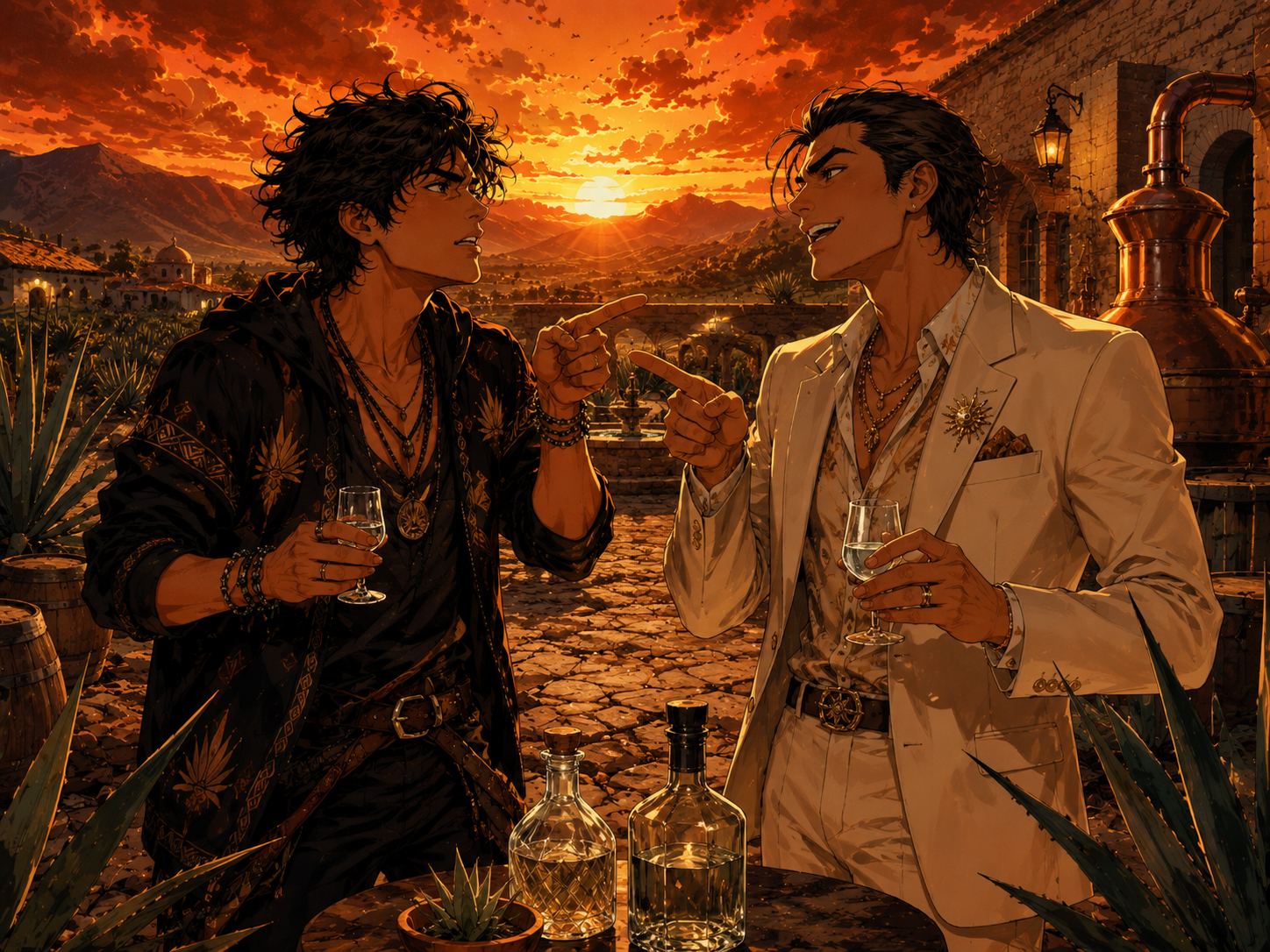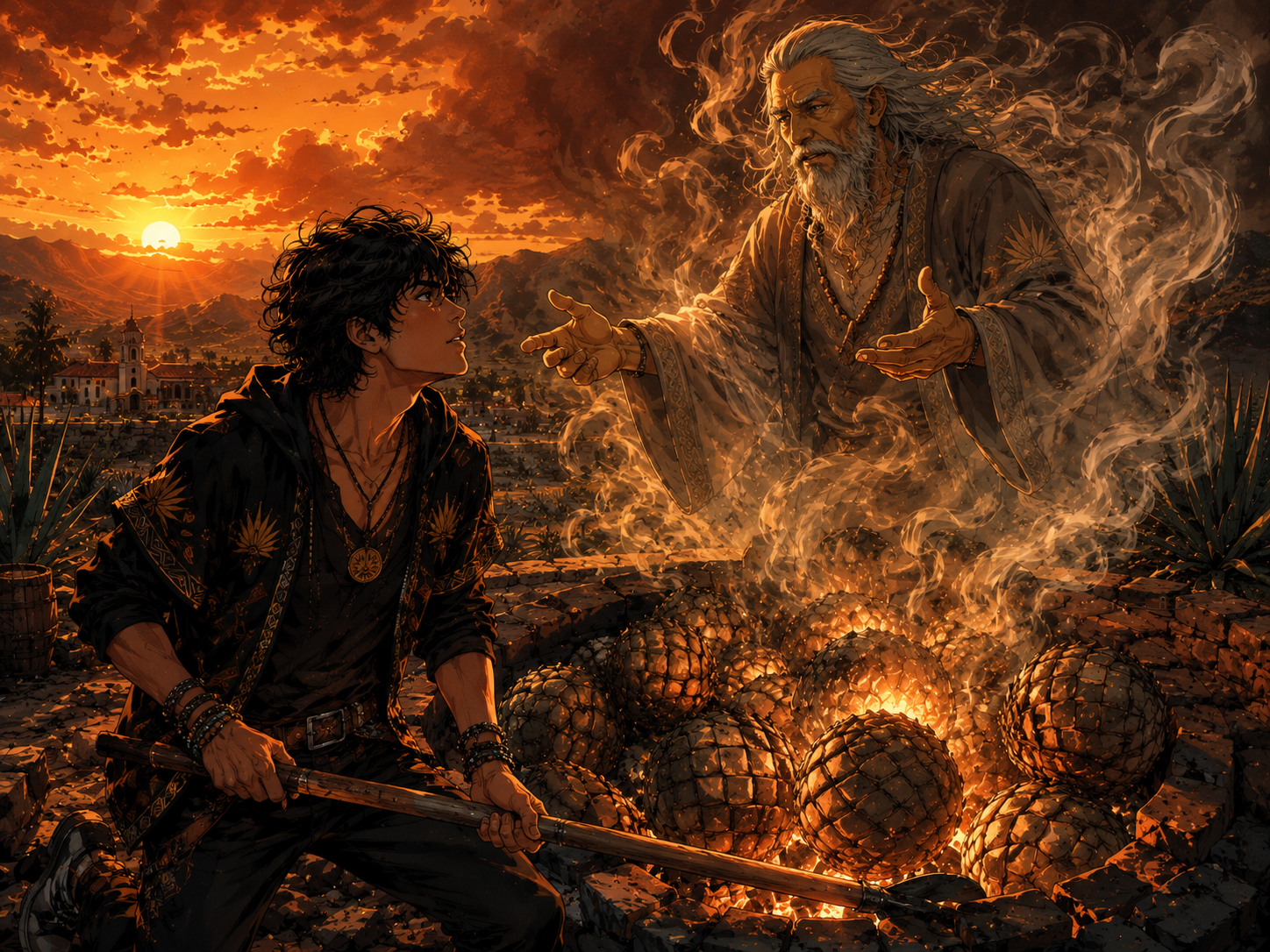
Episode summary
Before mezcal is smoke, spirit, or cocktail, it is agave.
In the first MezcalDaily episode, Agave Boy walks into a sunset field expecting a simple answer. He has heard the usual lazy definitions: “mezcal is smoky tequila,” “mezcal is fire water,” “mezcal is that thing in fancy cocktails.” Then the agave awakens and corrects everyone.
The lesson is simple and important: mezcal begins with the agave plant. Not smoke. Not a shot glass. Not marketing fog. Not the Label Goblin’s little clipboard.
Agave Spirit says:
“If you want to understand mezcal, start with the plant. I waited years for this conversation. You can wait five minutes before making a cocktail.”
Panel 1: Agave Boy enters the field
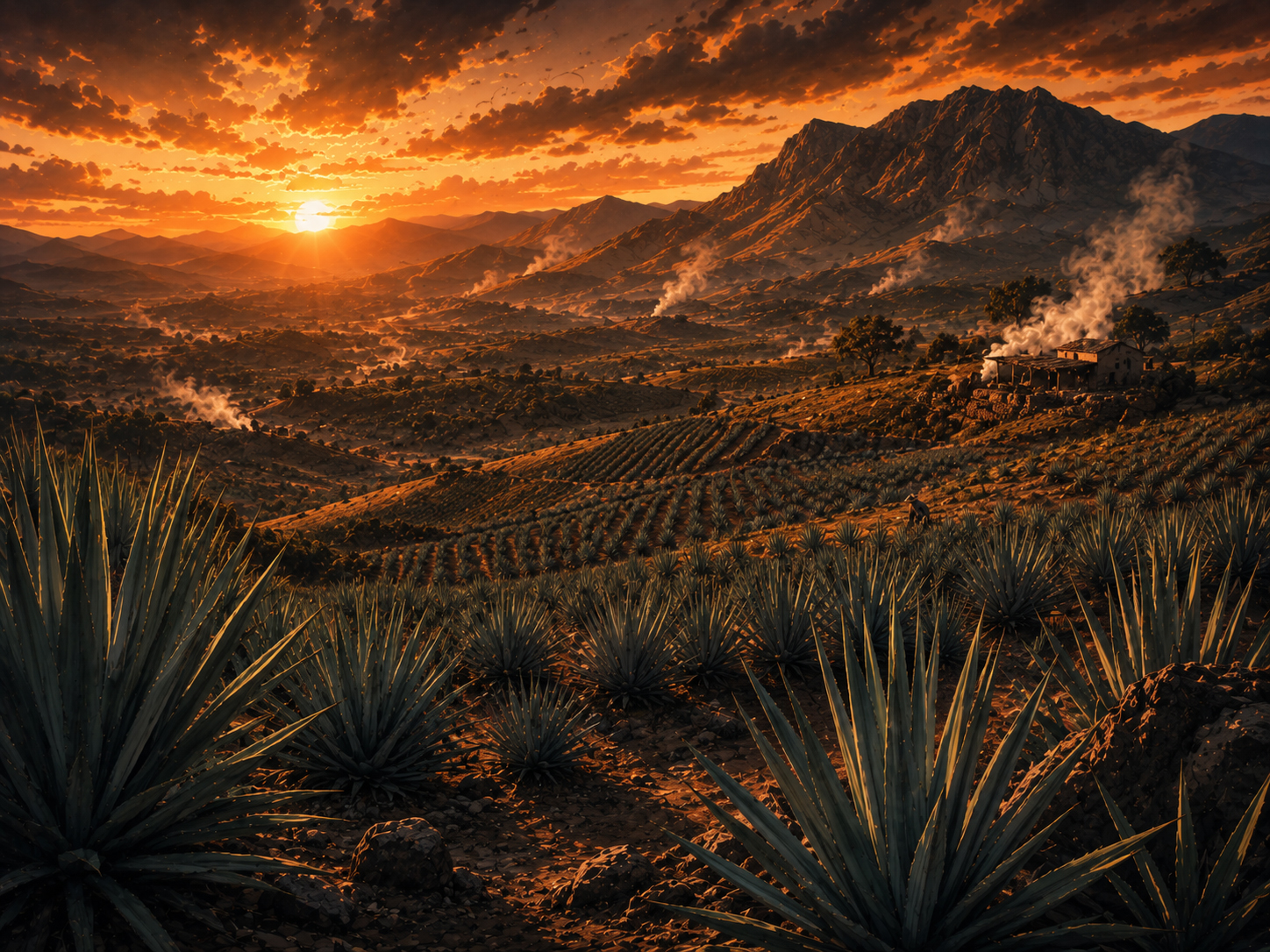
The episode opens with Agave Boy standing in a golden agave field. He is carrying a notebook, a tiny tasting cup, and the dangerous confidence of someone who has read half a menu description.
“I am ready to understand mezcal,” says Agave Boy. “Excellent,” says the field. “Please begin by admitting you do not.”
This is the proper beginning for all mezcal education: humility with good lighting.
Panel 2: The plant speaks
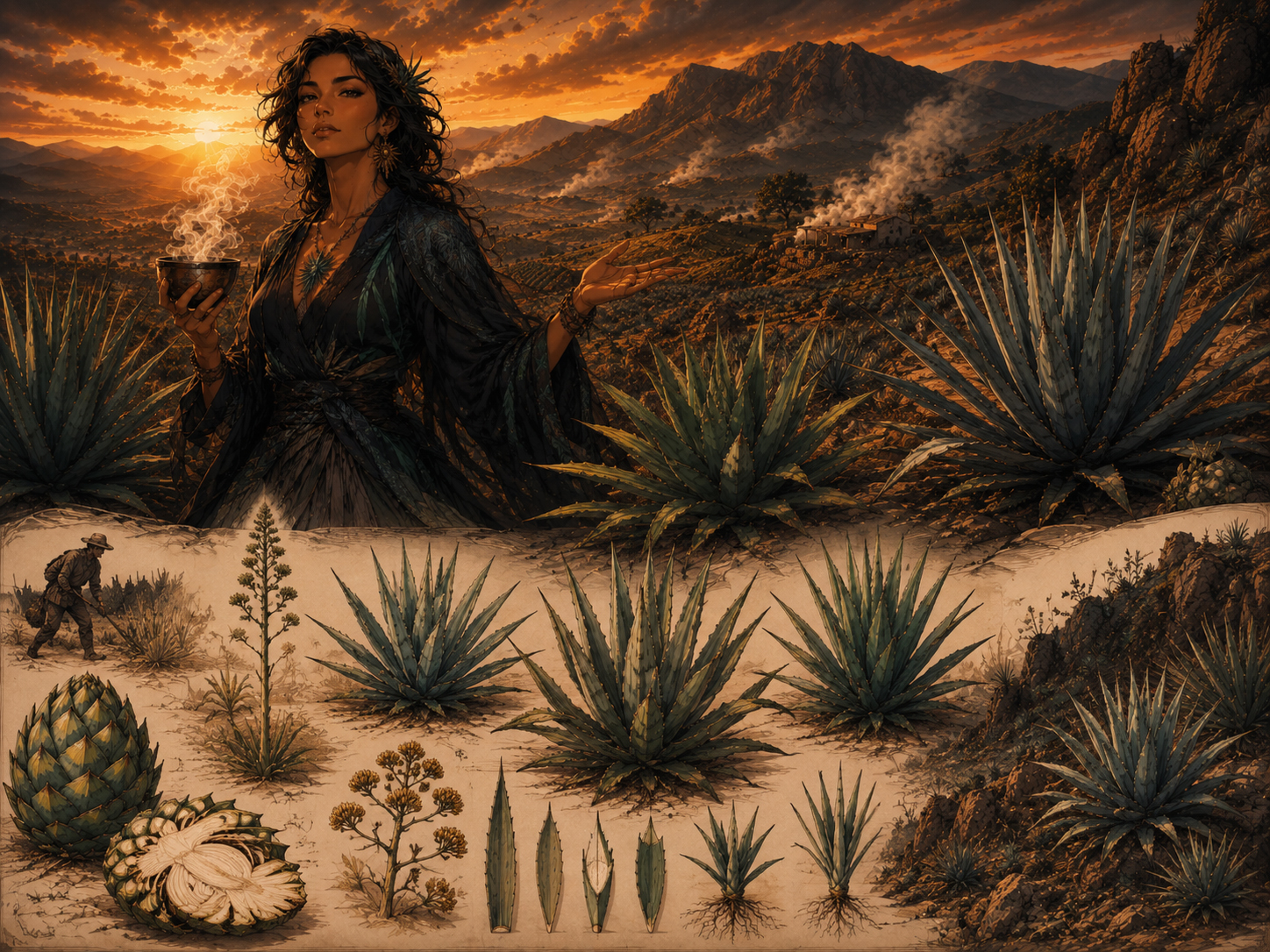
A large agave glows at sunset. Its leaves look like swords. Its voice sounds like a mountain clearing its throat.
The agave explains that it is not a cactus. It is not a garnish. It is not a smoky decoration. It is the source plant. Its heart, called the piña, stores the material that can become mezcal after cooking, crushing, fermentation, and distillation.
Panel 3: The Cactus Misunderstanding
Agave Boy whispers, “So you are a cactus?”
The agave goes silent.
A wind blows across the field. Somewhere, a botanist drops a clipboard.
Agave correction
Agave is not cactus. Agave merely has dramatic spiky confidence and a desert wardrobe.
This is the first joke of the series and also a useful fact. Agave is often confused with cactus, but mezcal comes from agave. The plant deserves correct billing.
Panel 4: Meet the piña
The agave shows Agave Boy the central heart of the plant, the piña. It looks like a giant pineapple with a gym membership and a serious destiny.
The piña is harvested, cooked, crushed, fermented, and distilled. This is where the mezcal journey begins. Without the piña, there is no mezcal. Without mature agave, there is no piña worth bragging about.
| Episode term | Meaning | Manga translation |
|---|---|---|
| Agave / Maguey | The plant used to make mezcal. | The spiky main character. |
| Piña | The harvested heart of the agave. | A sugar battery in pineapple armor. |
| Pencas | The long agave leaves trimmed away during harvest. | The plant’s sword collection. |
| Maturity | The time needed for agave to develop before harvest. | Years of waiting before the plot begins. |
Panel 5: The Label Goblin appears too early
Just as Agave Boy begins to understand the plant, the Label Goblin bursts out from behind a rock holding five bottle tags and a tiny megaphone.
“Ignore the plant!” screams the Goblin. “Buy the one that says mystical premium ancient smoke!”
The agave sighs. This will not be the last time.
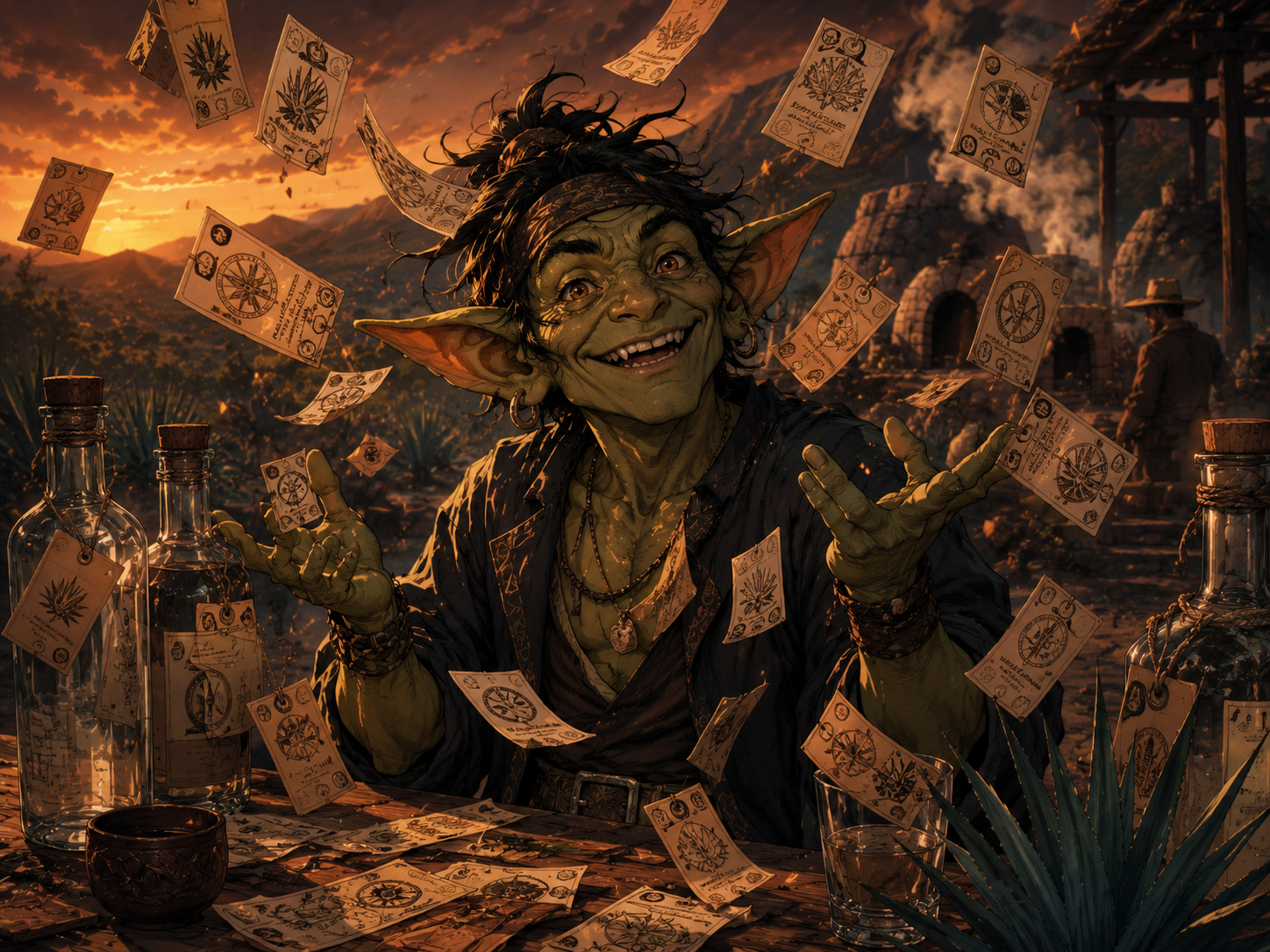
The Label Goblin represents a real problem: mezcal marketing can get vague, romantic, or confusing. A bottle should tell you useful things: agave, producer, place, method, category, ABV, and batch when possible.
Panel 6: Espadín enters like a reliable hero
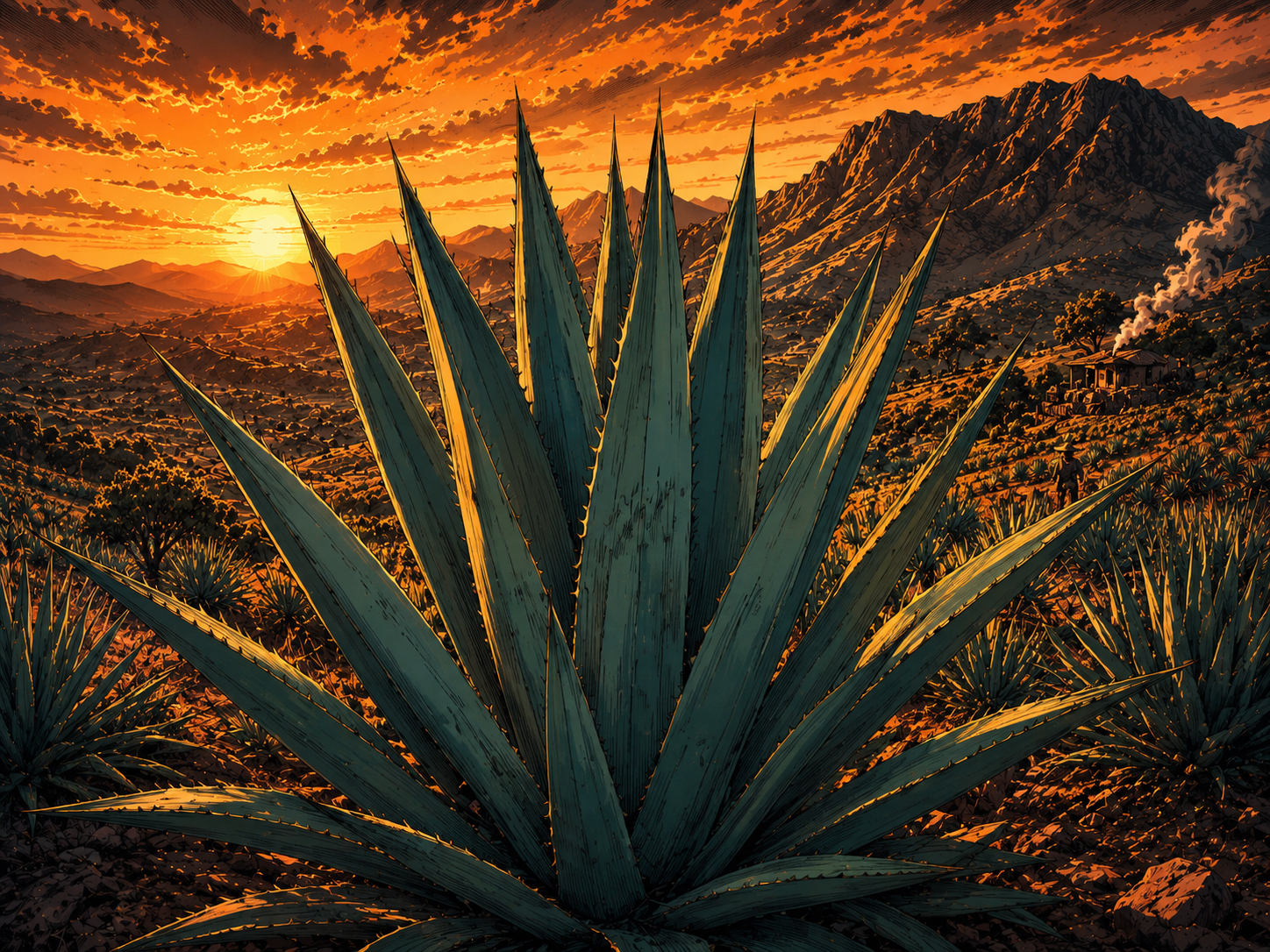
Agave Boy asks where beginners should start. A strong, practical espadín agave steps into the frame with heroic sunset lighting.
Espadín is one of the most common agaves used for mezcal. That does not make it boring. It makes it a good classroom. Many drinkers learn mezcal through espadín because it is widely cultivated, widely available, and capable of excellent flavor.
Espadín says:
“Common does not mean boring. Common means I showed up to work.”
Panel 7: Wild agave whispers from the rocks
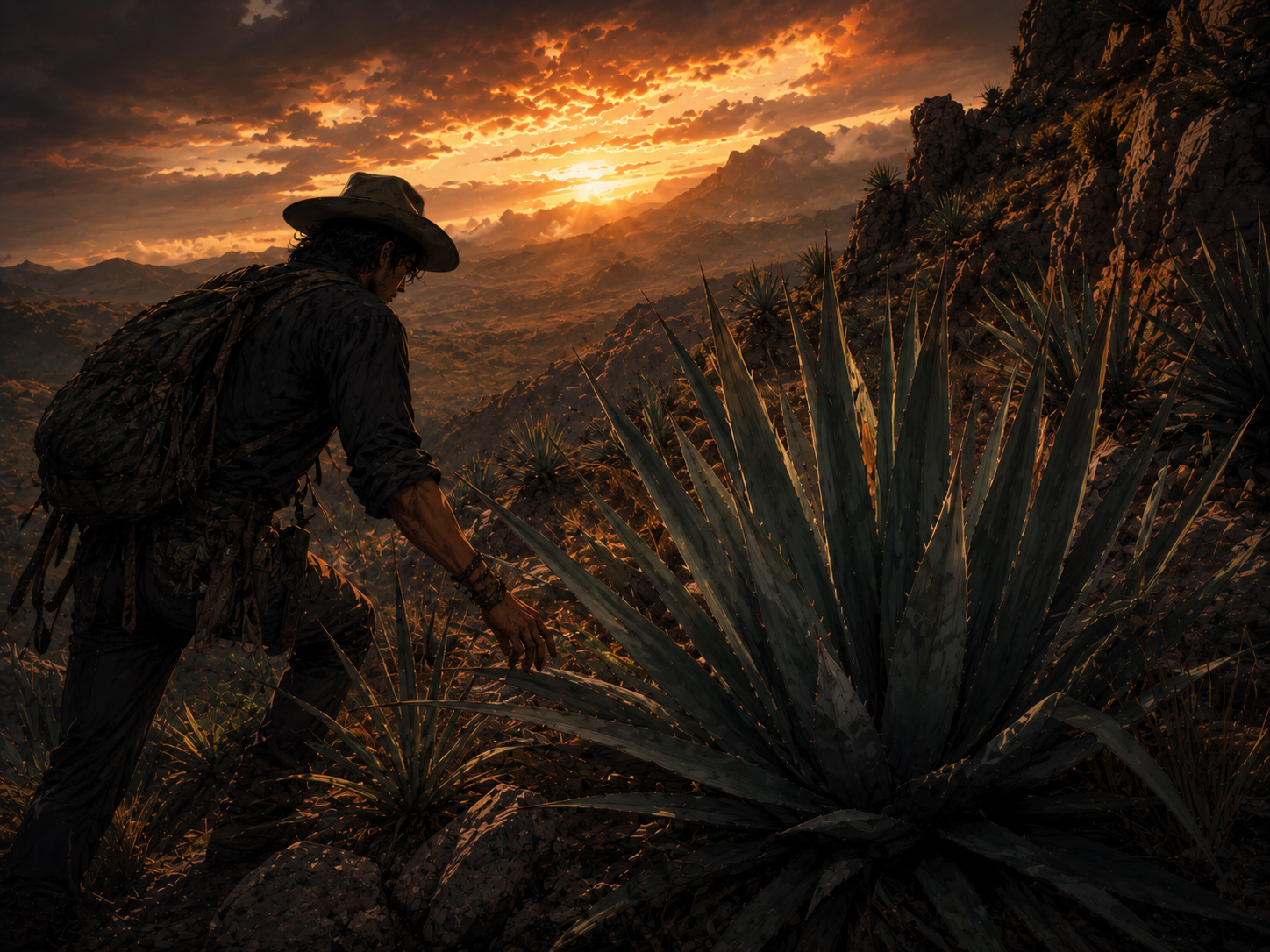
From the hills, rare and wild agaves whisper. They are beautiful, strange, slow-growing, and not interested in becoming status trophies for collectors.
The episode gives a preview of a later lesson: rare agave can be amazing, but it requires responsibility. Ask about sourcing, replanting, regeneration, and whether the plant can return.
Panel 8: The first MezcalDaily rule
As the sun drops behind the agave field, the plant gives Agave Boy the first rule of the series:
“Respect the plant before you praise the bottle.”
Agave Boy writes it down. The Label Goblin tries to replace it with “smoky premium vibes.” Tahona Donkey kicks the clipboard into a cactus-shaped shadow. Everyone learns something.
What this episode teaches
- Mezcal starts with agave. Smoke is not the source. The plant is.
- Agave is not cactus. It only has dramatic spike energy.
- The piña matters. The harvested agave heart becomes the raw material for mezcal.
- Espadín is important. Common agave can still produce excellent mezcal.
- Rare agave needs responsibility. Rarity is not automatically quality.
- Labels should be useful. Romance is nice. Facts are better.
Episode 1 tasting homework
Try a small pour of a clearly labeled espadín mezcal. Do not shoot it. Smell gently. Take a tiny sip. Look for roasted agave, herbs, smoke, fruit, minerals, pepper, or sweetness. Then read the label again and connect the glass to the plant, place, and producer.
Responsible homework rule
Tiny pour. Slow sip. Water nearby. Food on the table. No driving after drinking. The Label Goblin is not a rideshare service.
The final panel
The agave field glows. Agave Boy finally understands that mezcal is not a smoky shortcut. It is a long story that begins in the ground.
Mezcal is agave with time, fire, fermentation, distillation, and memory.
Responsible drinking note
MezcalDaily.com is for adults of legal drinking age. This episode is educational and cultural content about an alcoholic beverage. Sip slowly, hydrate, eat food, and do not drink and drive.