Episode summary
A mezcal label should be a map, not a fog machine.
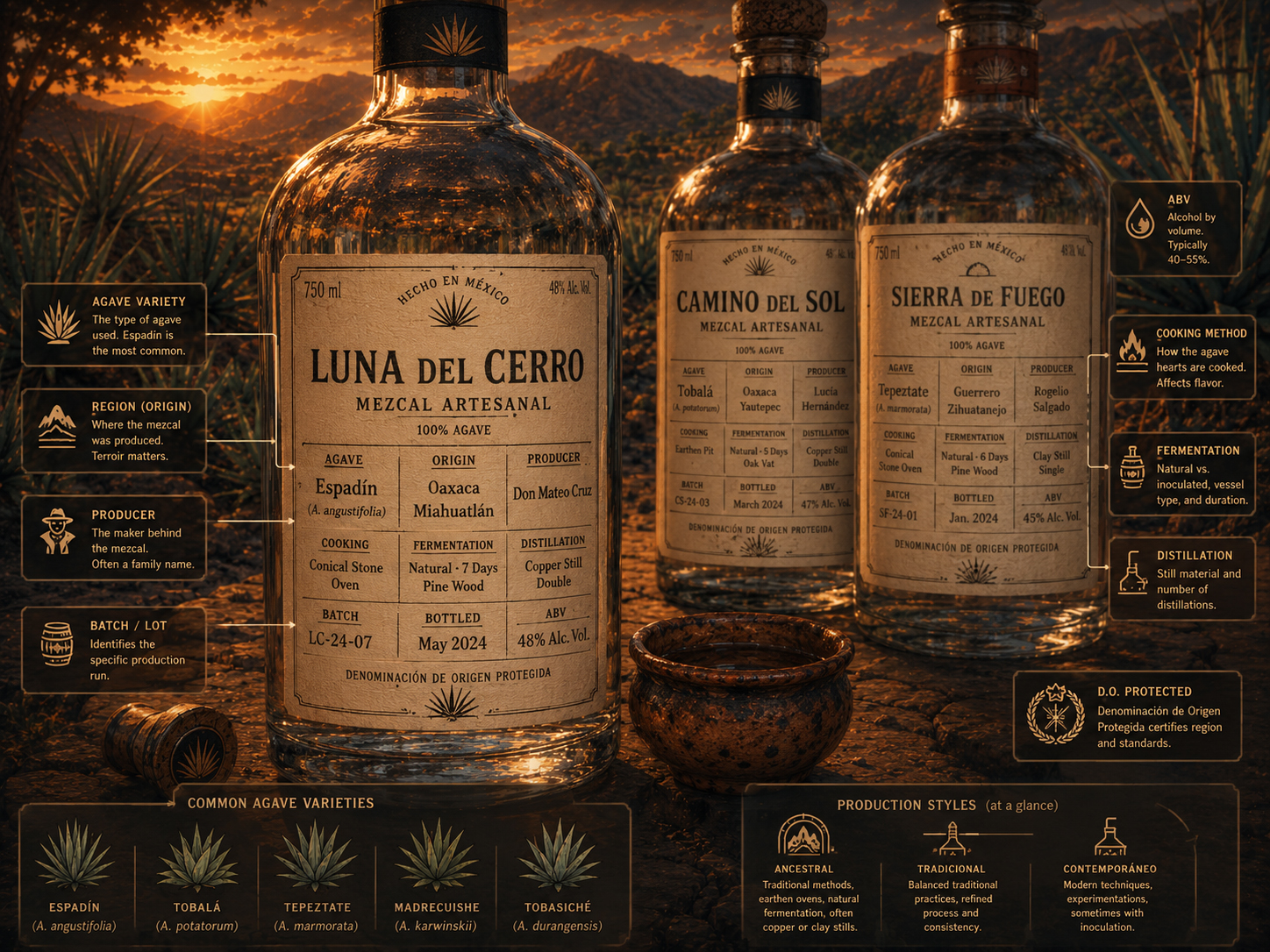
After surviving the agave field, the roasting pit, and the tequila family argument, Agave Boy thinks he is ready to buy a bottle. Then he turns the bottle around. Suddenly there are agave names, regions, producer notes, ABV, batch numbers, categories, certification marks, and one goblin yelling “just buy the smoky one!”
Episode 4 teaches the central MezcalDaily bottle rule: good label details help you connect the mezcal to plant, place, maker, method, and strength.
Label Goblin says:
“Facts are boring. Try this sticker: MYSTICAL PREMIUM SMOKE OF DESTINY.”
Panel 1: The shelf of confusion
Agave Boy stands in front of a mezcal shelf. The bottles look beautiful. Some have elegant labels. Some have tiny print. Some explain the producer and town. Some say almost nothing except that a mountain was somehow emotionally involved.
He reaches for one bottle. The Label Goblin leaps from behind the shelf and throws tags into the air.
“Do not read!” shouts the Goblin. “Reading leads to informed choices!”
Panel 2: The first clue is agave
Madame Terroir calmly takes the bottle from Agave Boy and points to the agave name. Espadín, tobalá, tepeztate, cupreata, cenizo, madrecuixe, blends — the plant name is often one of the first useful clues.
But the plant name is not everything. A rare agave can be poorly made. A common agave can be excellent. The label is a starting point, not a crown.
| Label clue | Why it matters | Goblin trick |
|---|---|---|
| Agave / maguey | Tells you which plant was used. | Making rare names sound automatically superior. |
| Producer | Connects the bottle to the person or family making it. | Highlighting the brand while hiding the maker. |
| Town / region | Shows where the mezcal comes from. | Using vague geography like “ancient mountain.” |
| ABV | Tells you alcohol strength. | Printing tiny numbers and hoping you ignore them. |
Panel 3: Producer credit matters
The Label Goblin tries to cover the producer’s name with a sticker that says “HANDCRAFTED BY TRADITIONAL SECRETS.”
Agave Boy peels it off.
“Who made this?” asks Agave Boy. “No further questions,” says the Goblin, sweating.
A good label should help identify the mezcalero, mezcalera, family, palenque, vinata, or production source. Producer credit helps connect the bottle to real craft, not just brand storytelling.
Madame Terroir’s ruling
“A beautiful label without maker information is a postcard without an address.”
Panel 4: The place clue
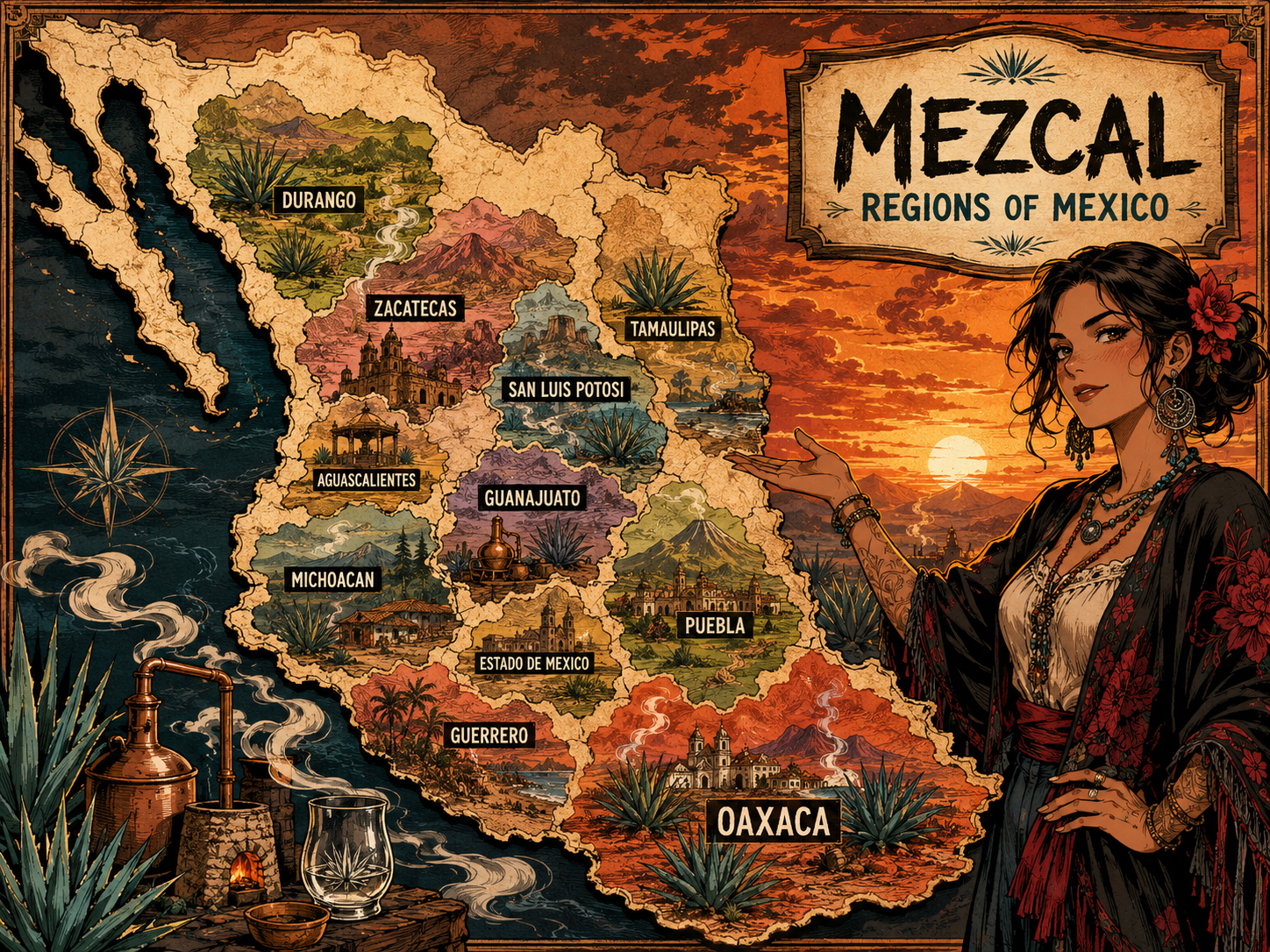
Next, Madame Terroir points to the region. “Oaxaca” is useful. A town is more useful. A producer site can be even more useful. Place can shape agave, water, fermentation, roasting traditions, still types, and local style.
The goblin tries to replace the town with “FROM THE MYSTIC HILLS.” Tahona Donkey eats the sticker.
Panel 5: ABV enters loudly
Agave Boy sees “48% ABV” and asks if that matters.
Smoke Sensei almost falls into the shelf.
Smoke Sensei says:
“Read the ABV before the ABV reads you.”
ABV affects aroma, heat, texture, and tasting. Higher proof can carry flavor beautifully, but it also demands smaller sips and more attention. A careful tiny pour is the correct move. A heroic gulp is how the goblin writes your biography.
Panel 6: Category confusion
The Label Goblin throws three banners:
- Mezcal
- Mezcal Artesanal
- Mezcal Ancestral
Then he screams, “One of these must automatically be best!”
Incorrect. Category words describe production method lanes. They do not guarantee quality. Artesanal can be great. Ancestral can be great. Either can disappoint. The maker still matters.
| Category | Basic idea | Episode lesson |
|---|---|---|
| Mezcal | Broad category under mezcal rules. | Ask for method details. |
| Mezcal Artesanal | Craft/traditional method category with permitted tools. | Can be excellent; read the full label. |
| Mezcal Ancestral | More restrictive traditional methods. | Can be beautiful; still not automatic greatness. |
Panel 7: Batch numbers save the day
A tiny batch number appears on the bottle. Agave Boy almost misses it. The Label Goblin tries to distract him with a fake “ultra premium” ribbon.
Batch or lot numbers help track what you tasted. Mezcal can vary because agave, weather, fermentation, and producer decisions vary. If you love a bottle, write down the batch.
“Future-you deserves better than ‘that one bottle with the cool label,’” says Madame Terroir.
Panel 8: Method notes defeat the fog
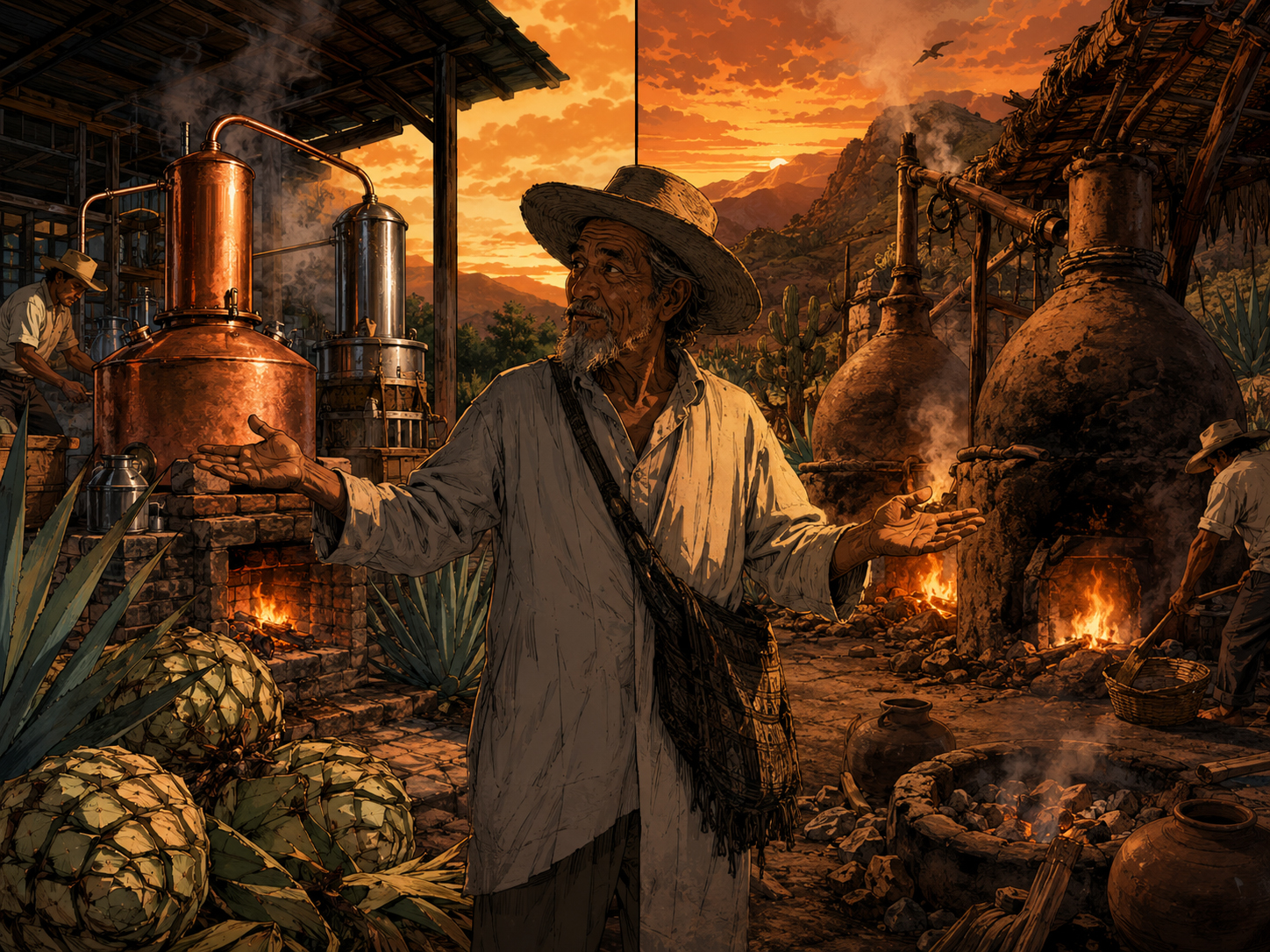
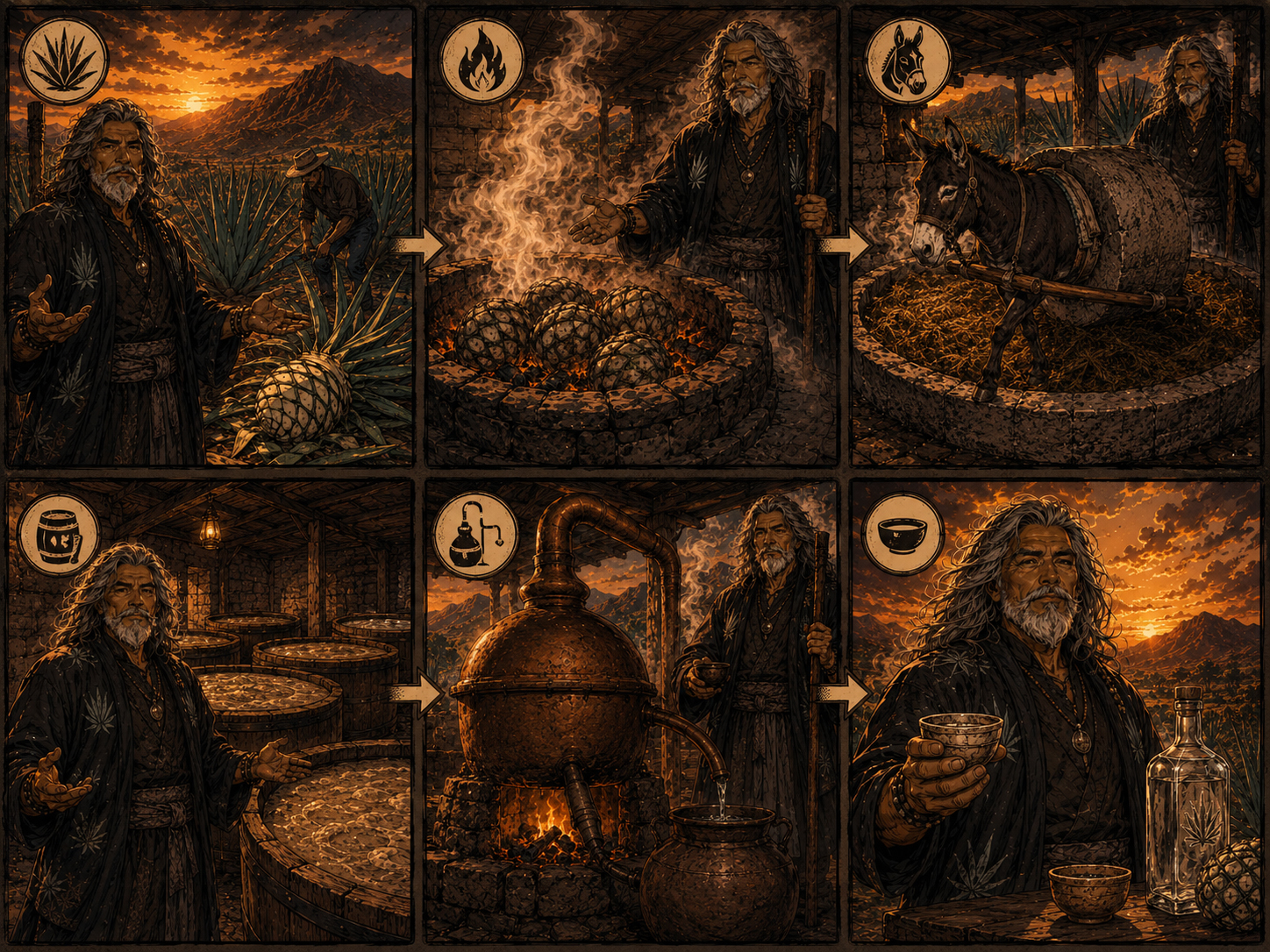
The best label in the episode lists useful production clues: pit oven, tahona, wooden fermentation vats, copper still, clay still, double distillation, resting vessel, or other method details.
Agave Boy realizes the label is not just decoration. It is a trail of clues.
What this episode teaches
- Start with the agave. Plant name matters, but it is not everything.
- Find the producer. Maker credit connects the bottle to real craft.
- Look for place. State, town, region, or production site gives context.
- Read the ABV. Strength affects taste, aroma, heat, and responsible sipping.
- Understand category words. Mezcal, artesanal, and ancestral describe method lanes, not automatic quality.
- Track batch or lot. It helps you compare and remember.
- Prefer useful details over romance fog. The goblin hates specifics.
Episode 4 label checklist
| Look for | Ask |
|---|---|
| Agave | What plant was used? |
| Producer | Who made it? |
| Place | Where was it made? |
| Category | What production category is stated? |
| ABV | How strong is it? |
| Batch | Can I identify this specific lot? |
| Method notes | How did agave become mezcal? |
Episode 4 tasting homework
Pick one mezcal bottle and read the label before tasting. Write down the agave, producer, place, category, ABV, batch, and any method notes. Then pour a tiny sip and see if the glass connects to the label.
Responsible homework rule
Tiny pour. Slow sip. Water nearby. Food on the table. No driving after drinking. Reading labels is adult behavior. So is hydration.
The final panel
Agave Boy holds up a bottle and reads the label calmly. The Label Goblin shrinks to the size of a bottle cap.
The label is not the flavor, but it is the map that helps you understand the journey.
Responsible drinking note
MezcalDaily.com is for adults of legal drinking age. This episode is educational and cultural content about an alcoholic beverage. Sip slowly, hydrate, eat food, and do not drink and drive.